



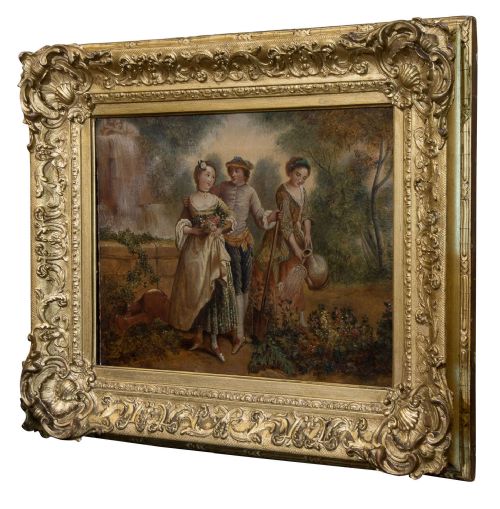
Rococo Pastoral Painting
These rococo pastoral painting examples capture leisurely scenes in oils, porcelain and enamel across the eighteenth and nineteenth centuries.
Rococo Pastoral Painting
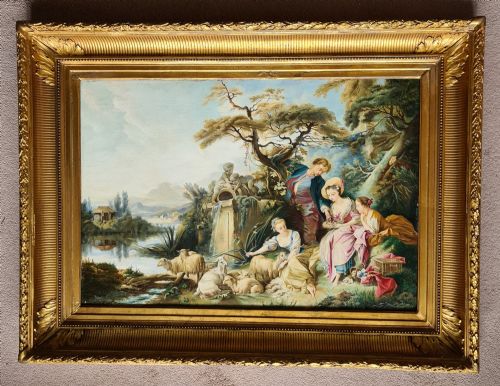
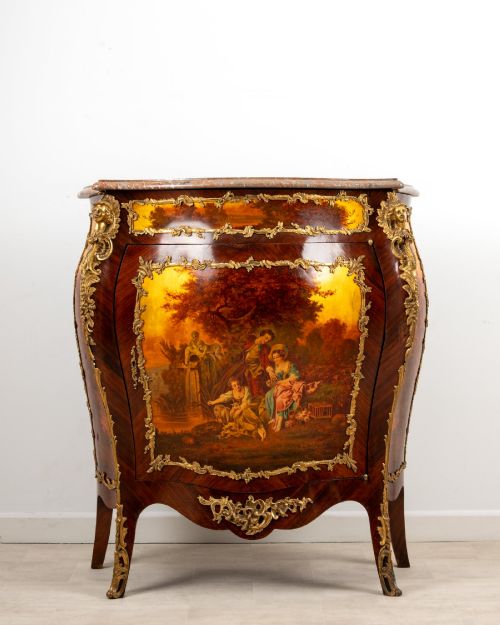
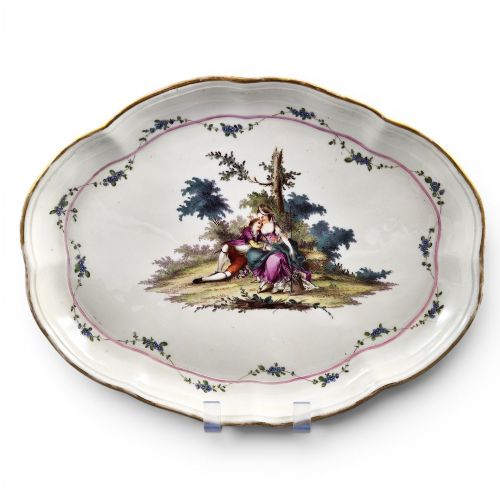
When you search for rococo pastoral painting, you encounter rustic scenes of courting couples, shepherds and courtly figures at leisure. These artworks appear on oil on canvas, porcelain surfaces, and painted wood panels.
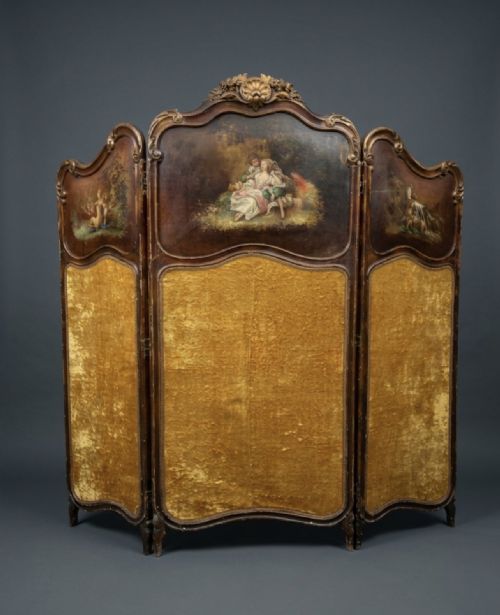
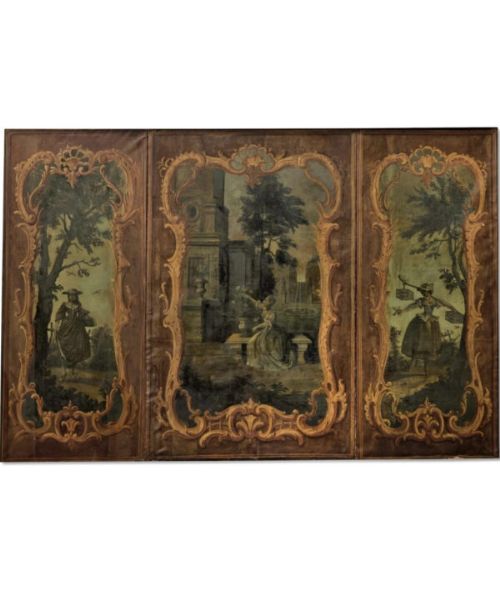
The selections on this page lean heavily towards French and German interpretations, spanning original eighteenth-century works and later nineteenth-century revivals. You will find large canvas formats alongside miniature paintings and panels set into mirrors or folding screens.
Many works reference prominent French masters such as François Boucher and Jean-Antoine Watteau. These compositions draw the eye into idealized rural landscapes populated by graceful figures.
How they were made
Makers utilised oil paint on stretched canvas or wood panels, employing fine brushwork to render soft fabrics and leafy canopies. Miniature paintings and enamel patch boxes applied similar delicate pigments to metallic bases and porcelain.
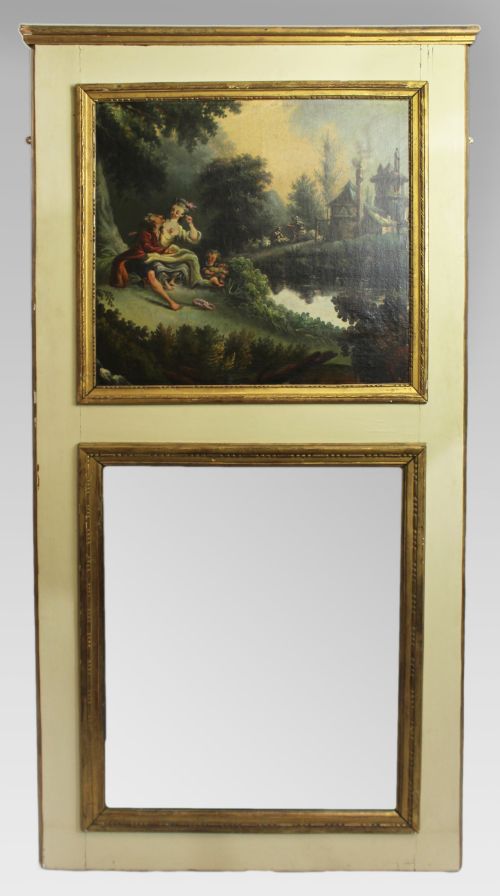
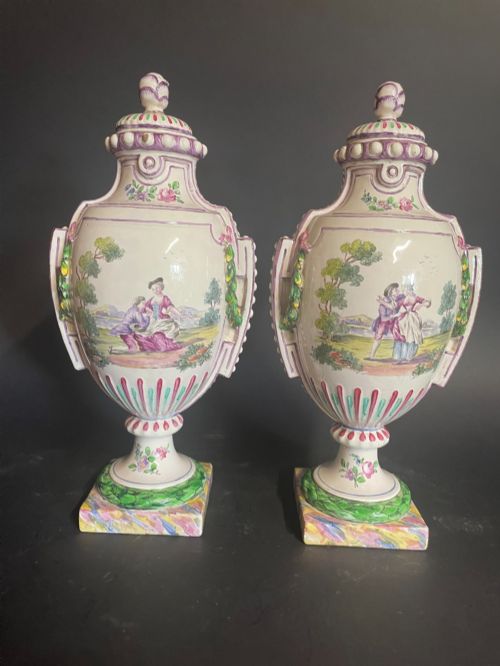
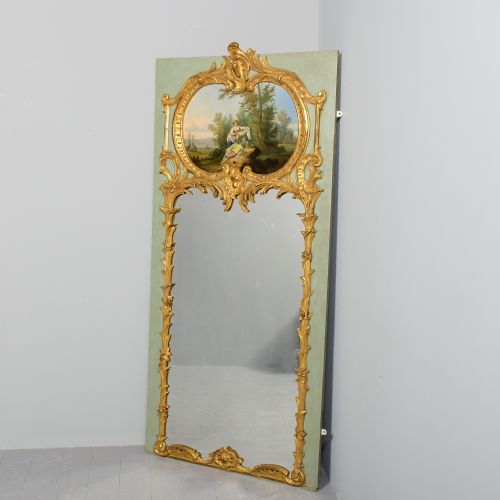
Porcelain bodies from factories like Meissen and Sèvres received hand-painted pastoral vignettes fired beneath glossy glazes. Gilt frames, ormolu mounts and carved wooden trumeau structures frequently house these painted scenes.
This selection spans the eighteenth, nineteenth, and early twentieth centuries, uniting oil on canvas with porcelain figurines and painted wooden screens.
What varies in quality
The integration of the painting into its intended object also matters. Pieces where the artwork complements the carved wood of a trumeau mirror or the form of a porcelain vase demonstrate superior coordination.
Francois Boucher·Jean-Antoine Watteau·Meissen Porcelain·Carl Thieme Dresden·Helena Wolfsohn Dresden
The Rococo Pastoral Painting Glossary
- Trumeau
- A decorative wall mirror featuring an oil painting set into the wooden frame above the glass. These architectural elements originated in eighteenth-century French interiors.
- Grisaille
- A painting executed entirely in shades of grey or neutral monochrome. This technique often mimics the appearance of stone or relief sculpture within interior decorative schemes.
- Ormolu
- Gilt bronze mounts applied to furniture, porcelain and mirrors. This decorative metalwork adds architectural structure and visual richness.
- Faience
- Tin-glazed earthenware produced across European kilns. Early examples often display hand-painted pastoral scenes directly onto the porous white glaze.
- Vernis Martin
- A type of polished lacquer finish developed in France to imitate Asian lacquerware. It frequently protects delicate pastoral scenes on cabinetry and screens.
Rococo Pastoral Painting: Frequently Asked Questions
What is a rococo pastoral painting?
It is an artwork depicting idealized rural life, featuring shepherds, dancers, and aristocrats playing at rusticity in lush landscapes. These scenes emphasise leisurely pursuits and romantic encounters.
You encounter these subjects not only on traditional canvases but also on porcelain vessels, enamel boxes, and painted wooden furniture panels from the eighteenth century onwards.
How do I date a painted trumeau mirror?
Dating relies on the construction of the wooden frame, the composition of the mirror glass, and the style of the integrated pastoral oil painting. Eighteenth-century versions typically feature carved giltwood with distinct regional joinery.
Nineteenth-century revival pieces often copy these earlier proportions but utilise machine-cut timber and later pigments. Examining the reverse of the panel usually clarifies the age of the woodwork.
Where were these porcelain pastoral scenes made?
Major factories in Germany and France produced the majority of these figurative ceramics and painted vessels. Meissen, Sèvres, and various Dresden workshops dominated the output.
These pieces often bear underglaze factory marks on the base. Later nineteenth-century makers frequently imitated these earlier eighteenth-century styles.
How do I care for antique painted panels?
Keep painted wooden panels and canvases away from direct sunlight and fluctuating humidity to prevent cracking. Dust them gently with a dry, soft cloth without applying moisture or cleaning agents.
Enamel and porcelain surfaces tolerate light dusting well. Avoid placing these items near heat sources that might warp the surrounding wood or canvas.