



Rococo Painted Drawer Chest
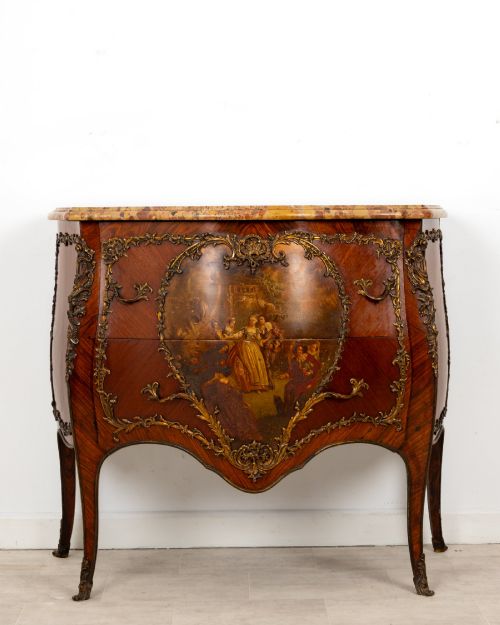
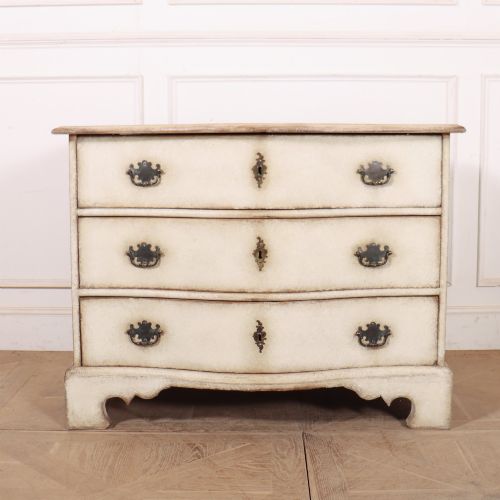
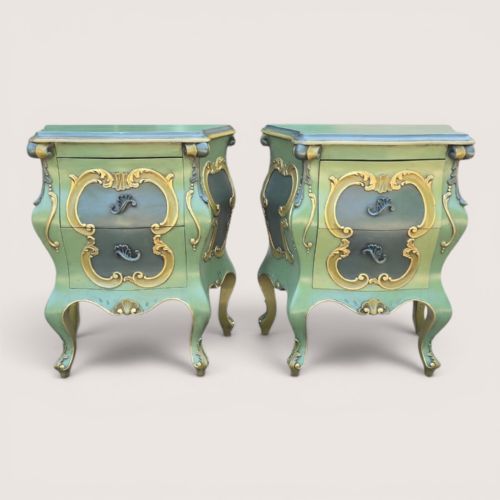
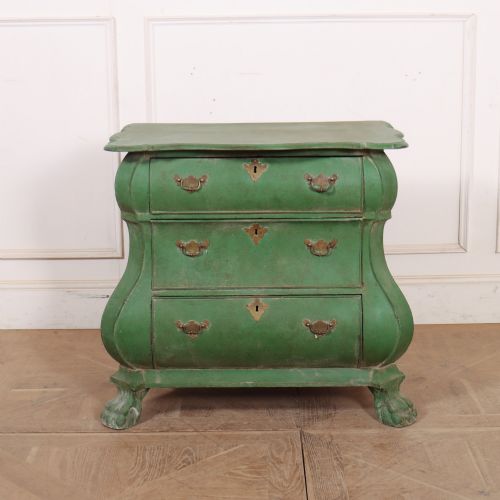
These rococo painted drawer chests combine sweeping serpentine fronts with decorative painted surfaces, offering both storage and strong visual character.
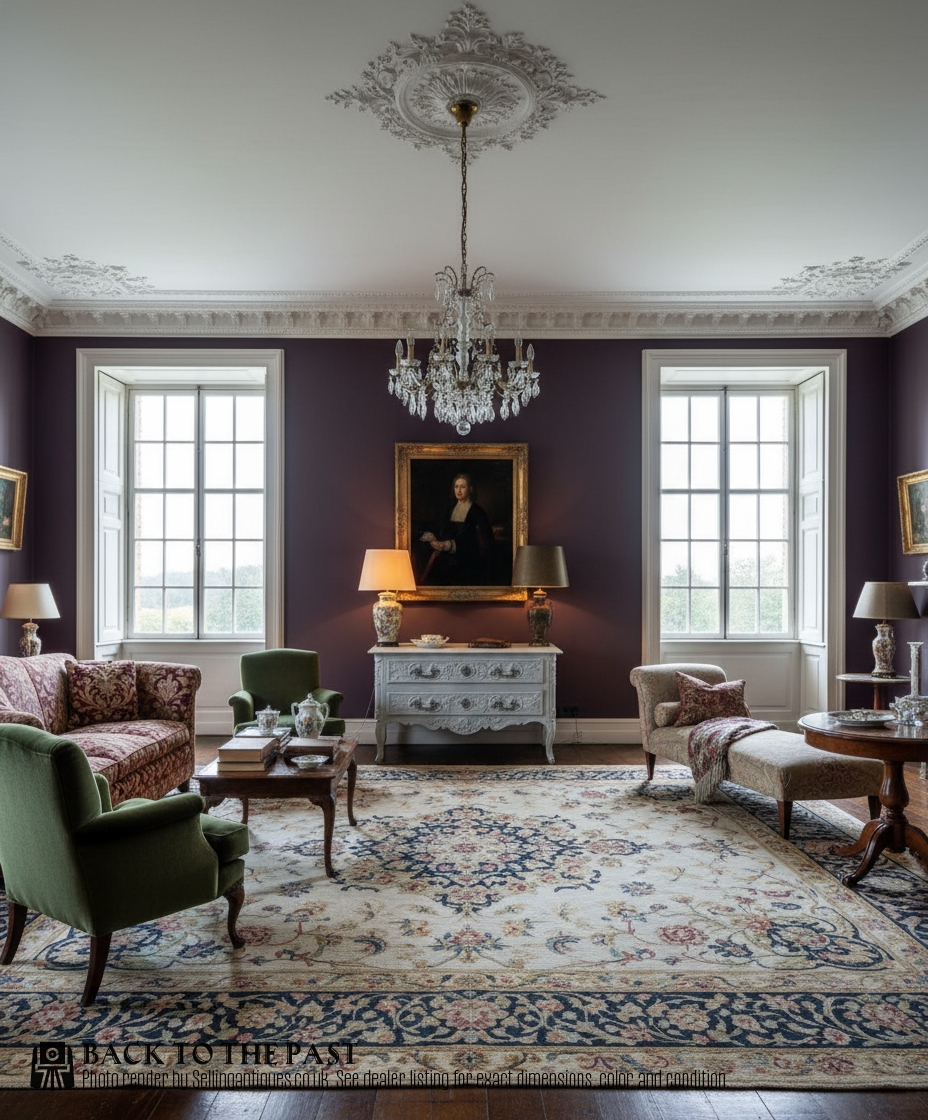
Rococo Painted Drawer Chest
A rococo painted drawer chest brings together the asymmetrical, curvaceous forms of the eighteenth century and subsequent revival periods with decorative painted finishes. Buyers encounter forms ranging from full-sized commodes to smaller bedside chests.
Continental European workshops dominate the selection, with Dutch, French, Italian, German, Scandinavian and Portuguese examples appearing across the inventory. These pieces utilise serpentine, bombe or straight fronts, frequently paired with fitted marble tops.
Periods span from the mid-eighteenth century through to the early twentieth century, encompassing original period production and later revival movements such as Louis XV Revival and Italian Rococo Revival.
Materials and construction
Carpenters constructed carcasses primarily from solid woods such as oak, pine and kingwood, shaping the timber to create the characteristic undulating contours of the style. Drawers were fitted into these frames to accommodate varying storage requirements.
Surface decoration relies on paint, gold leaf and occasionally lacquer or Vernis Martin to achieve polychrome scenes, Venetian motifs or solid colour grounds. Brass and gilt-bronze mounts frequently accent the handles, escutcheons and corners.
Many commodes incorporate heavy marble slabs cut to follow the serpentine profile of the wooden top, providing a durable and decorative upper surface.
The inventory records Dutch, French, Italian, German, Danish and Portuguese origins alongside specific revival styles.
Distinctions in quality
The refinement of the painted decoration establishes much of the distinction between pieces, ranging from simple monochrome or distressed grounds to intricate multi-coloured scenes and gilded highlights. Hand-painted detail requires considerable skill from the artisan.
The complexity of the carcass carpentry also sets pieces apart, particularly the execution of extreme bombe curves and deeply serpentine fronts that demand precise joinery. Superior hardware, such as chased gilt-bronze mounts and original brass drawer furniture, elevates the overall execution.
The Rococo Painted Drawer Chest Glossary
- Bombe
- A bulging, outward-swelling profile on the front and sides of a chest of drawers. This silhouette requires advanced woodworking techniques to curve the timber successfully.
- Serpentine
- A front shape that curves inward in the centre and outward at the ends, creating a gentle wave effect. It is a defining contour of rococo case furniture.
- Commode
- A decorative low chest of drawers originating in France. These pieces frequently serve as bedside tables or principal storage furniture in principal rooms.
- Vernis Martin
- A simulated Japanese lacquer developed in France during the eighteenth century. It uses multiple layers of varnish to create translucent, highly polished decorative surfaces.
Rococo Painted Drawer Chest: Frequently Asked Questions
How do I care for painted wood?
Painted wooden surfaces require protection from direct sunlight and excessive moisture to prevent fading and cracking. Dusting with a soft, dry cloth is sufficient for routine maintenance.
Avoid chemical cleaning products that might lift or damage the historic paint layers and gilt details.
Are these chests eighteenth century?
The inventory includes examples dating from the eighteenth century alongside nineteenth-century pieces and early twentieth-century revivals. Each era employs distinct construction methods and stylistic interpretations.
Examining the timber, fixings and paint degradation helps determine the age of an individual chest.
What is a marble top commode?
A marble top commode incorporates a thick slab of stone fitted precisely to the upper contour of the wooden chest. This provides a hard-wearing surface that complements the painted frame.
Marble tops on these chests frequently follow serpentine or bombe profiles.