


Rococo Glazed Display Cabinet
A rococo glazed display cabinet brings together serpentine timber and glass to hold porcelain and silver.

Rococo Glazed Display Cabinet
A rococo glazed display cabinet takes the curved lines and asymmetry of eighteenth-century French and Dutch design and applies them to glass-fronted storage. These pieces appear most frequently from the nineteenth century, including Victorian and Edwardian revivals, alongside earlier eighteenth-century Dutch examples.
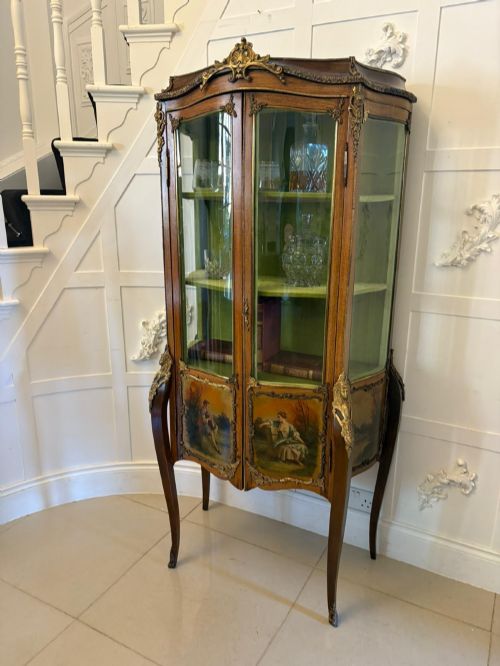
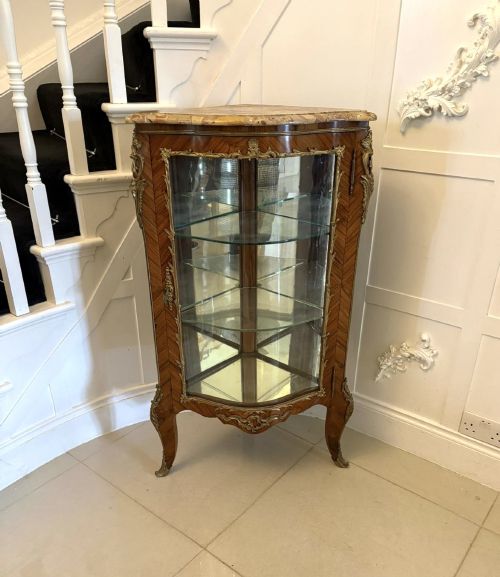
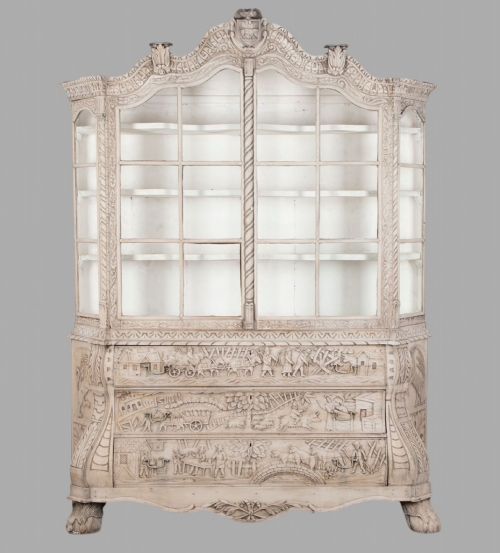
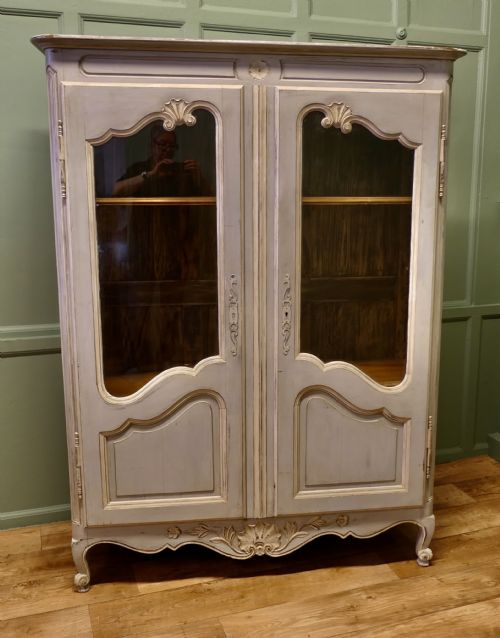
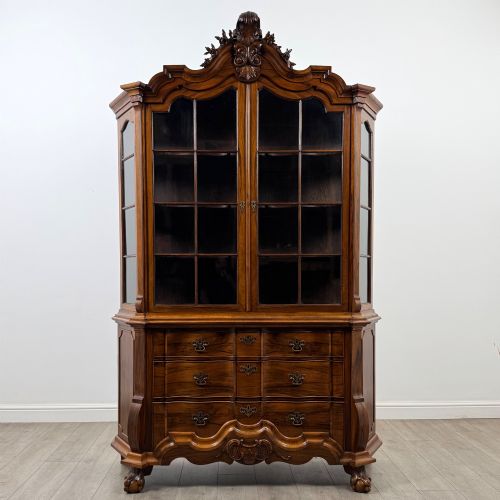
The format ranges from narrow corner cabinets and serpentine vitrines to large double-door bookcases and bombe forms on chests. Makers employed mahogany, walnut, kingwood, and painted surfaces to shape these display pieces.
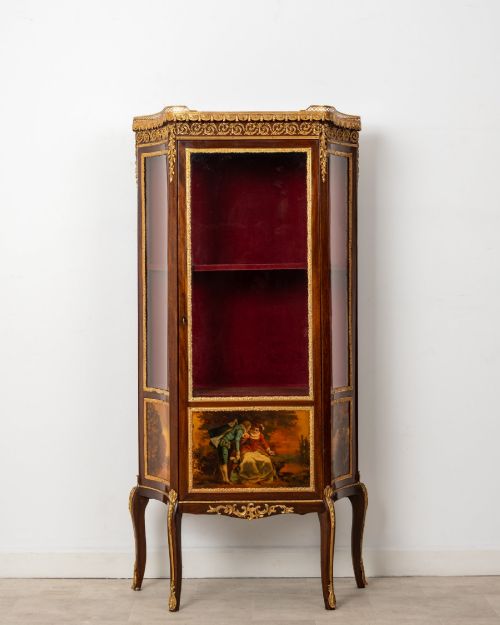
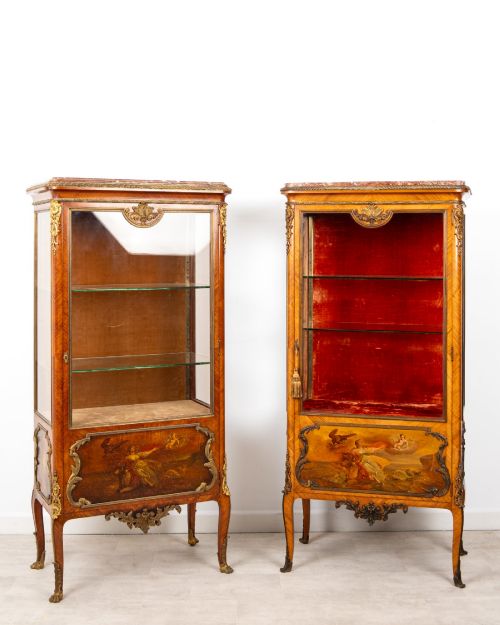
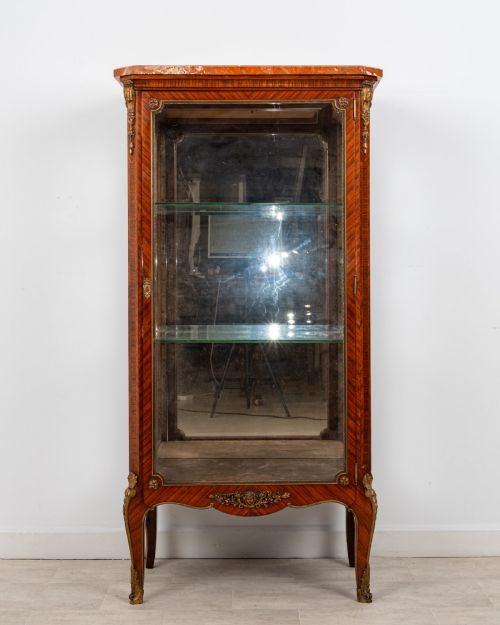
French Louis XV revival models dominate the selection, bringing together glazed sides, marble tops, and gilt-bronze mounts. Dutch interpretations favour bombé profiles and rich marquetry or painted finishes.
Materials and construction
Makers built these cabinets using supportive carcases of oak or pine faced with choice veneers such as kingwood, walnut, and mahogany. Marquetry and parquetry patterns set geometric or floral designs into the timber surfaces.
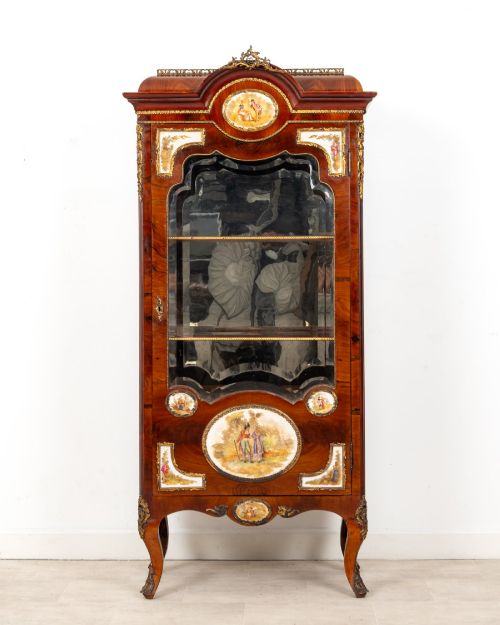
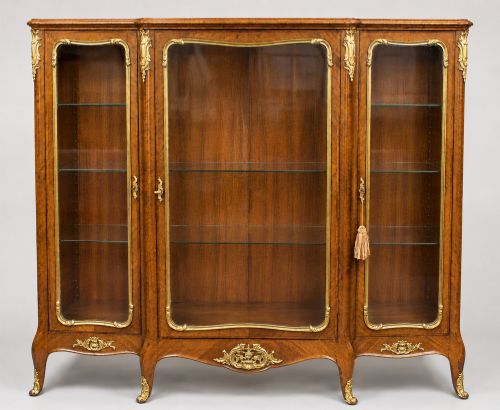
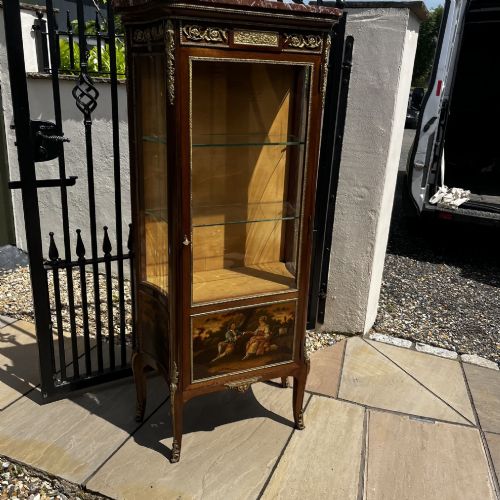
Cast ormolu mounts and gilt-bronze details frame the glass panels, corners, and apron rails. Vernis Martin painted panels often appear below the main glazing, depicting pastoral scenes in layered varnishes.
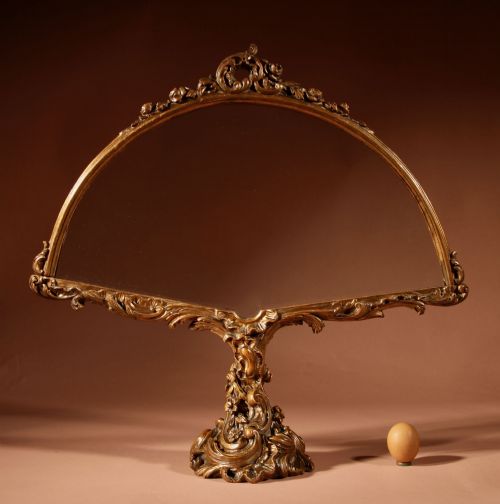
Some miniature fan display stands join the cabinets, ready for delicate silk accessories.
Execution and refinement
The weight and crispness of the ormolu mounts separate standard production from exceptional pieces. Finer cabinets display hand-chiselled detailing in the bronze rather than flat, cast-finish metalwork.
Timber selection dictates visual depth, with matched kingwood veneers and complex serpentine curves requiring advanced cabinet-making skill. The integration of marble tops and fitted porcelain plaques further distinguishes the upper tier of these cabinets.
François Linke·Gillows
The Rococo Glazed Display Cabinet Glossary
- Ormolu
- Gilt-bronze mounts applied to furniture. These decorative elements highlight the contours of the cabinet and protect vulnerable corners.
- Vitrine
- A glass-fronted cabinet designed for displaying porcelain, figures, and curiosities. The sides often feature glass panels to admit maximum light.
- Bombé
- A swelling, outward-curving profile found on Dutch and continental pieces. This shape requires specialised curved veneer work.
- Vernis Martin
- A simulated Japanese lacquer technique developed in France. It uses multiple layers of translucent varnish over painted scenes.
- Marquetry
- Inlaid wood veneers forming pictorial or geometric patterns. Artisans cut contrasting timber veneers to create these decorative surfaces.
Rococo Glazed Display Cabinet: Frequently Asked Questions
What is a rococo glazed display cabinet?
A rococo glazed display cabinet is a glass-fronted case designed to showcase decorative objects, characterised by curved serpentine lines and asymmetrical ornamentation. These pieces utilise rich veneers and gilt mounts to frame the items kept inside.
Originating as revivals of French and Dutch eighteenth-century styles during the nineteenth century, these cabinets serve both a practical storage function and a decorative role in a room.
Where should I place a vitrine?
A vitrine requires a stable position away from direct sunlight to protect antique timber veneers and fabric linings from fading. Placing the cabinet against an interior wall ensures safety from temperature fluctuations.
Because these pieces feature glazed sides and doors, positioning them near a natural light source allows illumination to pass through the cabinet and highlight the displayed contents.
How do I clean a glazed cabinet?
Cleaning antique glass and timber requires gentle methods that avoid harsh chemical sprays. Use a soft, dry cloth for dusting the wood surfaces and avoid letting moisture sit on polished veneers.
For the glass panels, apply a mild glass cleaner to a cloth rather than spraying directly onto the cabinet, preventing any liquid from seeping into the wooden frame or ormolu mounts.
How do I tell French and Dutch styles apart?
French rococo revival cabinets often lean towards slender proportions, kingwood veneers, and detailed ormolu mounts with marble tops. The lines follow smooth, flowing curves associated with Louis XV designs.
Dutch examples frequently display heavier bombé profiles, substantial walnut or oak construction, and elaborate floral marquetry or painted finishes. These pieces emphasise swelling contours and rich surface patterns.