



Rococo Glass Lantern
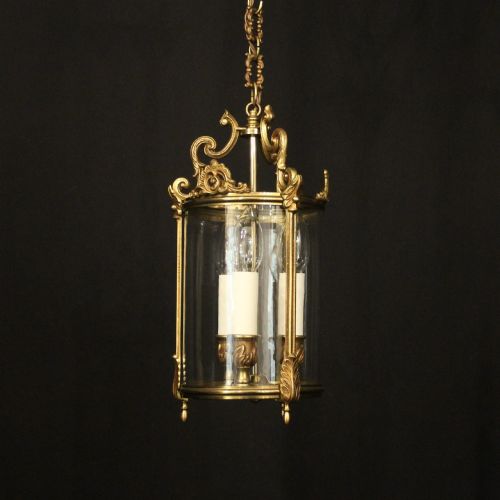
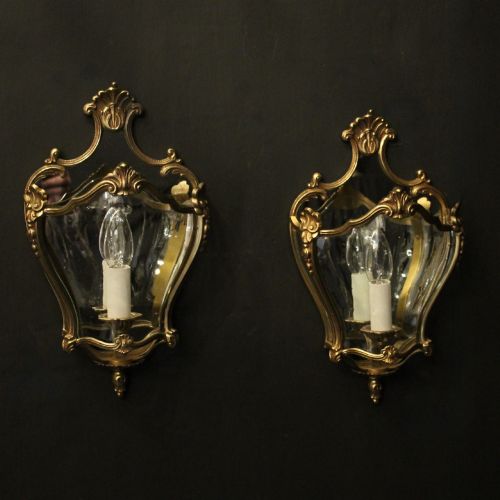
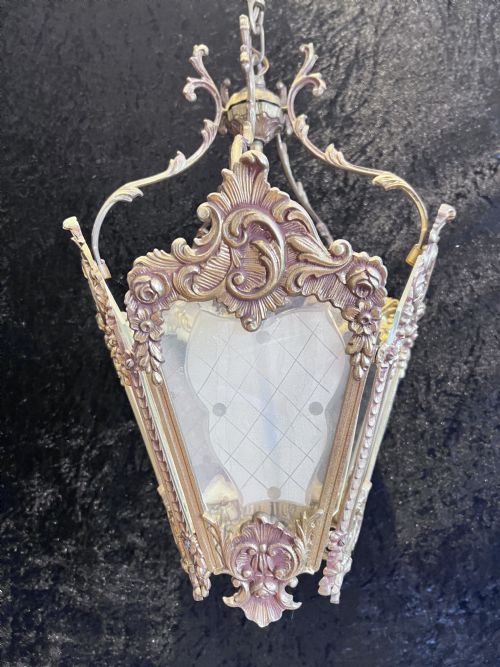
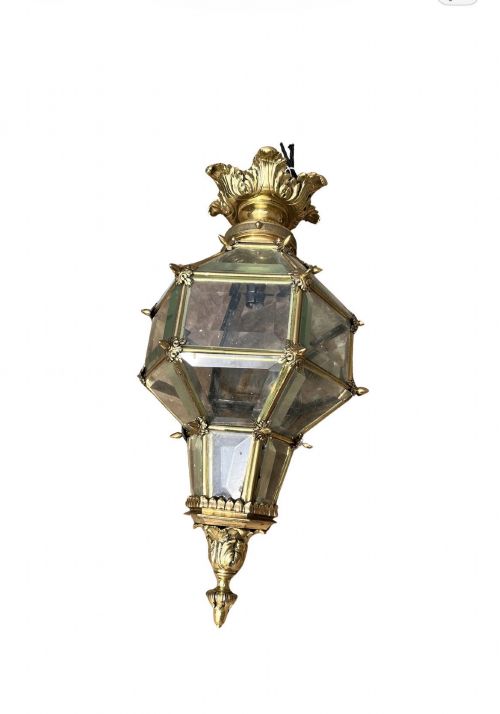
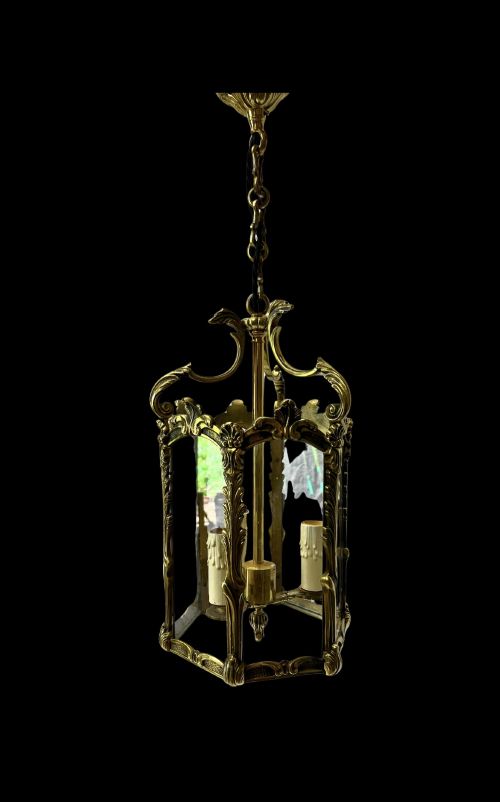
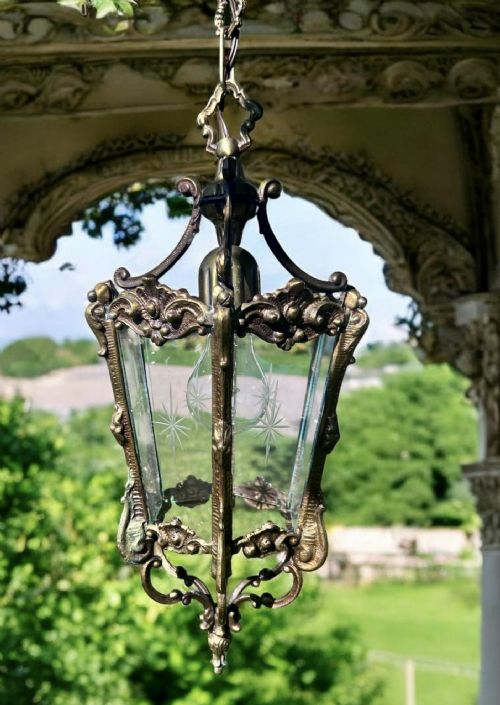
These rococo glass lantern designs combine swirling brass and bronze mounts with clear glass panels to light entrance halls with eighteenth-century flair.
Rococo Glass Lantern
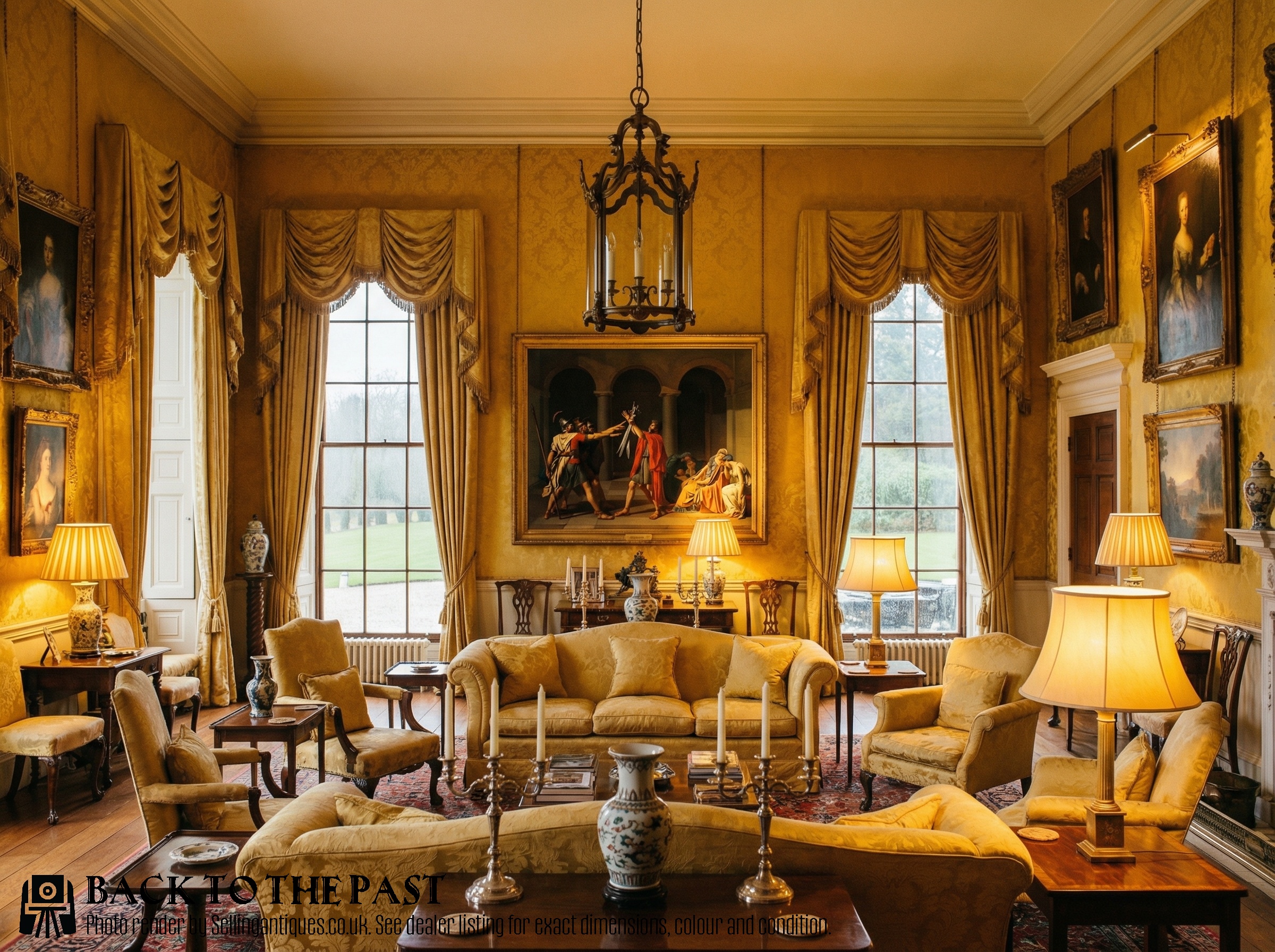
A rococo glass lantern is a hanging ceiling or hall light built in the French or Italian revival taste, drawing on earlier chateau styles for domestic interiors. The examples met on this page span the nineteenth and early twentieth centuries, running from the eighteen-nineties through the nineteen-thirties.
Makers shaped these pieces as hall lanterns, pendant lights, and wall sconces designed to hang in corridors and entrance spaces. Most pieces follow French or Italian rococo revival idioms, incorporating Louis XV style curves into domestic illumination.
Materials and construction
Workshops built the frames from brass, bronze, gilded bronze, and gilt brass, sometimes employing toleware or giltwood for specific regional variants. Glass panels - plain, bevelled, or etched - were fitted into cast metal armatures shaped with asymmetrical scrolls and leaf motifs.
Metal components were cast, chased, and gilded or silvered to catch the light from single or multiple internal lamp holders. Structural assembly relied on threaded rods and pins to secure the glass panes within the decorative metal cage.
Rococo Glass Lantern Retail Price Guide 2026
Typical asking prices for rococo glass lantern among the pieces listed under this phrase on Sellingantiques today, from the lower quarter to the upper quarter. They describe what is for sale here now, not the wider market.
Even the tiniest hexagonal hall lantern manages to pack enough scrolls and leaves into its frame to start its own private chateau.
Quality and craftsmanship
The distinction between standard production and superior work lies in the crispness of the metal casting and the depth of the chasing on the bronze or brass mounts. Finer examples display heavier gauge metalwork with sharply defined rocaille ornamentation rather than soft, repetitive machine stamping.
Quality also shows in the weight of the glass panels and the sophistication of the surface finish, such as fire-gilding or layered silvering on bronze. Well-proportioned frames maintain structural balance without awkward joints or clumsy suspension loops.
The Rococo Glass Lantern Glossary
- Rococo Revival
- A nineteenth-century design movement that revived the ornate, asymmetrical scrollwork and shell motifs of the mid-eighteenth century. This style dominated the production of decorative light fittings across France and Italy during the period.
- Gilded Bronze
- Bronze metal that has been coated with a thin layer of gold using fire-gilding or electroplating techniques. It provides a durable, warm metallic lustre that resists tarnishing.
- Bevelled Glass
- Glass panes with angled edges cut and polished to a specific slope. This technique refracts light and adds decorative dimension to the lantern sides.
- Hall Lantern
- A pendant lighting fixture specifically scaled for entryways, vestibules, and corridors. These fixtures usually feature enclosed glass panels protecting internal candle-holders or bulbs.
Rococo Glass Lantern: Frequently Asked Questions
How do I hang a heavy bronze lantern safely?
Suspension requires fixing directly into ceiling joists or using a reinforced ceiling rose capable of supporting the combined weight of cast metal and glass. Professional electricians should install a proper steel load-bearing hook independent of the electrical supply cable.
Heavier pieces demand substantial chain links and sturdy ceiling fixings to ensure the fixture hangs securely without straining the internal wiring or ceiling plaster.
Can these antique lanterns be wired for modern bulbs?
Most existing lanterns have been adapted over time with internal electrical lampholders to replace original candle or gas fittings. Rewiring allows modern low-voltage or LED lamps to be installed safely inside the metal and glass cage.
Qualified restorers can update the internal wiring while preserving original sockets, burners, and structural components wherever possible.
How do I clean glass panels without damaging the metal?
Glass panels should be removed if possible or wiped down carefully using a soft cloth and mild glass cleaner applied to the cloth rather than sprayed directly. This prevents moisture from seeping into aged bronze or brass patinas.
Harsh chemical abrasives must be kept away from gilded or silvered surfaces to preserve the original metal finish and prevent stripping the protective patination.
What is the difference between French and Italian styles?
French designs typically emphasise refined symmetry, crisply chased rocaille scrollwork, and restrained use of gilt bronze or brass. Italian variants often incorporate bolder carving, painted polychrome elements, or giltwood details alongside traditional metalwork.
Both regional traditions draw on eighteenth-century decorative vocabularies, but Italian pieces frequently display a more exuberant use of colour and carved wooden structures.