




Rococo Corner Cupboard
A rococo corner cupboard turns wasted wall space into a graceful display of carved curves, rich veneers, and fine mounts.
Rococo Corner Cupboard
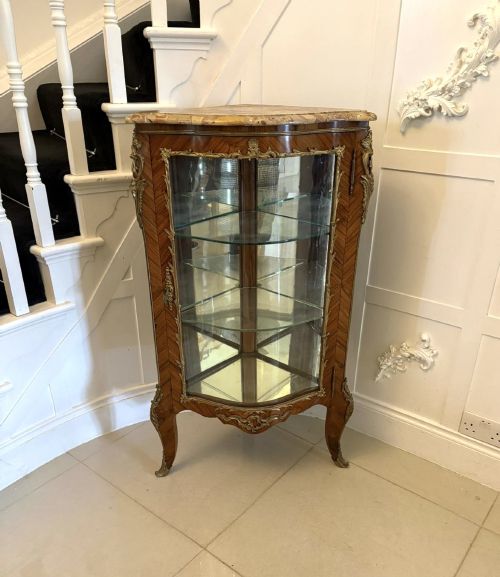
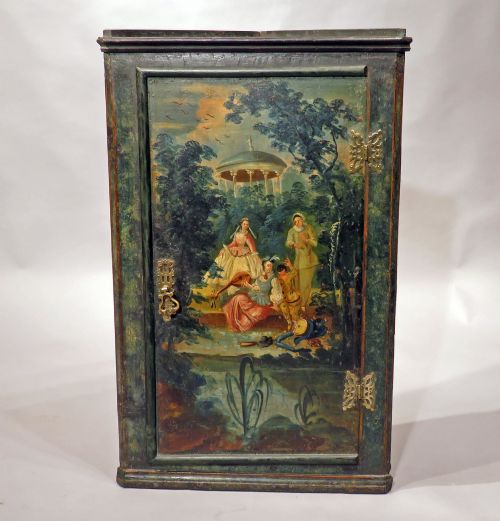
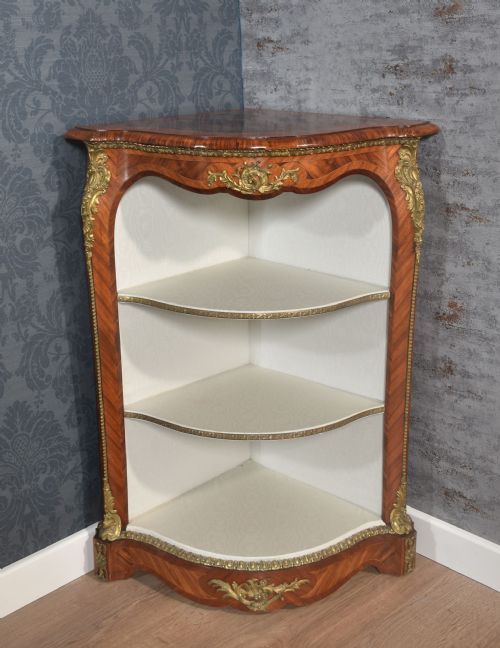
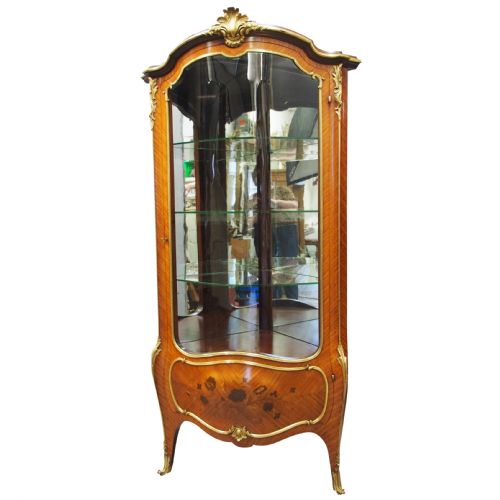
A rococo corner cupboard is a fitted cabinet designed to sit neatly into the angle of a room, combining practical storage with sweeping asymmetrical lines. When you search for a rococo corner cupboard, you encounter forms that range from hanging wall cabinets to grand serpentine display pieces standing on the floor.
Interior layouts frequently feature glazed doors or open shelving designed to showcase porcelain and glassware. These cabinets utilise the architectural geometry of a room, softening hard right angles with fluid shaping and botanical motifs.
How they were made
Cabinetmakers built these pieces using solid foundational timbers such as pine or walnut, which were then veneered with decorative woods including kingwood and tulipwood. Parquetry patterns were meticulously cut and fitted by hand to create geometric or floral arrangements across the curved surfaces.
Ornate cast or chased ormolu mounts were applied to accent the corners, aprons, and feet, following the naturalistic curves characteristic of the style. Marble tops, often shaped to follow the serpentine contour of the cabinet below, provided a durable and luxurious finish.
Painted and gilded wooden versions relied on layered pigments and gold leaf applied over gesso grounds. Glazed doors utilised leaded or fitted glass panels to protect the contents while maintaining visibility from across the room.
Listings feature both hanging wall cabinets and grand freestanding floor models, spanning the eighteenth, nineteenth, and twentieth centuries.
What varies in quality
Quality rests primarily in the harmony of the proportions and the crispness of the carving or mount work. Finer pieces demonstrate seamless veneer matching across difficult serpentine and bombe curves, where lesser examples reveal abrupt joins or flat planes.
The weight and detail of the ormolu mounts dictate much of the upper tier, with hand-chased bronze sitting far above light, pressed brass. Interior finish and the precision with which doors hang and lock without sagging also separate standard workshop output from master cabinetmaking.
The Rococo Corner Cupboard Glossary
- Ormolu
- Gilded bronze used for decorative mounts and accents. This material was widely employed on high-end French furniture to highlight structural lines.
- Serpentine
- A curved line that undulates gently, convex in the centre and concave at the sides. It creates movement across the front of a cabinet.
- Bombe
- A swollen or bulging outward curve profile seen on case furniture. This shape requires advanced woodworking skill to veneer accurately.
- Parquetry
- Geometric wood mosaic work used for decorative flooring or furniture veneers. Small pieces of contrasting timber are fitted together precisely.
- Vitrine
- A glass-fronted cabinet designed for displaying fine objects or porcelain. The glazed doors allow visibility from multiple angles.
Rococo Corner Cupboard: Frequently Asked Questions
Where should I place a corner cupboard?
These cabinets are specifically engineered to occupy the dead space where two walls meet, making them ideal for smaller rooms or awkward layouts. Positioning them away from direct sunlight protects vulnerable wood veneers and delicate painted finishes from fading.
Ensure the floor is reasonably level so that the doors hang true and latch correctly against the frame. Taller freestanding vitrines benefit from being secured to the wall for added stability.
How do I clean wooden surfaces safely?
Dust regularly with a soft, dry lint-free cloth to prevent abrasive particles from building up on the polished wood. Avoid modern aerosol polishes containing silicone, which can penetrate old finishes and attract further dirt over time.
Apply a traditional beeswax sparingly once or twice a year to nourish kingwood, walnut, or mahogany. Buff gently with a clean brush or cloth to restore a warm, natural sheen without creating buildup.
How do I tell an 18th-century piece from a later revival?
Eighteenth-century examples often show hand-cut joinery, pegged tenons, and timber shrinkage appropriate to age. The secondary woods inside, such as oak or pine, will match the expected regional sourcing of the period.
Nineteenth-century revival pieces, particularly those from the Victorian era or later, frequently employ machine-sawn elements and standardised screws. The veneers on revival work can also appear more uniform due to advanced industrial slicing techniques.