


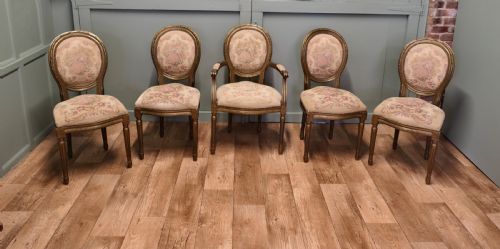
Vintage French Furniture
Vintage french furniture brings distinct Continental character to a room through centuries of cabinetmaking traditions, from rustic oak boards to polished walnut veneers.
Vintage French Furniture
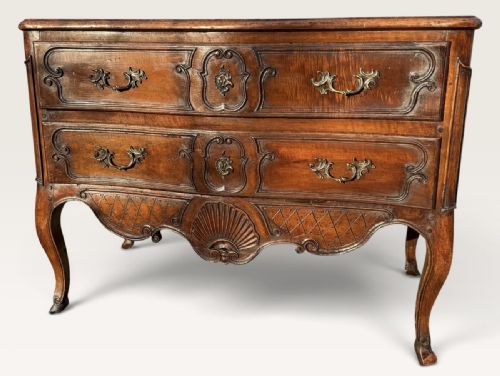
Vintage french furniture covers a wide span of domestic and garden pieces, ranging from eighteenth-century walnut commodes to nineteen-thirties art deco sideboards and iron bistro sets.
The pieces appearing most frequently on this page date from the nineteenth century and the early decades of the twentieth century, reflecting varied regional tastes and city workshops.
Buyers will encounter storage items like chests of drawers and bedside cabinets alongside dining tables, writing desks, seating, and garden furniture.
How they were made
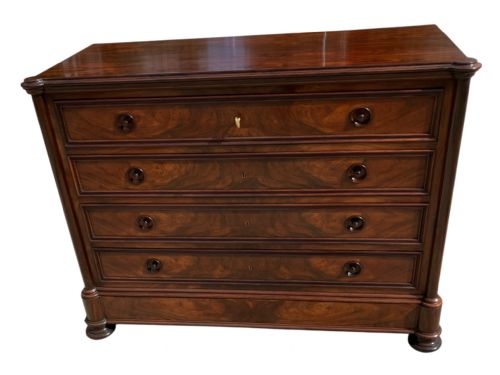
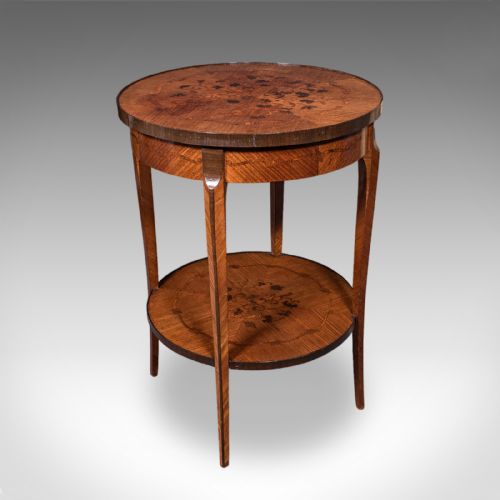
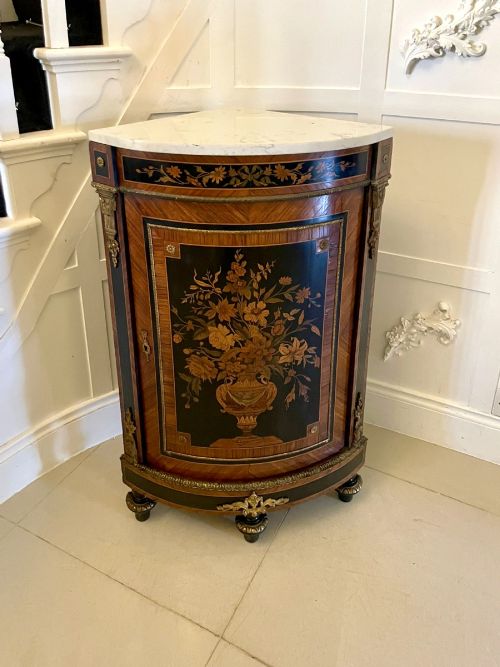
Cabinetmakers relied on substantial timbers such as oak, mahogany, walnut, and fruitwood, often applying intricate kingwood or rosewood marquetry and parquetry patterns across structural surfaces.
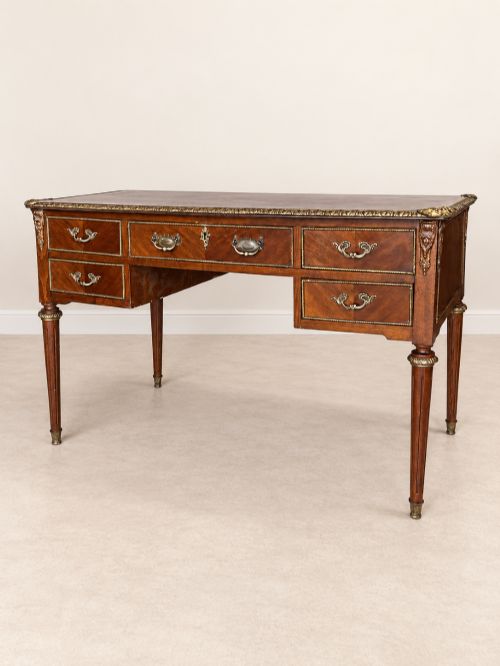
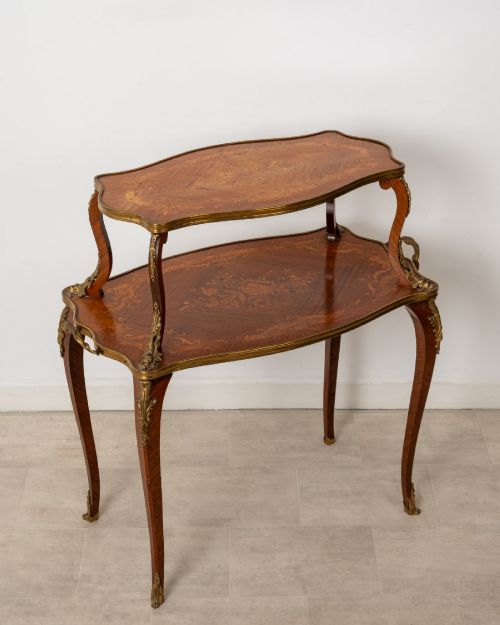
Decorative metal elements, including cast brass or ormolu mounts, added architectural definition to drawer fronts and corners, while marble tops provided durable, polished surfaces for commodes and cabinets.
Baker's racks measured up to nine feet six inches long.
What varies in quality
Quality rests upon the precision of the initial construction, the selection of figured wood veneers, and the integrity of hand-carved details or applied marquetry.
Superior examples retain their original marble tops, undamaged brass or ormolu mounts, and smooth drawer action, showing careful proportion and balanced design across revival styles.
Dubois of Lyon
The Vintage French Furniture Glossary
- Commode
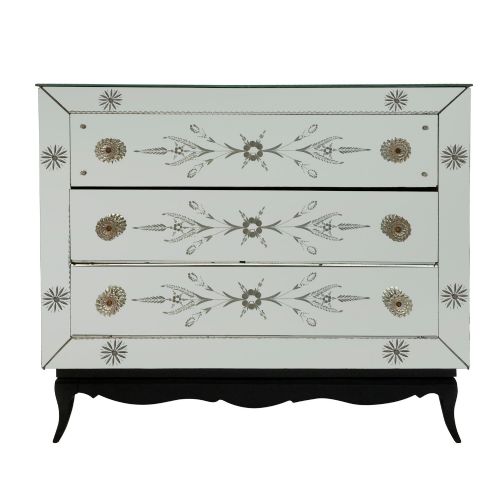
- A low chest of drawers or cabinet, often featuring a decorative marble top and serpentine front.
- Étagère
- An open piece of furniture with multiple tiers for displaying small objects or books.
- Marquetry
- The art of applying decorative pieces of veneer to a structure to form intricate geometric or pictorial designs.
- Ormolu
- Gilded bronze mounts utilised as decorative ornamentation on furniture frames and drawer fronts.
- Semainier
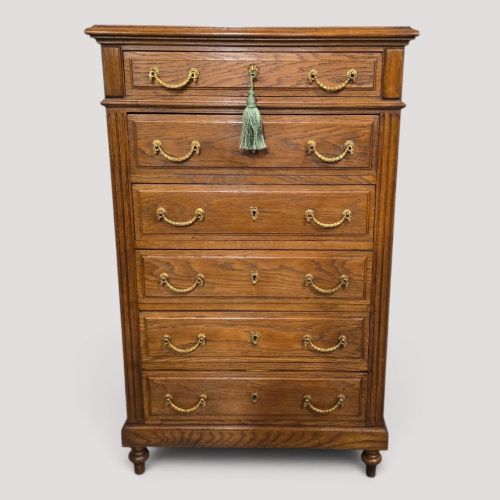
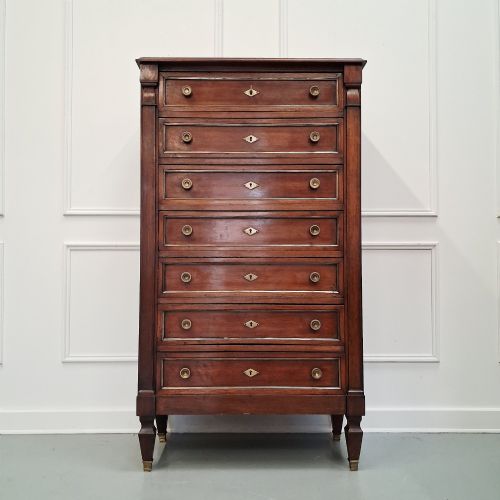
- A tall, slender chest of drawers traditionally designed with seven drawers, one for each day of the week.
Vintage French Furniture: Frequently Asked Questions
How do I identify a louis xvi style piece?
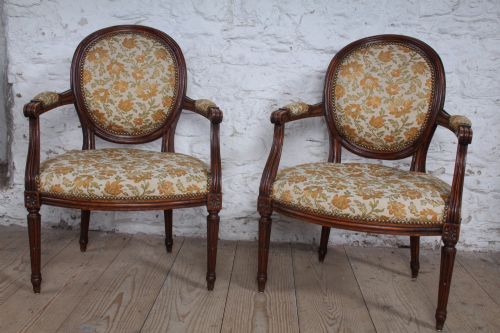
Look for straight, fluted legs, neoclassical symmetry, and restrained geometric or floral marquetry rather than the exuberant curves found in earlier rococo designs.
These characteristics reflect the architectural revival movements popular in nineteenth-century workshops.
Were marble tops original to these cabinets?
Many commodes, bedside tables, and corner cabinets were paired with fitted marble tops to provide a durable, decorative surface for daily use.
Rouge and white marble varieties are commonly seen across nineteenth-century and early twentieth-century examples.
What is the difference between art deco and earlier styles?
Art deco pieces from the nineteen-thirties favour streamlined geometric forms, smooth walnut or rosewood veneers, and minimal ornamentation compared to heavily carved nineteenth-century revival furniture.
This modern aesthetic prioritises clean silhouettes and functional elegance.
Can I use these garden sets outdoors?
Cast-iron and wood garden tables, chairs, and bistro sets were built to withstand outdoor conditions, utilising durable weather-resistant materials.
Over decades of exposure, iron frames often develop an authentic patina while retaining their structural integrity.