


French Walnut Storage Chest
A French walnut storage chest brings architectural warmth and practical depth to a room, uniting rich grain with traditional craftsmanship.
French Walnut Storage Chest
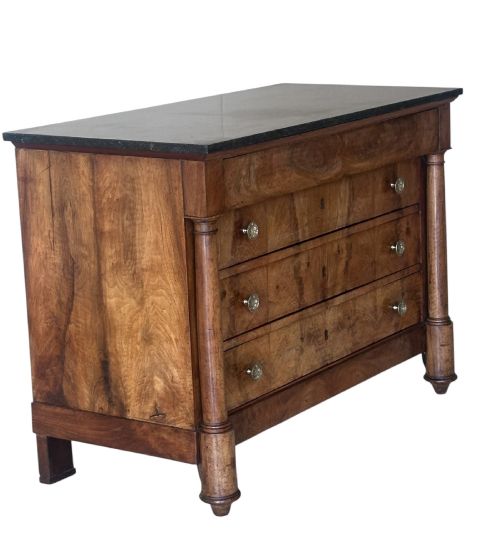
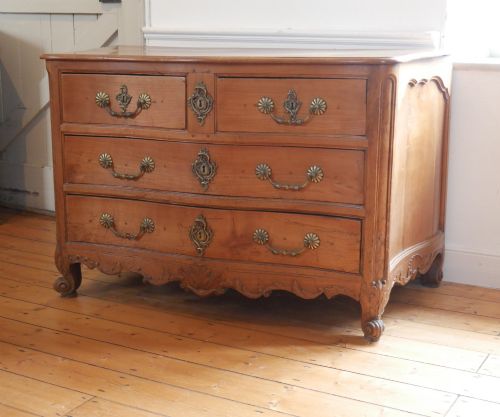
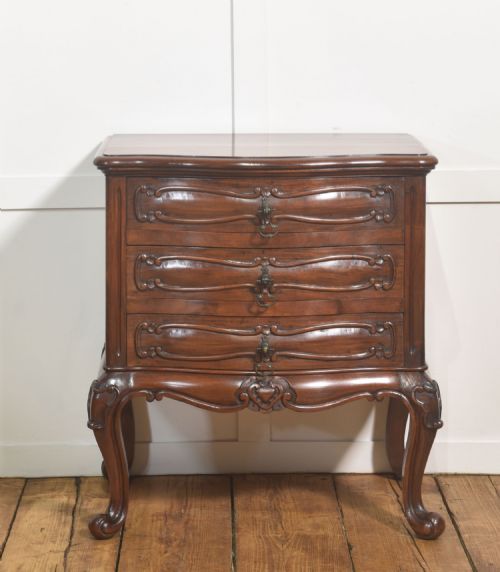
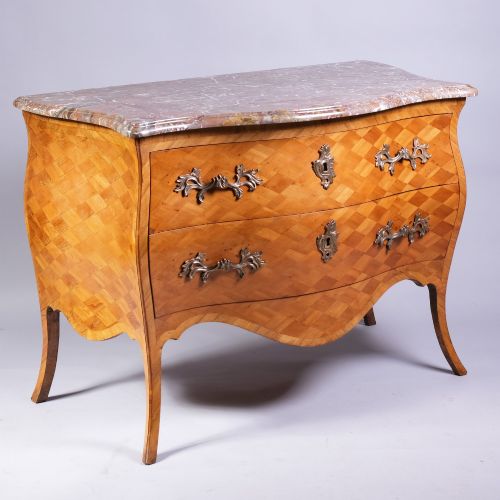
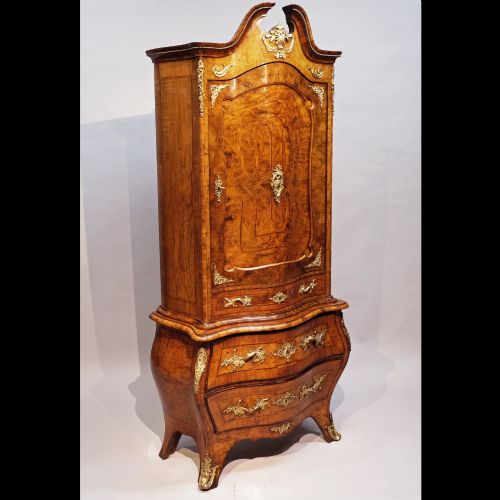
A French walnut storage chest typically takes the form of a commode, a cabinet, or a serpentine chest of drawers designed for domestic utility and formal display. These pieces span from the 18th century through the 19th century and into the early 20th century, representing regional French provincial workshops as well as metropolitan cabinet-makers.
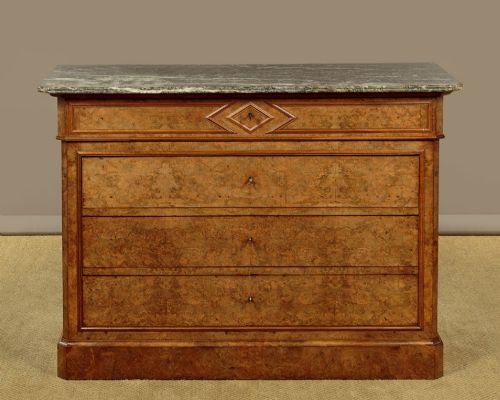
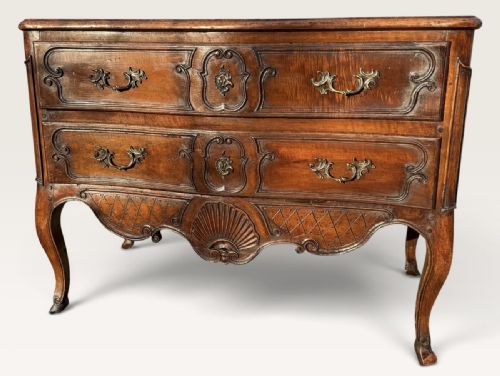
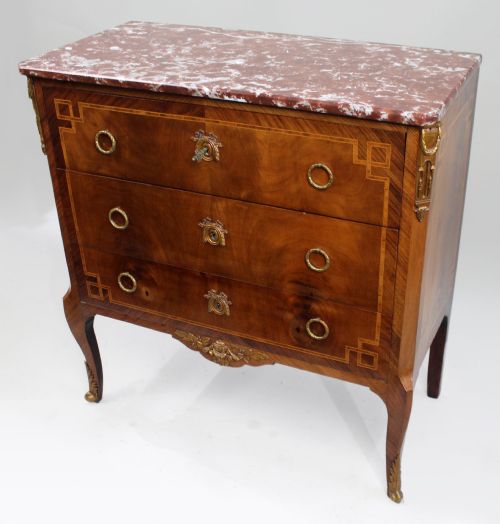
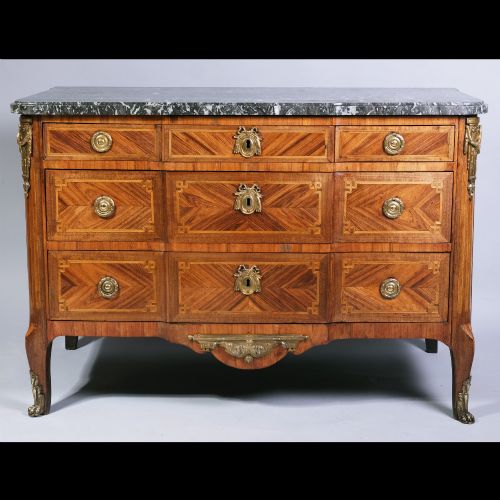
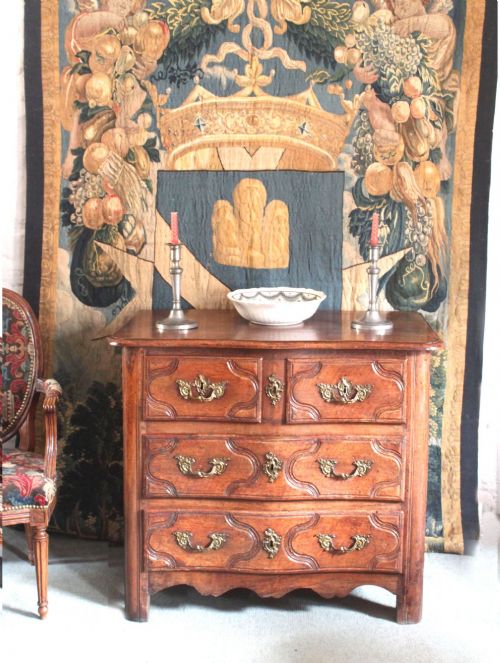
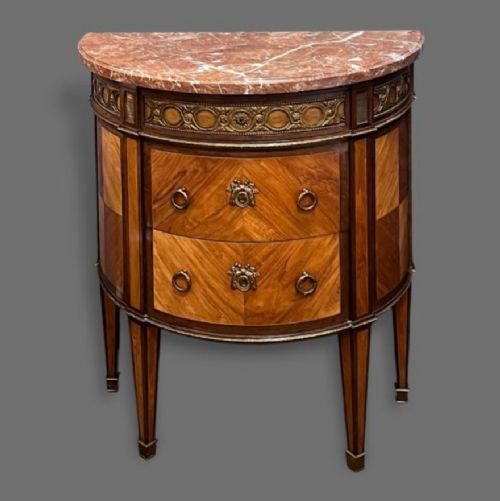
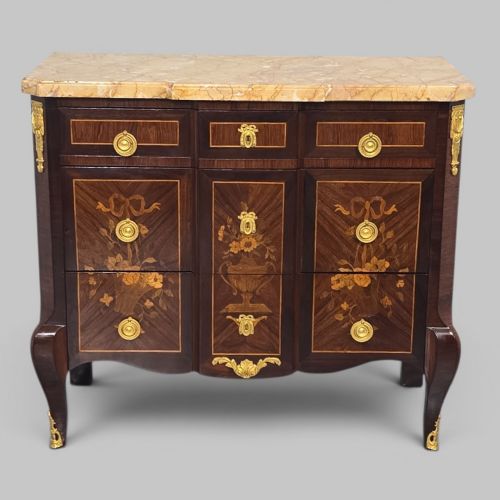
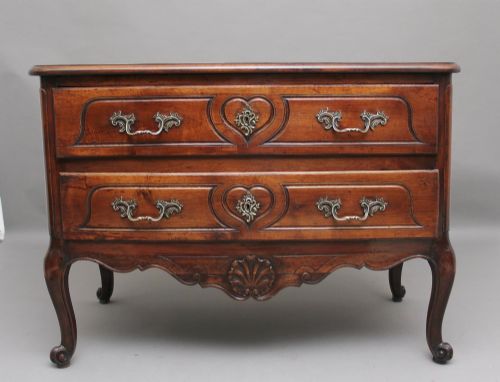
The version most commonly encountered on this page is the commode, frequently finished with a grey or rouge marble top and fitted with generous drawer space. Regional country pieces and refined Louis XV or Louis XVI revival models appear alongside dough bins and bedside tables, showing the breadth of walnut furniture produced across France.
Makers and provincial joiners utilised walnut for its dense grain and capacity to hold crisp carving, whether shaping a simple country front or laying intricate parquetry. Buyers select these items to anchor a room with period character while supplying enclosed storage for linen, tableware, or daily belongings.
How they were made
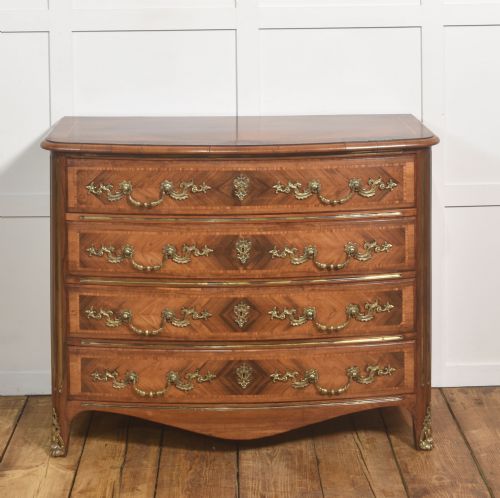
Cabinet-makers constructed these pieces using solid walnut and burr walnut veneers applied to secondary woods, often arranging grain patterns in geometric parquetry or floral marquetry. Drawer linings typically employ oak or pine, joined with hand-cut dovetails that indicate the age and origin of the carcase.
Many chests integrate inset marble tops in shades of grey or rouge, secured to the timber frame to provide a durable and cool horizontal surface. Brass and ormolu mounts, keyplates, and handles complete the construction, fastened to the drawer fronts to accent the natural warmth of the timber.
Some provincial pieces retain secret compartments hidden behind carved aprons, designed to keep family treasures safe from wandering hands.
What varies in quality
The standard of a French walnut storage chest rests upon the precision of its timber selection and the complexity of its surface decoration. Pieces featuring matched burr walnut veneers, intricate parquetry, or finely cast ormolu mounts stand apart from simpler provincial items through their decorative ambition.
Structural integrity also defines the tier of a piece, seen in the smoothness of drawer movement, the crispness of serpentine shaping, and the original pairing of the marble top to the base. Untouched patination and well-preserved timber figurework elevate an example above later alterations or heavy restorations.
The French Walnut Storage Chest Glossary
- Commode
- A low chest of drawers or cabinet developed in France during the late 17th century. It serves as both a decorative console and a practical storage unit in living spaces or bedrooms.
- Serpentine
- A furniture front or top shaped with a curving contour that bulges outward in the centre and recesses inward at the sides. This technique demands high skill from the cabinet-maker.
- Parquetry
- Geometric patterns formed by fitting small pieces of wood veneer together on a surface. It appears frequently on the drawer fronts and tops of 18th-century and revival commodes.
- Ormolu
- Gilded bronze mounted onto furniture as decorative handles, feet, or escutcheons. It provides a bright metallic contrast to dark walnut and burr veneers.
- Marquetry
- The art of applying decorative pieces of veneer to a carcase to form pictorial or abstract designs. Walnut and lighter fruitwoods combine to create subtle tonal contrast.
French Walnut Storage Chest: Frequently Asked Questions
How do I identify a commode?
A commode is a low chest of drawers, often distinguished by wide proportions and decorative hardware on the drawer fronts.
Many examples feature shaped aprons and marble tops, setting them apart from standard tall chests of drawers.
Where were these chests placed?
These pieces functioned primarily in formal salons, dining rooms, and private bedchambers for storing linens or personal items.
The finished marble surface also allowed them to hold decorative objects, lamps, or ewers.
Are marble tops original?
Many commodes retain their original grey or rouge marble slabs, shaped to match the serpentine or straight contours of the carcase beneath.
Close inspection of the rebate and underside reveals how the stone rests upon the timber frame.
How do I care for walnut?
Walnut benefits from stable room humidity and protection from direct sunlight to preserve the depth of the grain and prevent timber movement.
Regular dusting with a dry cloth keeps the surface clean without requiring heavy polishes.