







Antique Corner Bookshelf
An antique corner bookshelf uses wasted room to hold volumes while bringing rich mahogany, walnut, and rosewood into your study.
Antique Corner Bookshelf
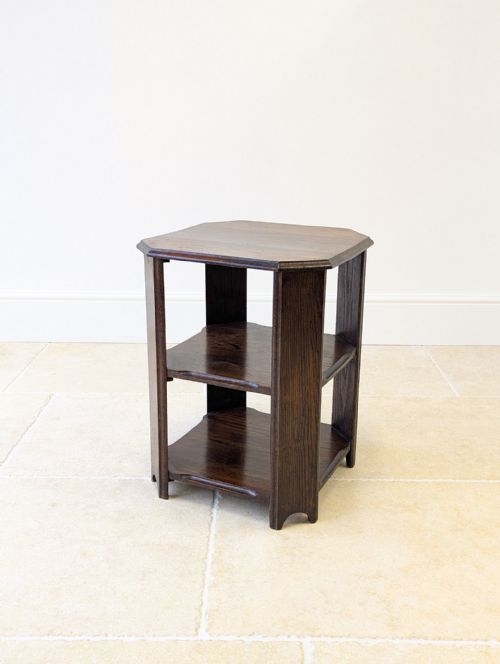
An antique corner bookshelf turns dead space into useful display area by fitting snugly into room angles. The pieces found here span the Victorian, Edwardian, and Regency periods, utilising rich timbers like mahogany, walnut, and rosewood.
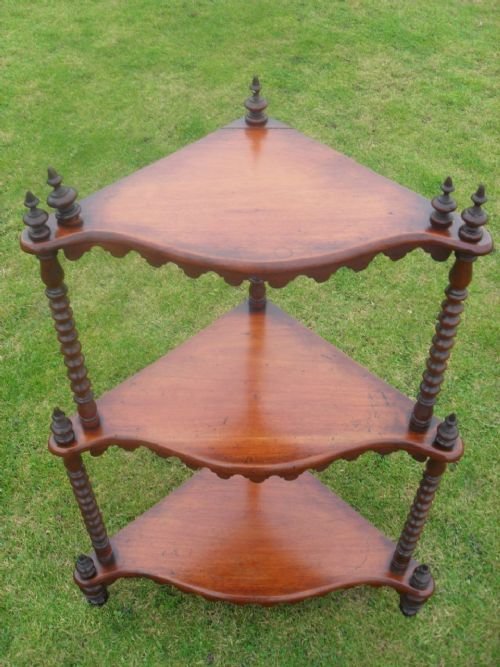
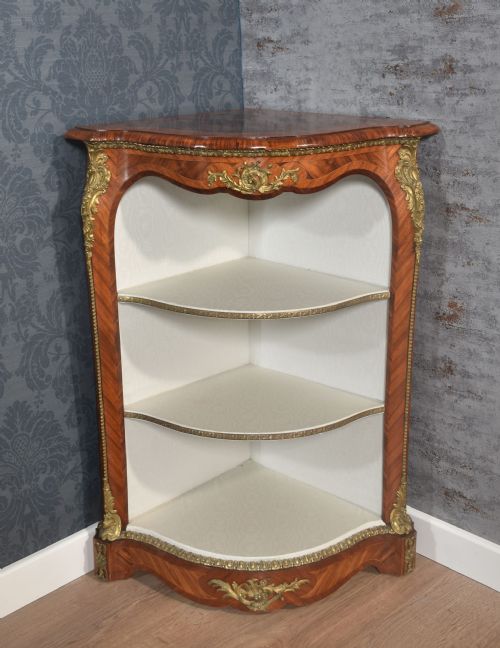
Most examples take the form of multi-tiered whatnots, etageres, and corner cabinets rather than strictly standard bookcases. They combine open shelving for books with enclosed cupboards or serpentine fronts for other household storage.
Makers designed these items from the early nineteenth century through the early twentieth century to suit drawing rooms and country houses. You will encounter three-tier and four-tier shelving alongside inlaid corner cabinets and glazed display stands.
How they were made
Cabinetmakers constructed these shelves using solid and veneered timbers including burr walnut, satinwood, and kingwood. They added brass details, ormolu mounts, and delicate inlaid woodwork to enhance the polished surfaces.
Tiered etageres and whatnots rely on turned or carved upright supports to separate the multiple shelves securely. Cupboards incorporated into the lower sections utilised pegged joints and fitted doors to conceal interior storage space.
Antique Corner Bookshelf Retail Price Guide 2026
Typical asking prices for corner bookshelf among the pieces listed under this phrase on Sellingantiques today, from the lower quarter to the upper quarter. They describe what is for sale here now, not the wider market.
The listings span from 1800 to 1910, incorporating Regency, Victorian, and Edwardian styles in mahogany, walnut, and rosewood.
What varies in quality
Quality shows in the choice of timber figure, such as richly patterned burr walnut or deeply grained rosewood veneers. Finer examples display intricate inlay work, exhibition-quality carving, and robust ormolu mounts.
Construction standards differ between standard domestic items and exhibition pieces featuring serpentine fronts and integrated cupboards. The crispness of turned supports and the tightness of corner joints separate the ordinary from the exceptional.
The Antique Corner Bookshelf Glossary
- Whatnot
- A piece of furniture with multiple open shelves used for displaying books and ornaments. These multi-tiered stands became popular during the nineteenth century.
- Etagere
- A set of tiered shelves for small objects and volumes. This French form offers light, open display space.
- Ormolu
- Gilt bronze mounts applied to furniture for decoration. This technique adds metallic contrast to dark woods.
- Burr walnut
- Wood taken from walnut tree growths that produces intricate, swirling grain patterns. Cabinetmakers used these veneers on high-end pieces.
- Serpentine front
- A curved furniture front shaped in a convex-concave-convex wave. This sophisticated joinery appears on select Victorian items.
Antique Corner Bookshelf: Frequently Asked Questions
Where should I place a corner bookshelf?
These items fit neatly into unused room angles to maximise floor space without crowding the interior.
They work particularly well in studies, drawing rooms, and hallways where books and display objects require compact storage.
How do I clean mahogany shelves?
Dust the timber regularly with a soft, dry cloth to prevent dirt accumulation on the polished surfaces.
Apply a quality beeswax occasionally to nourish the wood and maintain its natural lustre without using harsh modern chemical polishes.
How can I date my corner bookshelf?
Examine the primary timber, construction methods, and decorative styles to determine the era of manufacture.
Pieces labeled as Regency feature simpler classical lines, while Victorian and Edwardian examples frequently incorporate elaborate burr walnut veneers and detailed inlay work.