


Brown Corner Shelves
Brown corner shelves bring practical tiering to neglected corners, combining the utility of open display with the rich tones of mahogany, walnut, and olive wood.
Brown Corner Shelves
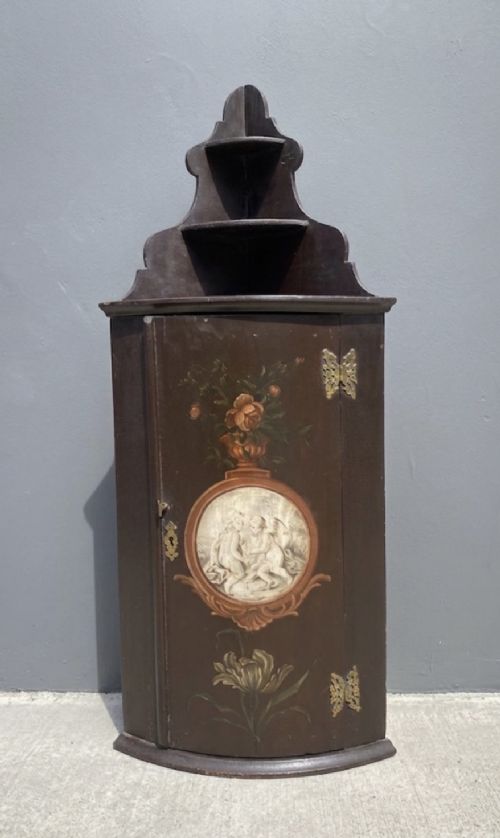
When you search for brown corner shelves, you enter a territory defined largely by multi-tiered whatnots, etageres, and corner cupboards. These pieces occupy right angles in a room, turning unused junctions into display space for books, ceramics, and ornaments.
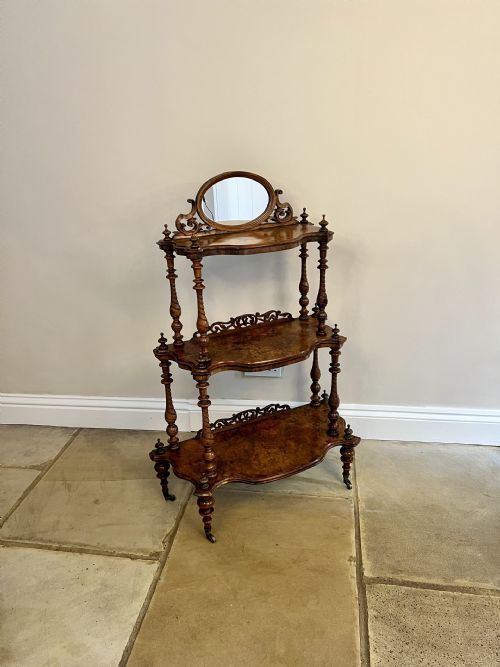
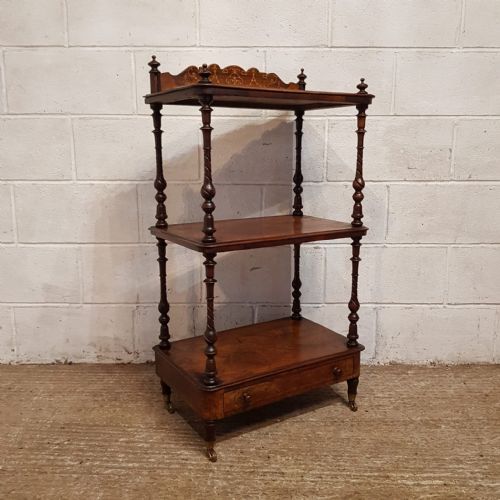
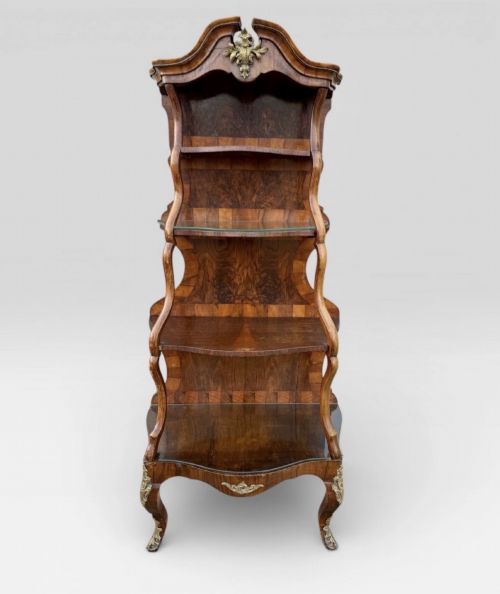
The specimens on this page lean heavily towards Victorian and Georgian examples, rendered in dense hardwoods like mahogany and burr walnut. You will encounter multi-tiered standing shelves alongside wall-mounted brackets and cabinets with glazed or open fronts.
Origins stretch from English workshops to French provincial cabinetmakers and Italian Sorrento workshops, reflecting domestic needs across the eighteenth and nineteenth centuries. Form follows function closely, with stacked platforms designed to utilise vertical space efficiently.
Markers of Quality
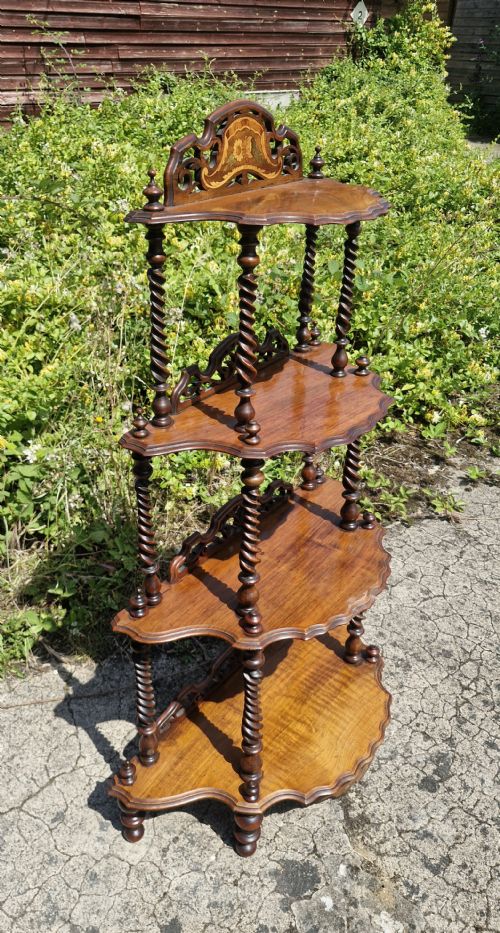
The grade of a piece rests on the choice of timber, particularly the liveliness of the burr walnut veneer or the depth of the mahogany grain. Finely figured surfaces and crisp inlay work separate ordinary utility furniture from pieces made for formal reception rooms.
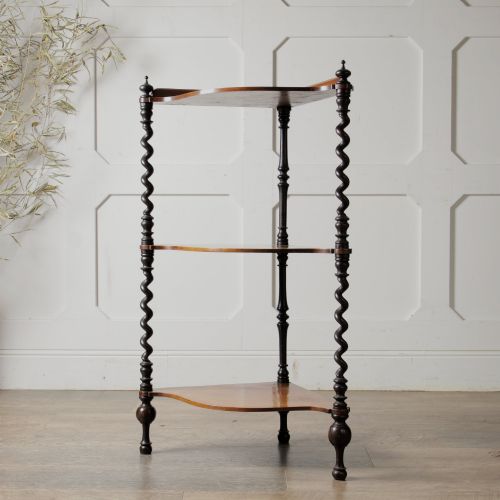
Joinery execution defines the longevity of these items, seen in the tightness of corner joints and the turning of barley twist columns. Original surfaces unmarred by heavy restoration retain the crispness intended by the cabinetmaker.
Some Victorian corner units feature hollow barley twist columns that somehow survived generations of enthusiastic dusting.
Liberty & Co.
The Brown Corner Shelves Glossary
- Whatnot
- A tiered movable set of shelves used for displaying ornaments or books. Originating in the eighteenth century, it became a staple of Victorian parlours.
- Etagere
- A piece of furniture consisting of a set of open shelves for displaying small objects. It shares much with the whatnot but often emphasises lighter, decorative framing.
- Barley twist
- A type of turning shaped like a helix, resembling a twisted rope or barley sugar. This decorative motif appears frequently on nineteenth-century upright supports.
- Burr walnut
- Wood taken from the warted excrescence of a walnut tree, yielding highly figured, swirling grain patterns. Cabinetmakers prized it for veneering prominent surfaces.
- Sorrentoware
- Woodwork featuring micro-mosaic inlay, originating from the Italian town of Sorrento. Olive wood pieces often display this intricate geometric marquetry.
Brown Corner Shelves: Frequently Asked Questions
What is a brown corner shelf?
A brown corner shelf is a tiered display unit or cupboard designed to fit flush into the ninety-degree junction of two walls. These pieces maximise room space while providing platforms for ornaments and books.
They appear primarily in mahogany and walnut across Victorian and Georgian periods, ranging from simple open wooden tiers to glazed cabinets.
How were corner shelves used historically?
In period homes, these shelves held porcelain, small clocks, and bound volumes in spaces that lacked the floor area for bulkier furniture. Their multi-tiered design kept everyday display items accessible yet orderly.
Drawing rooms and parlours utilised them to break up bare wall junctions without obstructing traffic flow through the room.
How do I date a corner shelf?
Dating relies on timber choice, construction methods, and stylistic cues such as barley twist uprights or inlay techniques. Georgian pieces tend to show restrained mahogany joinery, while Victorian examples often feature burr walnut veneers and multi-tiered turning.
Hardware, screw types, and secondary woods inside drawers or backing boards also offer clues to the decade of manufacture.
Can corner shelves support heavy items?
Most antique corner shelves were built for lighter decorative objects, ceramics, and books rather than heavy architectural loads. Floor-standing whatnots offer greater stability than wall-mounted brackets.
Checking the integrity of the upright supports and wall fixings helps determine safe weight limits for modern display use.