
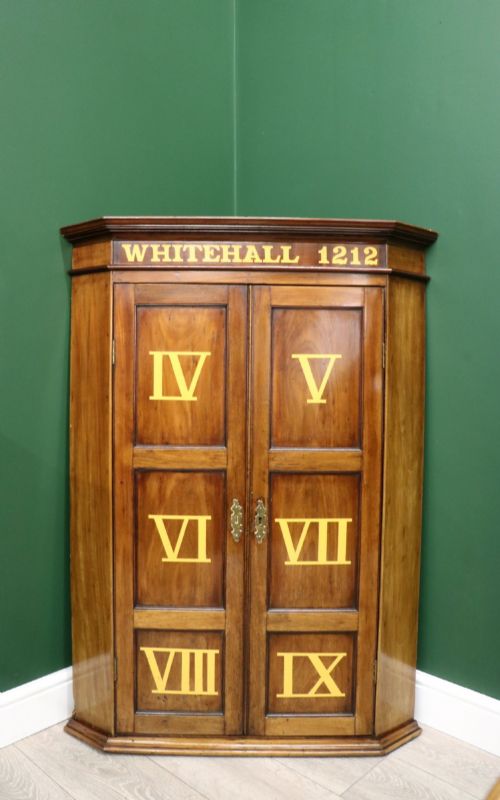
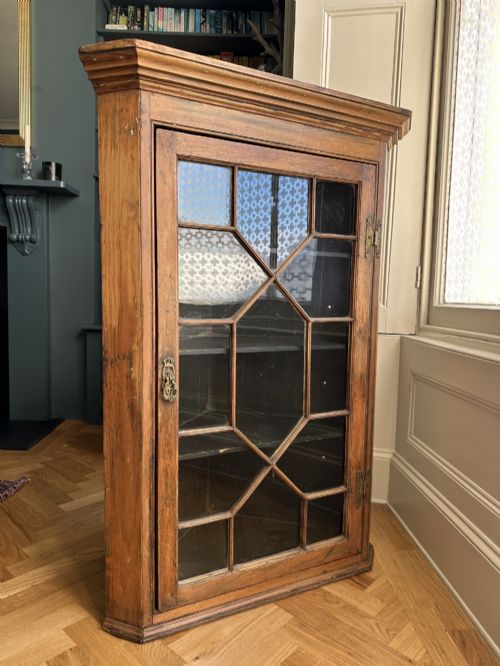
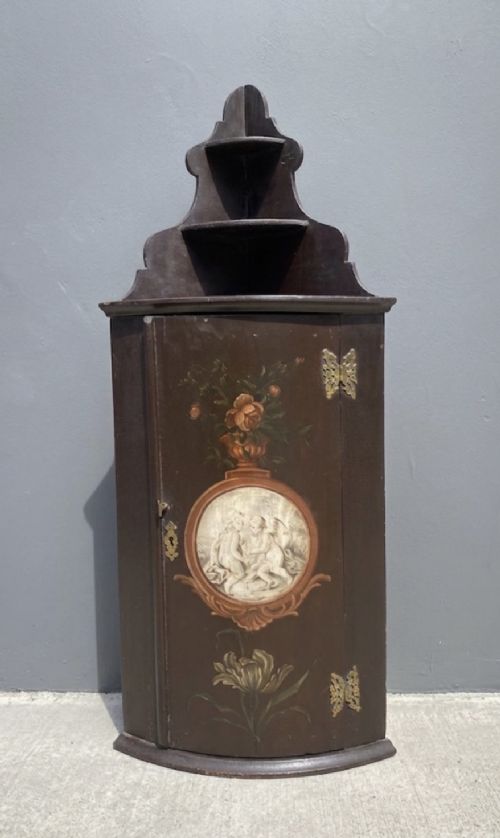


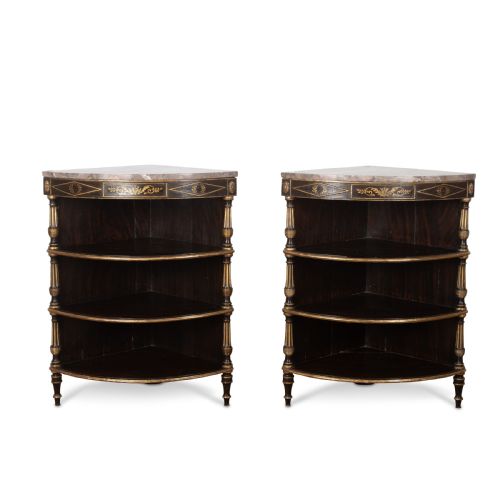

Painted Wood Corner Cabinet
These painted wood corner cabinet examples bring period character to awkward spaces, offering clever storage shaped specifically to fit a room's junction.
Painted Wood Corner Cabinet
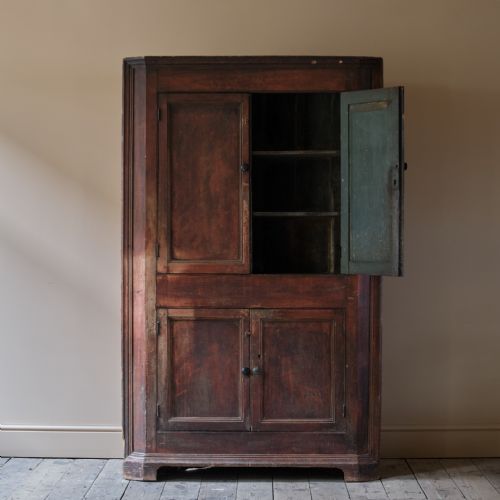
A painted wood corner cabinet uses wall junctions efficiently, providing internal shelving while occupying minimal floor space. The form ranges from wall-mounted units to tall cupboards resting on the ground.
The pieces appearing on this page span several centuries, led by Georgian and nineteenth-century examples alongside earlier continental European works. Makers adapted the triangular footprint for diverse domestic uses, creating storage and display vessels alike.
Regional variations include Scandinavian folk art designs, Italian baroque and rococo forms, and British country pieces. Buyers frequently encounter pine or hardwood carcasses finished with decorative paint schemes.
How they were made
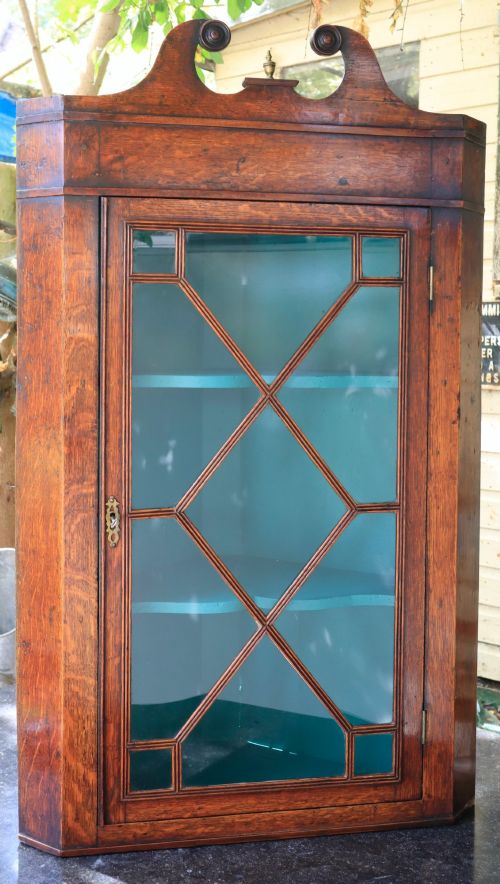
Carpenters constructed the carcasses primarily from pine and various woods, often employing sturdy dovetail joints and fielded panels. Glazed doors or solid timber doors secured the frontal aperture, complemented by brass hardware.
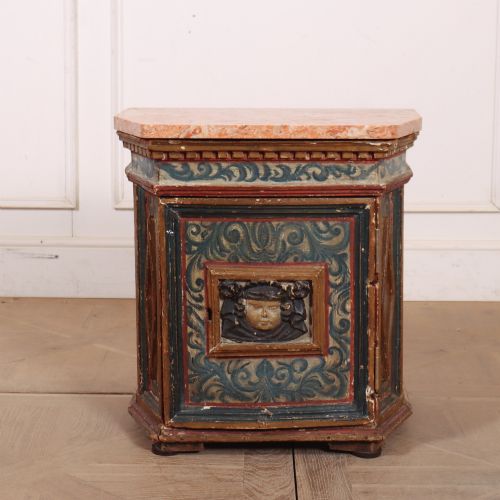
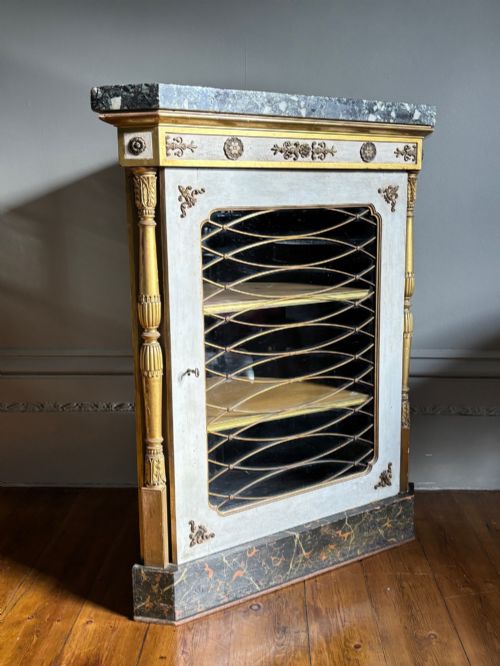
Surfaces received decorative treatments involving layered paint, sometimes featuring intricate Italian motifs, Chinoiserie scenes, or simple folk art patterns. Interior spaces occasionally retained contrasting painted finishes or accommodated glass shelving for display.
One eighteenth-century Italian apothecary cabinet evidently held remedies long before reaching the corner of a modern room.
What varies in quality
The integrity of the original paint surface distinguishes superior examples from later repainted surfaces. Hand-painted detailing and untouched historical patination hold greater interest for collectors than utilitarian modern refinishing.
Structural refinement shows in the precision of the mitred joints and the alignment of the doors within the triangular frame. Superior hardware, such as original brass hinges and escutcheons, indicates higher workshop standards.
The Painted Wood Corner Cabinet Glossary
- Corner cabinet
- A storage unit designed specifically to fit into the ninety-degree angle of a room. This form maximises spatial efficiency in domestic interiors.
- Vitrine
- A glass-fronted cabinet or display case used for showing ceramics and curiosities. Many feature glazed doors to protect the contents from dust.
- Chinoiserie
- European decorative style reflecting Chinese artistic influences, popular in furniture painting during the eighteenth century. It typically depicts fantastical landscapes and figures.
- Satinwood
- A durable timber with a lustrous, golden-yellow sheen frequently utilised for fine cabinetmaking and decorative veneers. It provides a smooth canvas for painted decoration.
- Gustavian
- The Swedish interpretation of neoclassical style, characterised by restrained carving and pale painted finishes. This aesthetic appears frequently in Scandinavian case furniture.
Painted Wood Corner Cabinet: Frequently Asked Questions
Where should I place a corner cabinet?
These cabinets suit underutilised room angles, bringing architectural interest to bare corners in dining rooms or hallways. Wall-mounted versions function well above sideboards or seating.
Ensure the surrounding clearance accommodates the door swing, particularly with glazed or bow-fronted variants.
How do I clean painted wood surfaces?
Dust gently with a dry, soft microfiber cloth to prevent abrasion to historical finishes. Avoid chemical sprays, modern detergents, and excessive moisture.
Consult a conservator if the paint layers show signs of flaking or instability.
How do I identify a Georgian piece?
Georgian furniture aligns with the reigns of the Georges, exhibiting classical proportions and specific regional timbers. Look for traditional construction methods and period-appropriate paint or mahogany surfaces.
Stylistic markers often include architectural cornices and understated brass hardware.