


Red Corner Cabinet
These red corner cabinet examples bring striking colour and clever spatial economy to any room, turning unused angles into focal points.
Red Corner Cabinet
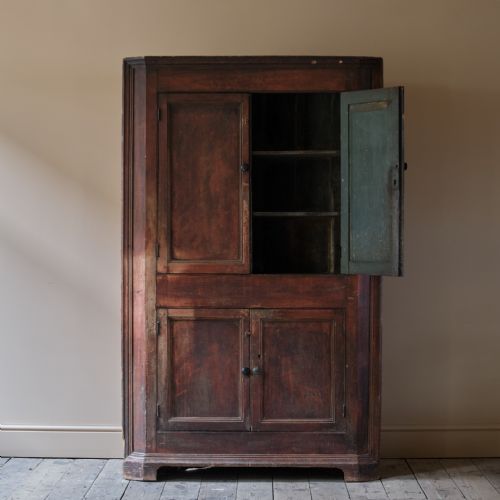
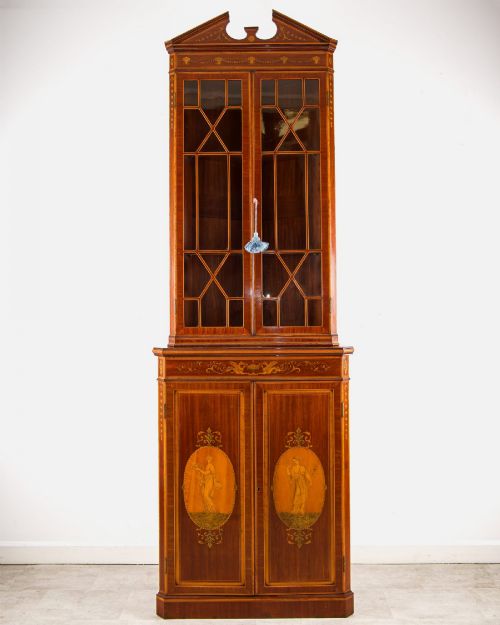
A red corner cabinet puts neglected wall junctions to work while adding a vivid splash of colour to the interior. The red corner cabinet pieces appearing here span centuries of design, moving from eighteenth-century painted finishes through to Edwardian interpretations.
Most examples take the form of corner cupboards or display cabinets, utilising wood such as pine, walnut, or mahogany beneath painted or lacquered surfaces. Makers shaped these fixtures to fit precisely ninety-degree angles, saving floor space while offering substantial storage.
The selection ranges from simple eighteenth-century painted cupboards to elaborate Edwardian chinoiserie models and Italian rococo pieces. Buyers frequently encounter variants featuring astragal glazing, brass hardware, or distinctive red walnut timbers.
Assessing quality and craftsmanship
Quality rests in the depth of the painted or lacquered finish and the crispness of any applied decoration or chinoiserie detailing. Finer examples display harmonious proportions, smooth door operations, and original brass hardware rather than later replacements.
The choice of underlying timber dictates the weight and longevity of the piece, with dense figured woods and solid construction sitting at the top of the range. Superior cabinets feature meticulous interior joinery and well-fitted shelving designed to withstand decades of use.
Red corner cabinets bring cheerful defiance to dull corners, proving that even a neglected ninety-degree angle deserves a bold splash of colour.
The Red Corner Cabinet Glossary
- Astragal glazing
- Wooden or metal bars that hold small panes of glass within a cabinet door. This technique became popular during the Georgian period.
- Bow front
- A convex, curved cabinet front that projects outward. This design adds visual softness to traditional corner furniture.
- Satinwood
- A durable, yellowish timber prized for its lustrous grain. Makers used it for fine inlay work on Edwardian and Georgian pieces.
- Rococo
- An ornate design style characterised by asymmetry and curves. Italian examples often display these flamboyant decorative flourishes.
Red Corner Cabinet: Frequently Asked Questions
How do I place a corner cabinet?
Position the unit tightly against intersecting walls where standard rectangular furniture leaves awkward gaps. These cabinets naturally anchor a room without obstructing walking paths.
Ensure the door swings clear of adjacent seating or side tables before fixing the piece securely to the wall for stability.
What items fit inside these cabinets?
Use the shelved interior to display glassware, ceramics, or collected books away from heavy dust. Glazed doors allow collections to remain visible while protected.
Solid wooden doors conceal stored tableware, linens, or household items out of sight behind the decorative red exterior.
How do I distinguish eighteenth-century pieces?
Look for hand-carved details, pegged joinery, and traditional red walnut or painted timber surfaces. Eighteenth-century construction methods often reveal tool marks on unseen interior boards.
Examine the hinges and locks for hand-forged iron or early brass work consistent with the Georgian era.
Why choose painted over wood finishes?
Painted and lacquered surfaces introduce vibrant colour and decorative narrative scenes, such as chinoiserie motifs, into an interior. They provide an alternative to standard dark wood furniture.
Natural wood grains highlight the underlying timber, whereas painted finishes showcase decorative artistry and historical surface treatments.