

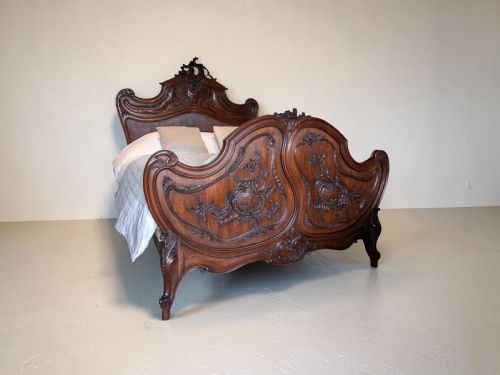


Rococo Carved Bedstead
A rococo carved bedstead brings theatrical serpentine curves and asymmetrical floral ornamentation directly into the bedroom.
Rococo Carved Bedstead
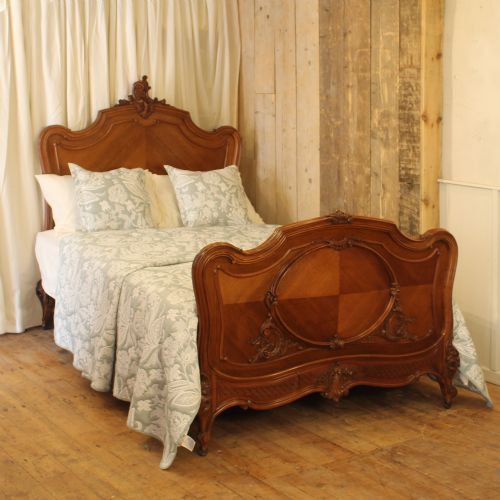
A rococo carved bedstead is a grand sleeping platform defined by sweeping scrollwork, naturalistic foliage and the characteristic asymmetry of the revival styles. These pieces range from double and king sizes to daybeds and singular headboards, originating predominantly from the late nineteenth and early twentieth centuries. Buyers seeking this aesthetic will find both French and Italian interpretations dominating the selection.
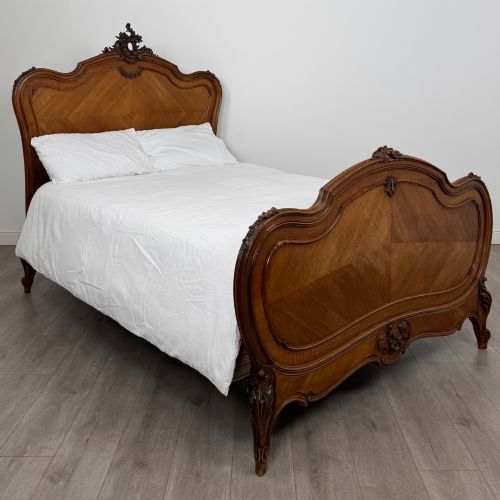
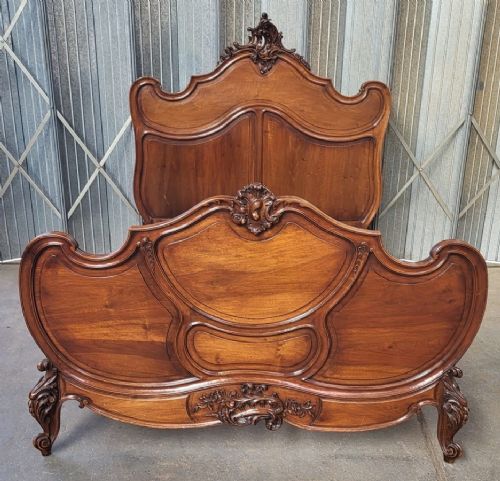
The architectural framework often draws upon Louis XV design principles, utilising expansive headboards and footboards shaped with pronounced cabriole lines. French provincial influences also appear alongside grander chateau variants in walnut, painted wood and occasionally mahogany. These beds serve as substantial focal points in period interiors without sacrificing practical proportions.
Materials and Construction
Walnut and giltwood form the structural backbone of these pieces, often shaped into intricate relief carvings depicting scrolls, shells and floral motifs. Cabinetmakers worked solid timber and applied walnut veneers over supportive cores to achieve the deep, lustrous grain patterns prized in revival furniture. Painted finishes, parcel gilt accents and bleached oak surfaces also appear across the selection.
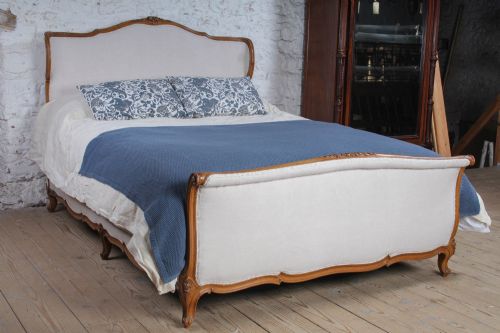
Upholstery plays a significant role in softening the ornate timber frames, frequently utilising newly applied fabric panels on headboards and daybeds. Marble tops appear on associated bedside cabinets accompanying larger bedsteads, adding utility and contrast to the carved wooden bodies. Craftsmanship relies on traditional joinery methods suited to supporting substantial proportions.
Listings feature pieces spanning the late nineteenth century through the 1930s, constructed predominantly in walnut, painted wood, and giltwood.
Distinctions in Execution
Quality in a rococo carved bedstead rests primarily on the depth and crispness of the hand-carved ornamentation. Superior examples display undercut foliage and fluid scrollwork that move organically with the timber rather than appearing stiff or mechanically shallow. The choice of material also dictates distinction, with finely figured walnut and genuine parcel gilt surfaces commanding greater visual presence than plain painted softwood.
The integrity of the structural frame and the proportional balance between the headboard and footboard determine overall refinement. Pieces retaining original matching bedside cabinets or integrated architectural symmetry represent the higher tier of survival from this period. Upholstery standard and the preservation of original patination further separate average examples from exceptional specimens.
The Rococo Carved Bedstead Glossary
- Rococo
- A decorative style originating in eighteenth-century France characterised by curved lines, asymmetry, and scrollwork inspired by shell and plant forms. Revival versions of this style dominate the late nineteenth and early twentieth centuries.
- Louis XV Style
- A furniture design movement defined by cabriole legs, serpentine contours, and restrained carved foliage. This aesthetic provides the blueprint for the majority of the bed frames found here.
- Giltwood
- Timber that has been coated with a thin layer of gold leaf or gilt paint to create a luminous, metallic finish. It highlights key carved details on high-status frames.
- Bombe
- A swelling, outward-curving contour found on certain furniture bases and associated bedside cabinets. This shape adds volume and visual weight to Italian pieces.
- Daybed
- A long seating unit designed for reclining that functions as both a bed and a couch. These pieces often feature an extended headboard or asymmetric side rail.
Rococo Carved Bedstead: Frequently Asked Questions
What mattress size fits a antique french bed?
Many vintage European frames do not adhere strictly to modern standard dimensions. It is essential to check internal length and width measurements before acquiring a mattress.
Custom mattresses or minor adjustments to modern slats may be required to ensure a secure fit within the wooden rails.
How do I care for carved walnut timber?
Regular dusting with a soft, dry cloth prevents particulate accumulation within the deep crevices of the carving. Avoid silicone-based polishes which can build up on the grain over time.
Maintain stable room humidity to protect the wood and veneer from shrinking or cracking.
Are these beds easy to assemble?
Most historic frames utilise traditional bolt-in rail systems rather than modern metal brackets. Assembly typically requires basic hand tools and two people to manage the weight of the headboards.
Care should be taken not to over-tighten bolts into aged timber threads.
What is the difference between louis xv and rococo?
Louis XV is a specific royal French design period that embodies the broader rococo movement. While rococo is an international style of asymmetric ornament, Louis XV furniture translates those curves into specific proportions and forms.
Revival pieces often blend elements of both terms interchangeably.