



Bookmatched Walnut Bed
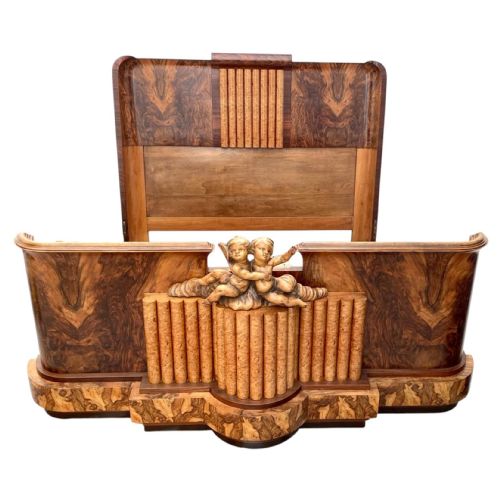
A bookmatched walnut bed brings striking grain symmetry and rich timber tones into a bedroom, combining practical sleeping quarters with architectural presence.
Bookmatched Walnut Bed
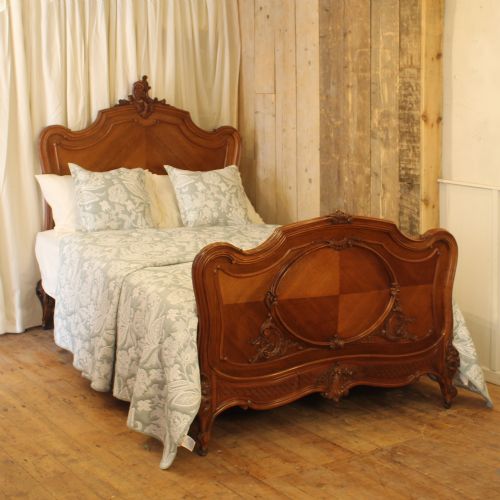
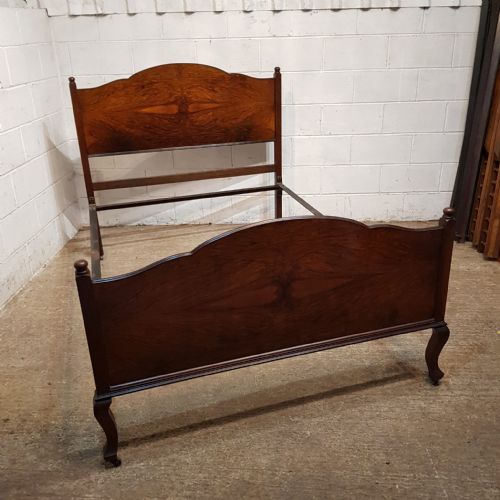
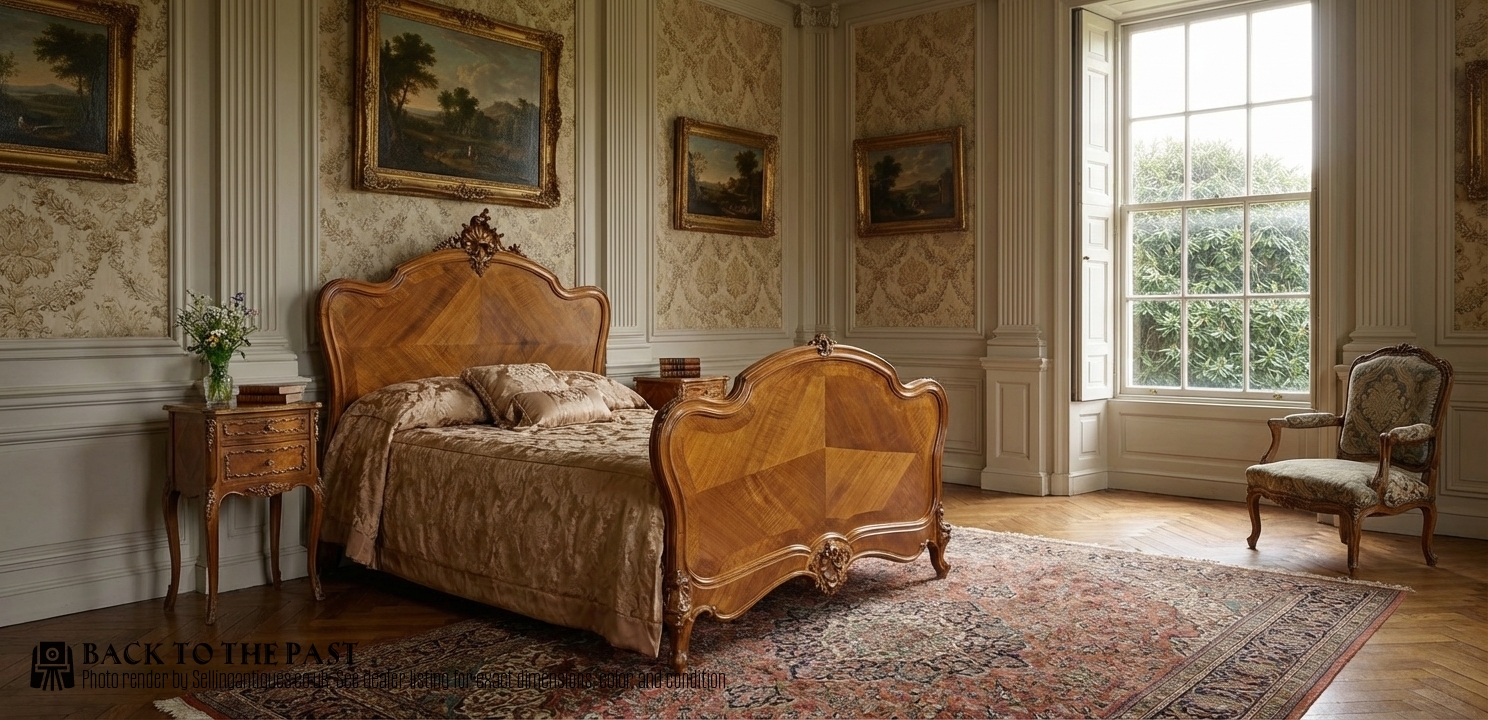
A bookmatched walnut bed presents timber surfaces mirrored along a central seam, creating symmetrical patterns across headboards and footboards. These pieces span from the late nineteenth century through to the interwar decades, taking forms that range from French Rococo revival to streamlined Art Deco silhouettes. Buyers frequently encounter double beds and single bedsteads alongside integrated headboard units with attached bedside cabinets.
The construction styles shift perceptibly across the periods represented in these listings. Pieces from nineteen hundred and earlier lean towards carved details and French Rococo influences, while items dated to nineteen thirty favour curvaceous figured veneers and geometric layouts. Satinwood accents and iron components occasionally appear alongside the dominant walnut and burr walnut timber surfaces.
How they were made
Cabinetmakers constructed these bedsteads by slicing thin veneers from walnut logs and laying them out so adjacent leaves mirrored each other. This technique exploited the natural figuring of burr and figured walnut, arranging the grain to form decorative symmetrical patterns across large flat panels.
Supporting structures utilised solid woods alongside veneered surfaces to ensure stability across double and king size frames. Carved elements, parcel gilt highlights, and occasional satinwood details were applied by hand to enhance specific stylistic periods.
Bookmatched Walnut Bed Retail Price Guide 2026
Typical asking prices for bookmatched walnut bed among the pieces listed under this phrase on Sellingantiques today, from the lower quarter to the upper quarter. They describe what is for sale here now, not the wider market.
Several nineteen thirties designs feature bedside tables bolted directly to the headboard, offering an early precursor to fitted bedroom furniture.
What varies in quality
The precision of the veneer matching dictates much of the visual success in a bookmatched walnut bed. Superior examples display seamless symmetry where the grain pattern mirrors perfectly across the central join, whereas lesser executions show abrupt transitions or mismatched figures.
The handling of secondary timbers and structural joinery also separates finer workshop production from standard output. Richness of timber selection, particularly the depth of burr walnut figures and the crispness of carved details, marks out the superior specimens.
The Bookmatched Walnut Bed Glossary
- Bookmatching
- A veneer technique where adjacent slices from a log are opened like a book and applied side by side to create a mirrored pattern. This method highlights the natural symmetry of walnut grain.
- Burr walnut
- Wood harvested from a tree growth that produces intricate, swirling patterns of grain. It is prized for decorative veneering on prominent furniture panels.
- Art Deco
- A design style from the interwar period characterised by streamlined curves, geometric forms, and smooth polished surfaces. Many bedsteads from nineteen thirty reflect this aesthetic.
- French Rococo revival
- A nineteenth-century revival style featuring elaborate carved ornamentation and flowing asymmetrical motifs. Pieces from eighteen eighty and nineteen hundred often utilise these decorative elements.
Bookmatched Walnut Bed: Frequently Asked Questions
What periods do these beds come from?
The listings span from the late Victorian era through the Edwardian period and into the interwar Art Deco years. Dates range from eighteen eighty up to nineteen thirty.
Earlier examples often display French Rococo revival styling with carved details, while nineteen thirties pieces favour figured veneers and curvaceous forms.
Are these beds standard modern sizes?
Sizes vary according to their original period of manufacture and often differ from contemporary standard mattress dimensions. Double beds, single bedsteads, and king size formats all appear.
Buyers should verify exact internal dimensions before sourcing a mattress, as older frames may require custom sizing or minor adjustments.
How do I care for walnut veneer?
Walnut veneer benefits from consistent indoor humidity and protection from direct sunlight to prevent the timber from fading or drying out. Gentle dusting with a soft cloth maintains the polished surface.
Avoid placing these pieces near heat sources or damp areas, as fluctuating conditions can cause the veneer to lift from its substrate.
What is the difference between walnut and burr walnut?
Standard walnut timber provides a straight, rich brown grain suitable for structural components and smooth surfaces. Burr walnut comes from a tree burl, yielding highly figured, swirling patterns.
Burr walnut is typically utilised as a decorative veneer on headboards and prominent panels to create striking visual focal points.