



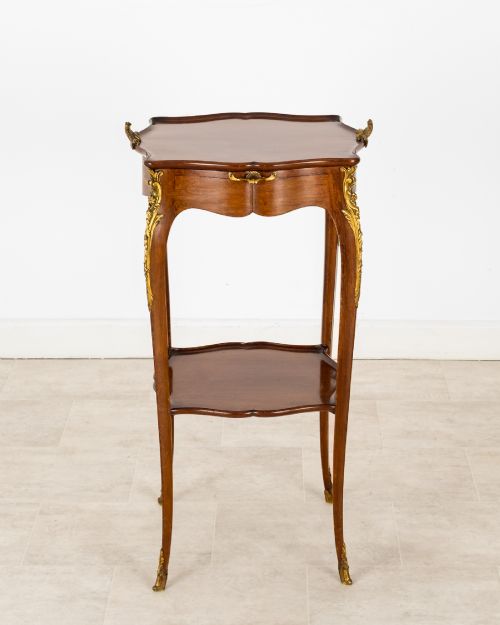
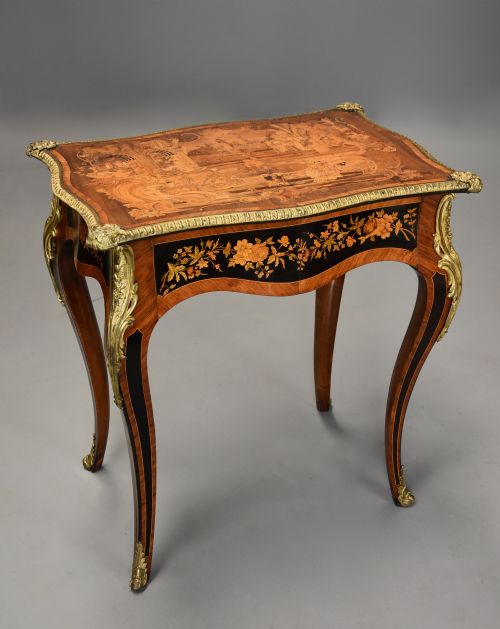


Rococo Brass Side Table
These pieces of rococo brass side table unite elaborate scrollwork with functional surfaces, offering a decorative surface for lamps or ornaments.
Rococo Brass Side Table
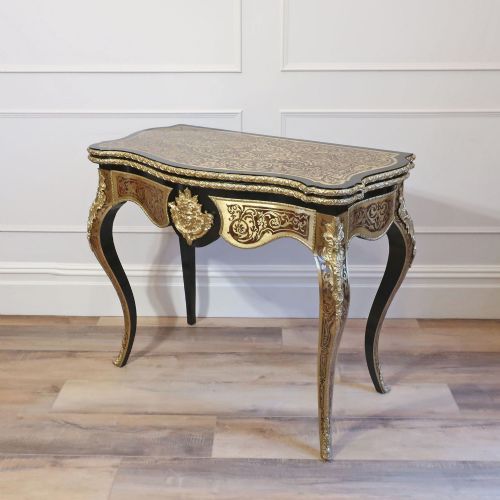
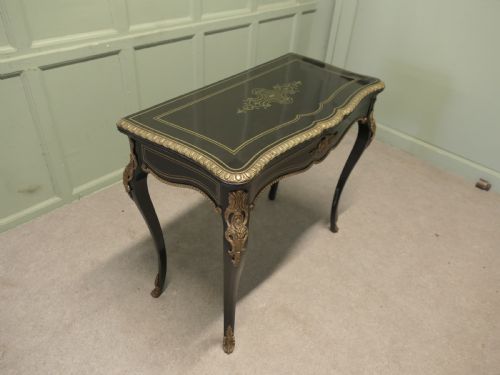
A rococo brass side table embodies the ornate aesthetic of the French Louis XV revival, incorporating scrolling lines and asymmetrical motifs adapted for domestic use. The pieces seen on this page span the nineteenth and early twentieth centuries, drawing heavily upon French stylistic precedents from chateau interiors.
While side tables form a central category, related forms such as occasional tables, centre tables, and games tables appear alongside bedside cabinets and pedestal stands. Walnut, kingwood, mahogany, and ebonised wood provide the foundational timbers for these surfaces.
Makers and designers working in this idiom integrated metal mounts closely with timber carcases to achieve a cohesive decorative scheme. The resulting furniture ranges from compact occasional pieces to substantial freestanding centre tables designed for principal rooms.
How They Were Made
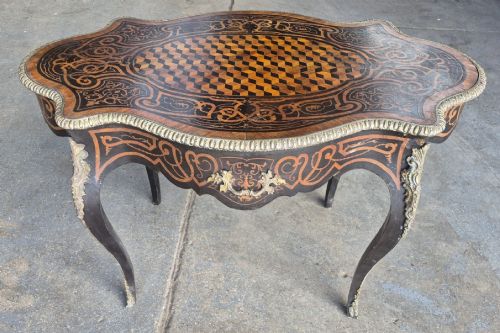
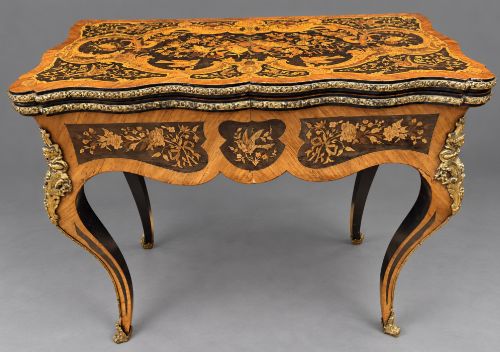
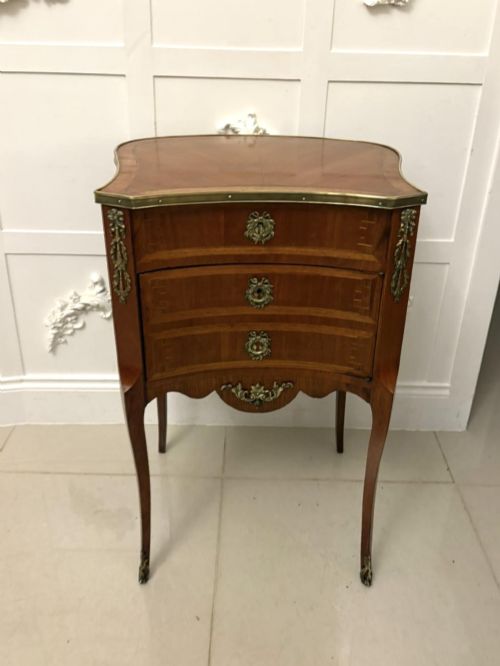
Craftsmen built these tables using dense cabinet timbers including mahogany, walnut, and kingwood, often applying intricate marquetry or parquetry inlays across the tops and sides. Structural carcases received decorative veneers arranged in geometric or floral patterns.
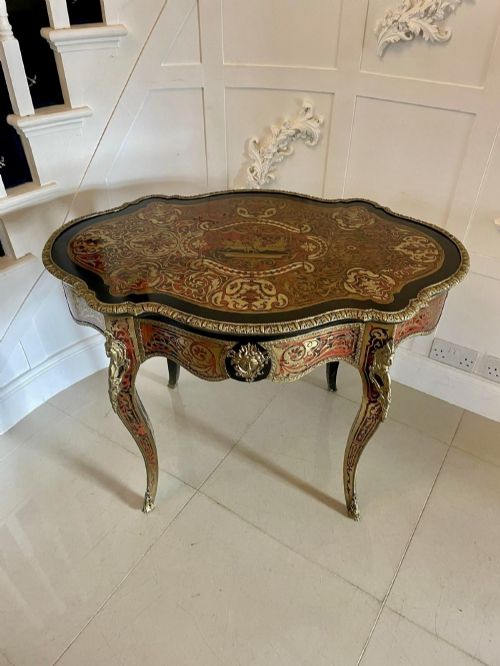
Foundry-cast brass, ormolu, and gilt bronze elements were chased by hand and affixed to the corners, legs, and aprons of the furniture. These metal mounts accentuate the characteristic curves of the revival style.
Rococo Brass Side Table Retail Price Guide 2026
Typical asking prices for rococo brass side table among the pieces listed under this phrase on Sellingantiques today, from the lower quarter to the upper quarter. They describe what is for sale here now, not the wider market.
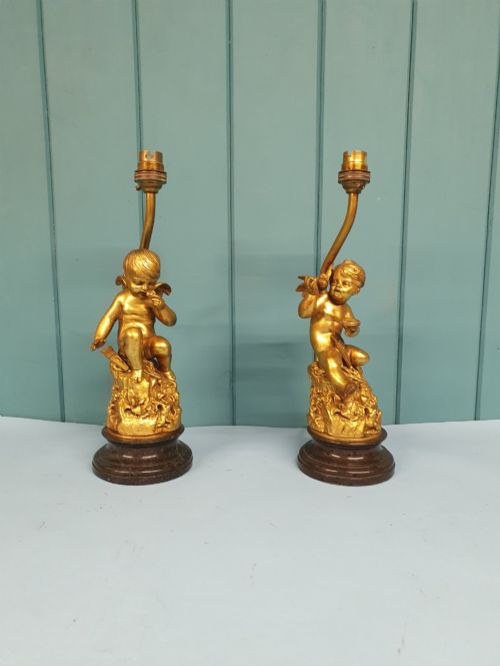
Cherub mounts peer out from corners and lamp bases, keeping a watchful metallic eye on the afternoon tea cups.
What Varies in Quality
The refinement of the cast metalwork separates standard production from superior pieces, demonstrated in the depth of chording and the crispness of the foliage or cherub motifs. Hand-chased ormolu exhibits sharper detail than mass-produced cast mounts.
The complexity of the timber marquetry and the choice of underlying cabinet woods dictate the standing of an individual table. Precision in veneer selection and joinery distinguishes finer examples from simpler provincial work.
Maison Millet·François Linke
The Rococo Brass Side Table Glossary
- Ormolu
- Gilt bronze applied to furniture mounts and decorative objects. The technique involves creating an amalgam of gold and mercury.
- Marquetry
- Decorative veneer work forming pictures or patterns using various woods. Craftsmen assemble thin slices of timber into complex designs.
- Gueridon
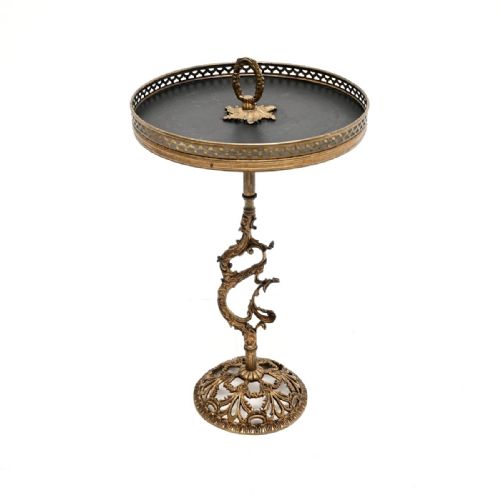
- A small occasional table supported by one or more columns or figures. These originated in seventeenth-century France.
- Parquetry
- Geometric wood inlay forming patterns such as cubes or chequers. It differs from marquetry through its strict geometric repetition.
- Boulle
- Brass and tortoiseshell inlay developed by André-Charles Boulle. The technique produces contrasting metallic patterns against a dark ground.
Rococo Brass Side Table: Frequently Asked Questions
How do I clean brass mounts safely?
Dust the mounts gently with a soft, dry cloth to remove surface particles without disturbing the underlying metal or timber.
Avoid liquid polishes and abrasive cleaners, as these substances can strip gilding and damage adjacent wood veneers.
Where should I place a side table?
Position the table beside seating areas or against a hallway wall to provide an accessible surface for lamps and decorative objects.
Keep the piece away from direct sunlight and heat sources to protect the polished wood surfaces and delicate brass mounts.
How do I distinguish revival styles?
Examine the timber construction, mount casting quality, and overall proportions to determine the likely period of manufacture.
Nineteenth-century revival pieces often employ machine assistance alongside hand-chasing, whereas original eighteenth-century work relies entirely on manual techniques.
Can these tables support heavy lamps?
Standard table lamps and decorative ornaments sit securely on these tables provided the weight distributes evenly across the top.
Heavier items require careful placement near the centre of the table to maintain balance across the legs and mounts.