



Revolving Piano Seat
A revolving piano seat gives you precise height adjustment at the keyboard through a threaded metal spindle.
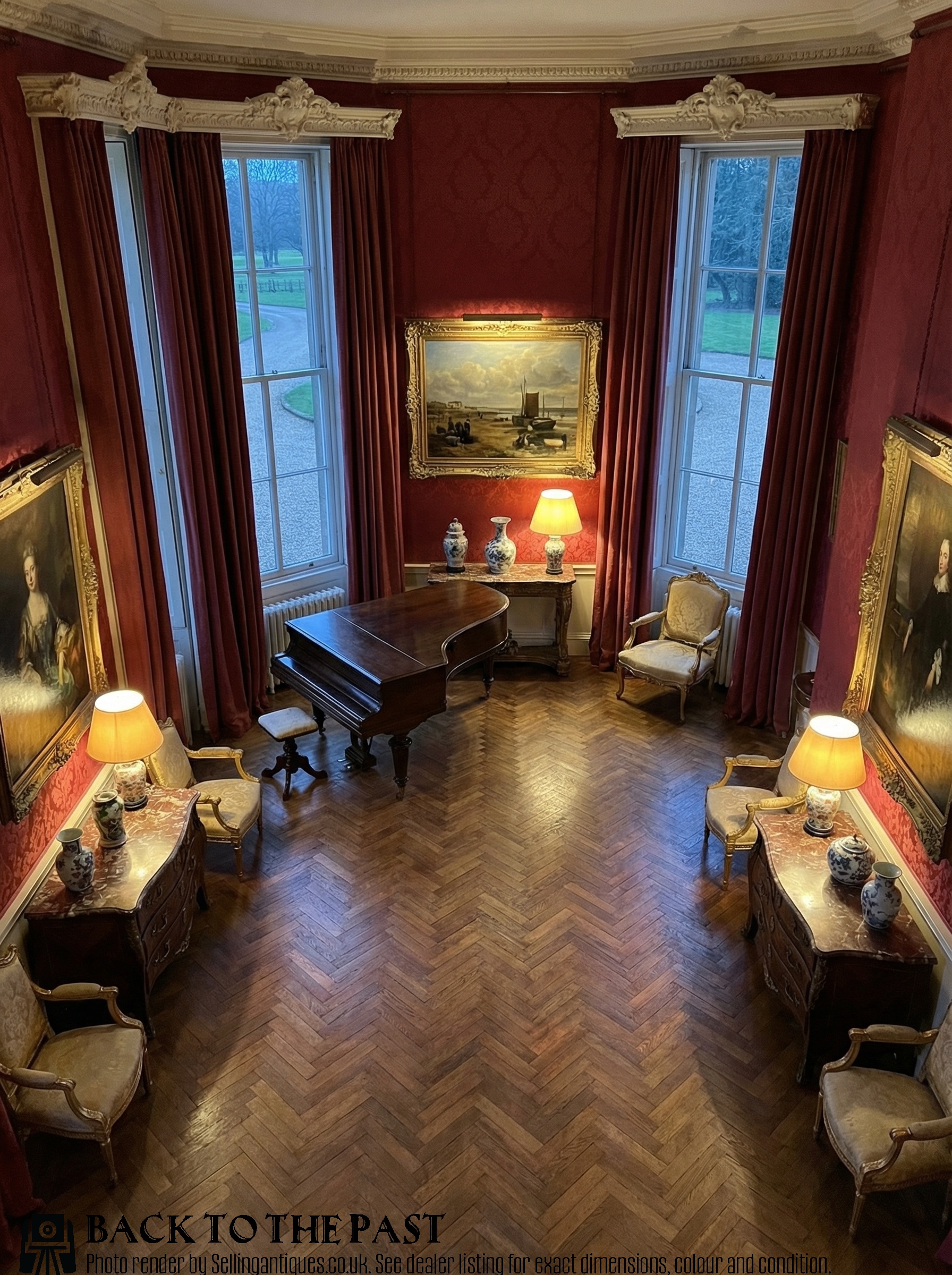
What these revolving piano seats are
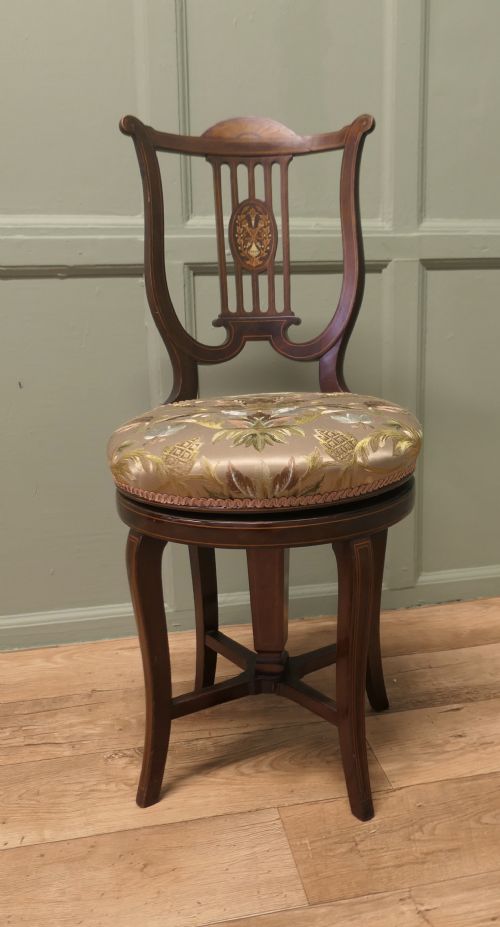
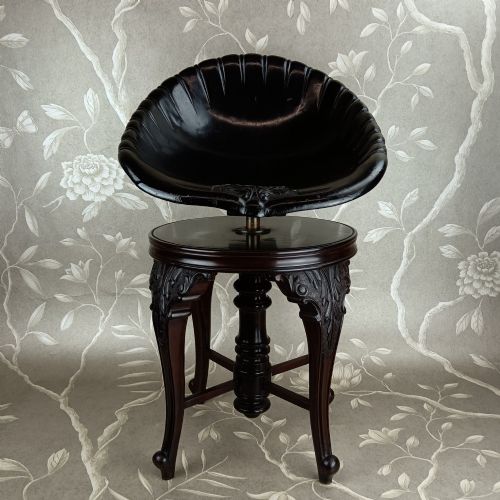
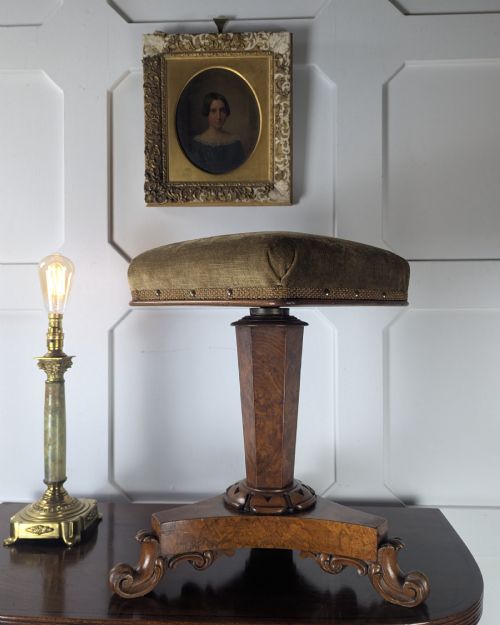
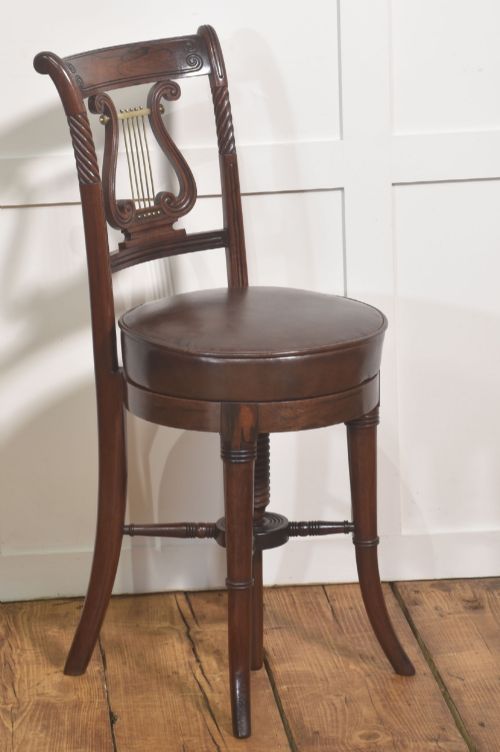
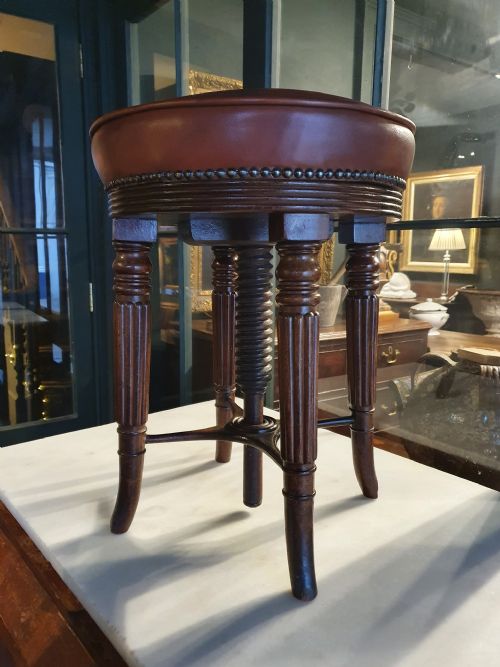
A revolving piano seat offers adjustable seating for the pianist using a central turning mechanism. The selection on this page centres on nineteenth century designs, spanning Early Victorian to Victorian Arts and Crafts periods, along with William IV examples.
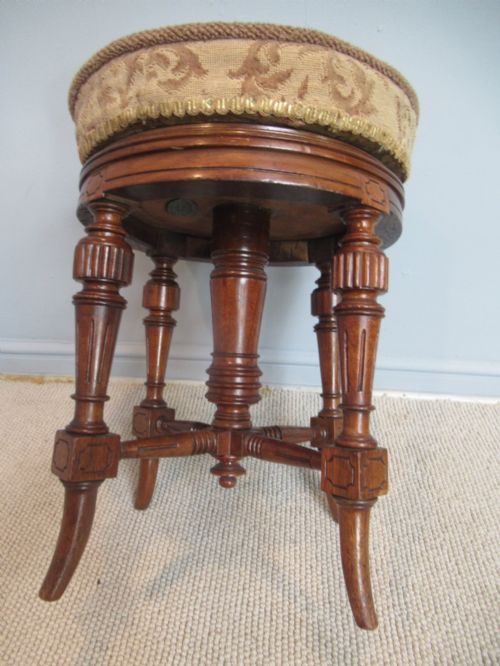
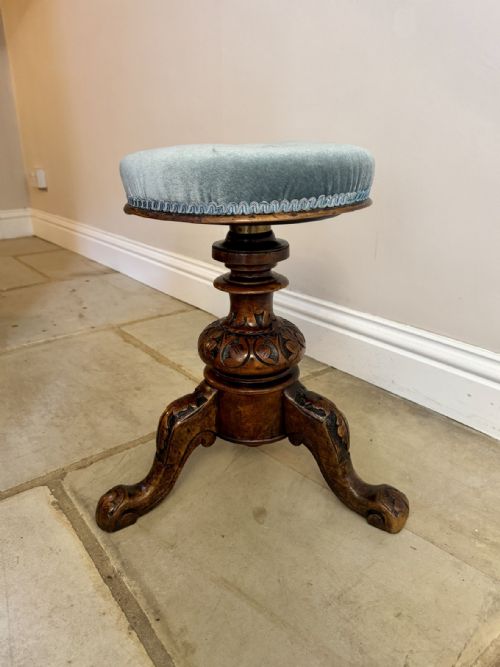
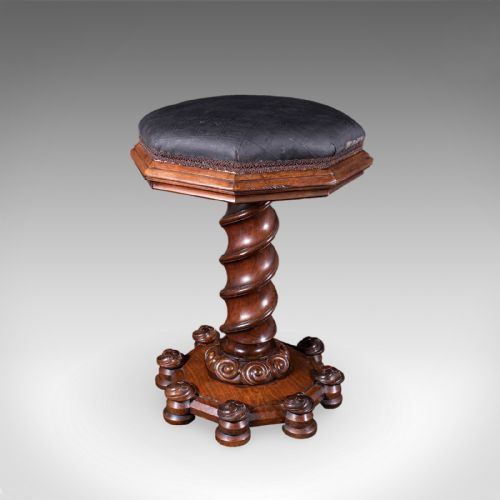
Most pieces take the form of piano stools or dressing table stools with circular or shaped tops. You will encounter rosewood and mahogany constructions, occasionally featuring boxwood inlay or textile, fabric, and tapestry upholstery.
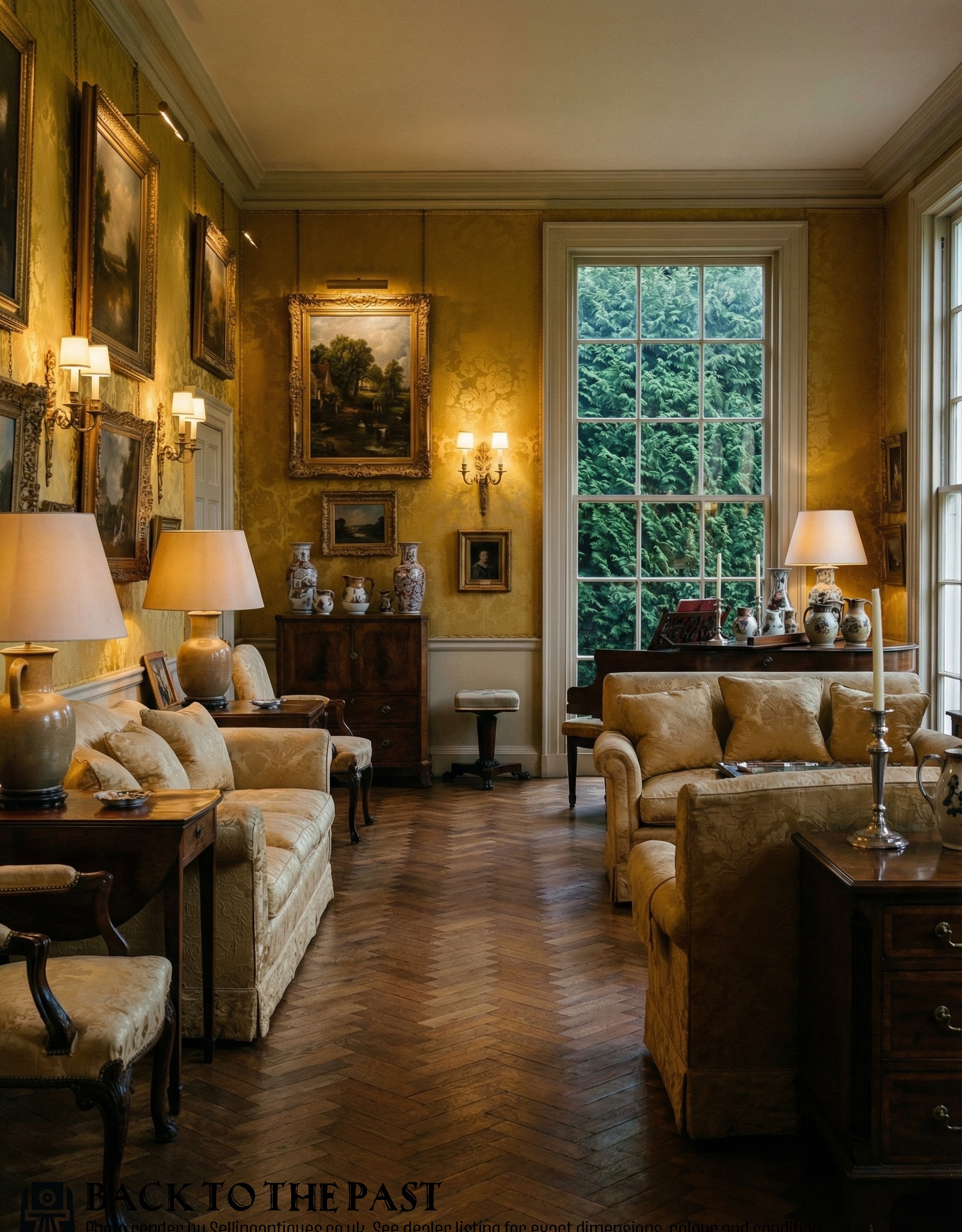
How they were made
Cabinet makers built these seats primarily from solid rosewood and mahogany timbers, sometimes applying boxwood inlay for decorative contrast. The rotating mechanism relies on sturdy metal internal screws that permit smooth height adjustment.
Upholstery techniques involved traditional textiles, fabrics, and tapestry work fixed directly to the wooden frame or removable seat top. Surviving pieces also include bead work seat designs from the period.
Retail Price Guide 2026
Typical UK retail prices for revolving piano seat, calculated from the Sellingantiques database of over a million retail prices indexed since 2003. This retail price guide relies exclusively on Sellingantiques data; no external sources or auction records are used, so the figures do not describe the wider market.
Early pianists spent hours spinning these seats furiously, turning a simple practice session into an unexpected upper-body workout.
What varies in quality
The distinction between standard and superior pieces lies in the selection of timbers like figured rosewood or rich mahogany. Maker attribution, such as work by Holland and Son, elevates an example above anonymous workshop production.
Refined execution appears in details like boxwood inlay, well-executed tapestry or fabric seats, and the smoothness of the metal turning mechanism. The overall architectural proportion of the stool dictates visual success in a room.
Holland and Son
The Revolving Piano Seat Glossary
- Rise and fall piano stool
- A seat with a mechanism allowing the height to be adjusted by turning the top. This design ensures the musician can sit at the correct ergonomic level for playing.
- Rosewood
- A dense, heavily figured timber favoured by nineteenth century cabinet makers for fine seating. Its dark grain provides a rich visual depth.
- Boxwood inlay
- Contrasting pale wood inserted into recesses within the darker primary timber to form geometric or floral patterns. It demonstrates meticulous craftsmanship.
- Aesthetic Movement
- A late nineteenth century design style prioritising visual beauty and artistic reform over heavy historicism. Pieces from this movement often display refined simplicity.
Frequently Asked Questions
How do you adjust the height?
You simply turn the wooden seat top clockwise or anticlockwise. This motion works the internal metal screw upwards or downwards.
Ensure you support the weight of the top while turning to protect the spindle from strain.
What periods do these seats date from?
The available pieces span the nineteenth century, including William IV, Early Victorian, and later Victorian eras. You will also find examples representing the Victorian Arts and Crafts and Aesthetic Movement styles.
Construction details and timber choices typically help indicate the exact decade of manufacture.
Can these be used as dressing table stools?
Many period examples were versatile enough to serve at both the piano and the dressing table. Their compact footprint and adjustable height make them practical for modern vanity spaces.
Original upholstery often reflects this domestic dual-purpose role.
What materials were used for the seats?
Upholstery options range from plain textiles and standard fabrics to elaborate tapestry and bead work. The supporting frames are constructed from solid rosewood or mahogany.
Some superior models incorporate delicate boxwood inlay into the wooden structure.