

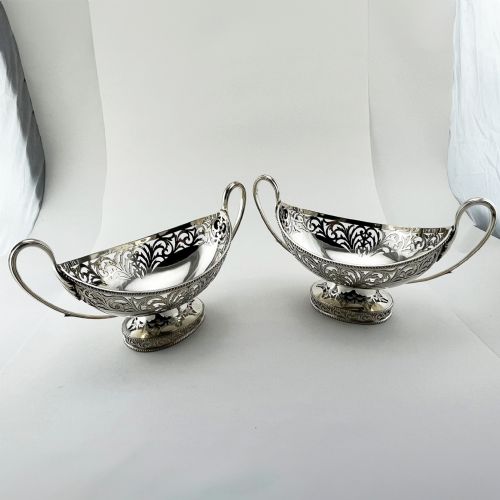


Reticulated Silver Dish
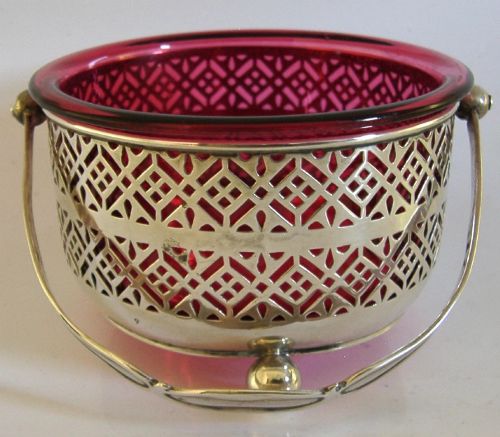
A reticulated silver dish offers pierced and openwork metalwork that frames coloured glass liners or stands alone as a decorative centrepiece.
Reticulated Silver Dish
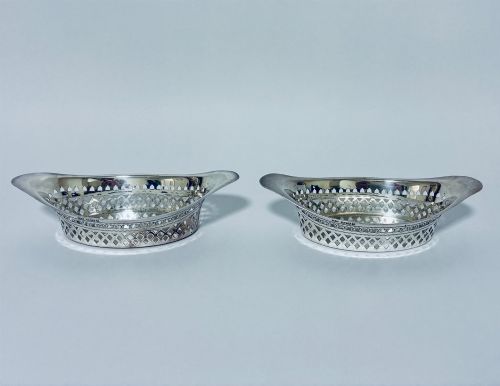
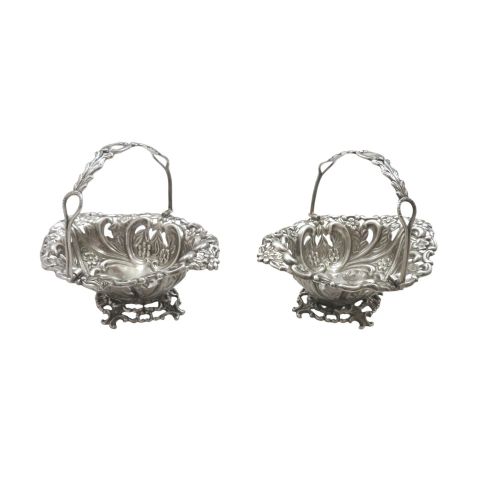
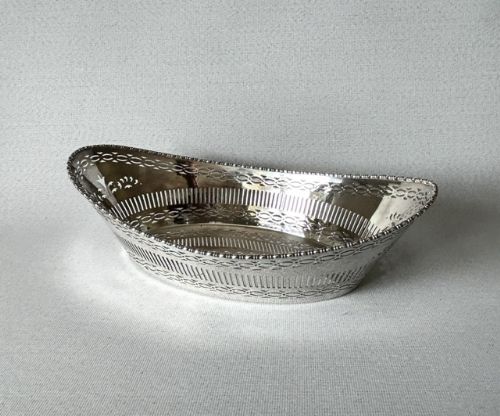
A reticulated silver dish draws the eye through pierced latticework and open metal patterns that transform solid tableware into light forms. When looking for a reticulated silver dish on this page, a buyer meets items created for sugar, fruit, bonbons, and bread across Victorian, Edwardian, and interwar periods.
Makers shaped these pieces in sterling silver, silver plate, and EPNS, frequently pairing the metal frames with removable cranberry, ruby, or cobalt blue glass liners. Forms range from swing-handled baskets and footed bowls to pedestal serving dishes and shell-shaped dishes originating from English, German, and Chinese workshops.
How they were made
Silversmiths produced the openwork patterns of a reticulated silver dish using piercing, sawing, and casting techniques. Solid silver and plated metal sheets were marked out and cut by hand or machine to create lattice and geometric designs.
Makers combined the pierced metal frames with blown or moulded glass inserts, securing them with swing handles, reeded mounts, and cast feet.
Edwardian baskets often feature swing handles that stubbornly refuse to stay upright until weighed down by a handful of sweets.
What varies in quality
The quality of a reticulated silver dish rests in the crispness of the piercing and the weight of the metal. Hand-cut lattice work with clean edges and balanced symmetry distinguishes finer workshop output from simpler stamped production.
The integration of the glass liner also indicates standard, where a snug, unchipped coloured glass insert matching the contours of the silver frame elevates the complete object.
Mappin & Webb·Thomas Bradbury·Fenton·Walker & Hall·Atkin Brothers
The Reticulated Silver Dish Glossary
- Reticulated
- Pierced or openwork metal patterned to resemble a net or lattice. This decorative technique allows light to pass through the walls of the dish.
- Bonbon dish
- A small vessel designed for holding sweets or confectionery. These pieces frequently appear in pairs from the Victorian period.
- EPNS
- Electroplated nickel silver, a base metal core coated with a layer of pure silver. It provided an accessible alternative to solid sterling silver during the nineteenth and twentieth centuries.
- Cranberry glass
- Transparent pinkish-red glass coloured with gold chloride. It is commonly found fitted inside pierced silver baskets.
- Swing handle
- A movable arched handle attached to the rim of a basket or dish by pivot pins. It permits easy lifting and folding down against the sides.
Reticulated Silver Dish: Frequently Asked Questions
What were reticulated silver dishes used for?
These dishes served as decorative tableware for presenting fruit, bread, bonbons, or sugar upon the dining table. Their openwork frames held delicate items or framed coloured glass inserts.
They moved between formal dining rooms and drawing rooms as receptacles for small foodstuffs during the Victorian and Edwardian eras.
How do I clean a reticulated silver dish?
Cleaning requires warm soapy water and a soft cloth to reach into the pierced lattice work without scratching the surface. Silver dips should be avoided where glass liners are permanently attached.
Gentle polishing maintains the shine of the sterling silver or silver plate without wearing down the raised details of the openwork pattern.
Are glass liners original to the dishes?
Many surviving pieces retain their original cranberry, ruby, or cobalt blue glass liners, which were blown to fit the specific dimensions of the metal frame. Replacement liners often show slight wobbles or modern glass characteristics.
Examining the fit and the wear marks on the base helps determine whether the glass and the silver have travelled together since manufacture.
How do I date a silver pierced basket?
Dating relies upon hallmarks stamped into the silver or silver plate, alongside stylistic indicators such as Edwardian garlands or Art Deco geometric lines. Maker marks and assay office symbols provide specific years of production.
Unmarked silver-plated items are dated through stylistic comparison with documented catalogues from makers like Walker & Hall or Mappin & Webb.