
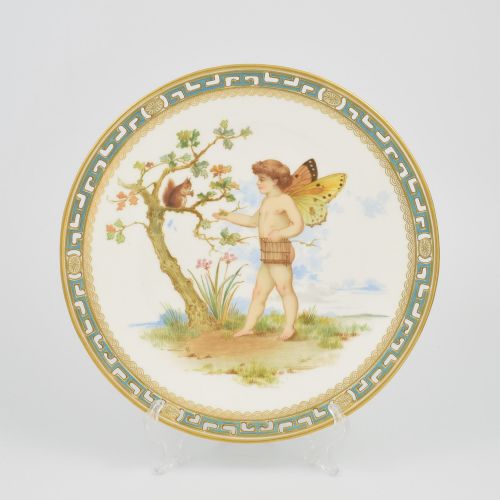


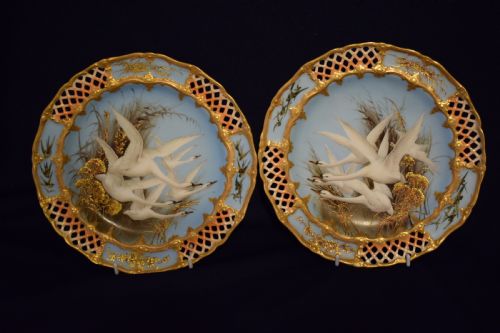

Reticulated Porcelain Cabinet Plate
These reticulated porcelain cabinet plates combine pierced ceramic borders with painted scenes, offering collectors fine examples of late Victorian and Edwardian factory skill.
Reticulated Porcelain Cabinet Plate
A reticulated porcelain cabinet plate is a decorative ceramic piece designed for display rather than dining, characterised by openwork pierced borders. When buyers search for this phrase, they encounter elaborate examples spanning the eighteenth, nineteenth, and early twentieth centuries. These pieces originate from major European manufacturers and showcase ornate painted surfaces alongside intricate lattice or basketweave patterns.
The selections available here predominantly feature Victorian, Edwardian, and nineteenth-century works, alongside earlier eighteenth-century productions. Forms range from standard cabinet plates and chargers to dessert service components and basketweave trays. The visual impact relies heavily on the contrast between solid painted central reserves and delicate pierced rims.
Makers represented in these categories include established English and continental houses such as Minton, Royal Worcester, Coalport, Meissen, and Vienna. The decoration often incorporates classical mythological subjects, naturalistic birds, or hand-painted botanical studies. Each piece serves primarily as a visual focal point, intended for interior placement on shelves, walls, or sideboards.
How they were made
The manufacture of these pieces relied on hard-paste or soft-paste porcelain bodies, shaped by hand or moulded into complex forms such as basketweave or pierced lattice designs. Artisans cut the reticulated openings into the clay before firing, requiring steady precision to prevent warping in the kiln. Once the base ceramic was formed and glazed, the pieces underwent multiple firings to fix the underlying structure.
Surface decoration combined hand-painted enamel colours with extensive application of gold leaf, gilding, and cobalt glaze. Skilled painters executed detailed central motifs, from swans and exotic birds to mythological figures like Cupid and Psyche, using specialised ceramic pigments. Subsequent low-temperature firings melted the metallic elements into the glaze, securing the lustrous finish characteristic of high-end cabinet ceramics.
Materials recorded across the inventory include enamel, gold leaf, cobalt glaze, and traditional hard-paste porcelain bodies.
What varies in quality
Quality in these ceramics rests primarily upon the execution of the hand-painted central artwork and the crispness of the reticulated piercing. Plates decorated by named artists command greater attention due to the sophistication of their brushwork and tonal depth. The intricacy and clean definition of the pierced borders similarly separate standard production items from masterworks.
The application of gilding and enamel also dictates the standing of a piece within the field. Superior examples display dense, burnished gold leaf and rich, stable cobalt glazes that have survived centuries without degradation. The overall weight, symmetry of the porcelain body, and clarity of factory marks further distinguish the finer outputs of period factories.
Minton·Meissen·Royal Vienna·Royal Worcester·Coalport·John Ridgway
The Reticulated Porcelain Cabinet Plate Glossary
- Reticulated
- Pierced or perforated in a net-like pattern, creating openwork lattice designs along the rim of a ceramic piece. This technique requires careful cutting of the unfired clay.
- Cabinet plate
- A decorative ceramic plate intended exclusively for display in a cabinet or on a wall rather than for practical dining use. These items typically feature elaborate hand-painted scenes.
- Gilding
- The application of gold leaf or powdered gold suspended in a medium onto the surface of porcelain. It is fired at high temperatures to produce a permanent metallic finish.
- Pate-sur-pate
- A French ceramic technique where liquid white porcelain clay is built up in successive layers on a coloured body to create a low-relief cameo effect. This method demands exceptional skill from the decorator.
- Charger
- A large ornamental plate used as a base dish or hung for display. In porcelain, these pieces provide a wider canvas for detailed narrative painting.
Reticulated Porcelain Cabinet Plate: Frequently Asked Questions
What is a reticulated porcelain cabinet plate?
A reticulated porcelain cabinet plate is an ornamental ceramic dish featuring pierced, openwork borders and hand-painted central artwork. Designed specifically for display rather than domestic use, these items showcase the technical prowess of nineteenth-century and early twentieth-century factories.
Collectors prize them for their combination of intricate ceramic piercing and detailed artistic scenes, ranging from mythological figures to naturalistic studies of birds and fruit.
How were cabinet plates displayed historically?
Historically, these plates were housed in glass-fronted display cabinets, mounted on walls using specialised wire hangers, or stood on dedicated plate rails within drawing rooms. Their primary function was to signal the refined taste and wealth of the household to visiting guests.
Because they were made for visual appreciation rather than dining, their surfaces remained protected from the wear of cutlery and heavy use.
How do I identify the period of a porcelain plate?
Dating relies primarily on factory marks stamped, painted, or impressed onto the underside of the ceramic body. Stylistic indicators, such as the naturalistic painting of the Aesthetic Movement or the classical revival motifs of the Victorian era, also help narrow down the date.
Comparing the specific shape, glaze consistency, and gilding style with documented factory production periods provides further confirmation of age.
Can these plates still be hung on walls?
Yes, many collectors continue to display them on walls using modern, non-damaging coated spring hangers that distribute weight evenly across the rim. It is essential to ensure the hanger grips securely without putting undue pressure on the delicate pierced reticulation.
For added security, flat wall brackets or enclosed display cabinets offer alternative ways to enjoy the pieces safely in a modern interior.