
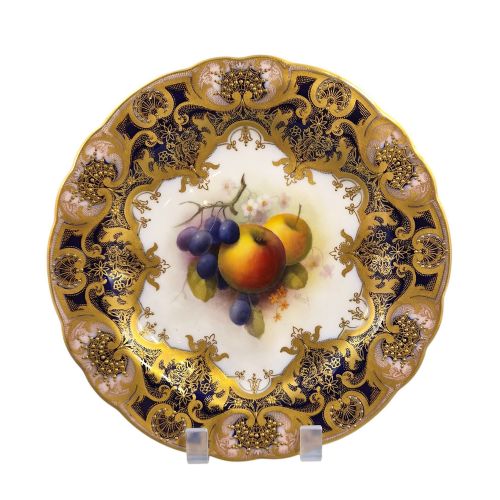
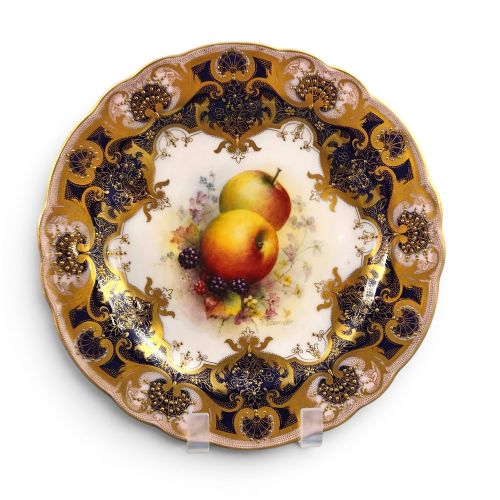
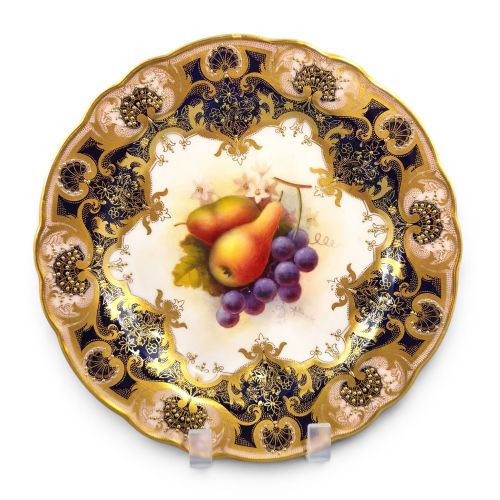
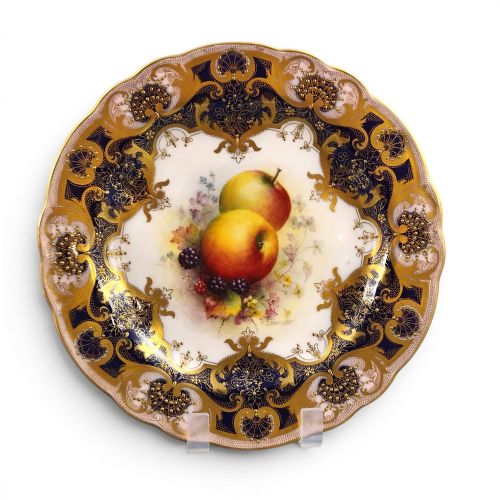
Blue Porcelain Cabinet Plate
A blue porcelain cabinet plate brings the rich depth of cobalt glaze and fine ceramic artistry straight to a formal interior.
Blue Porcelain Cabinet Plate
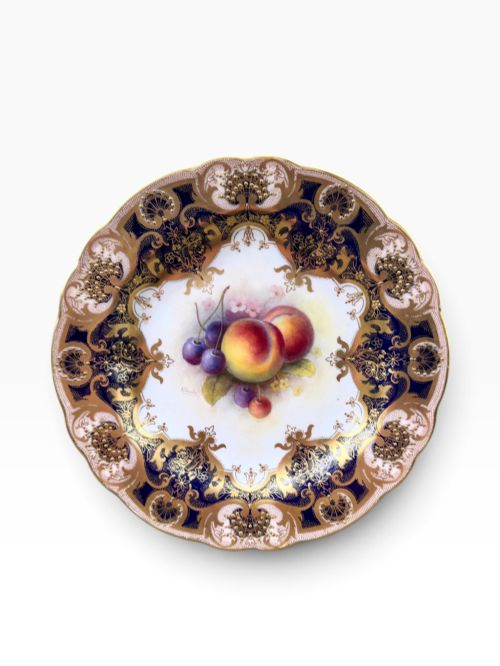
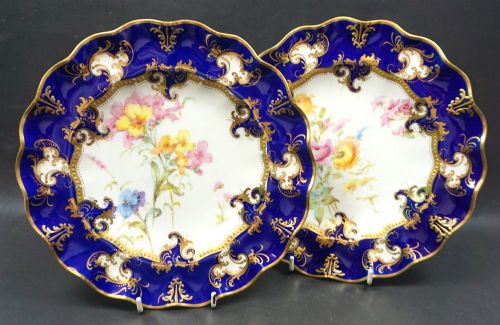
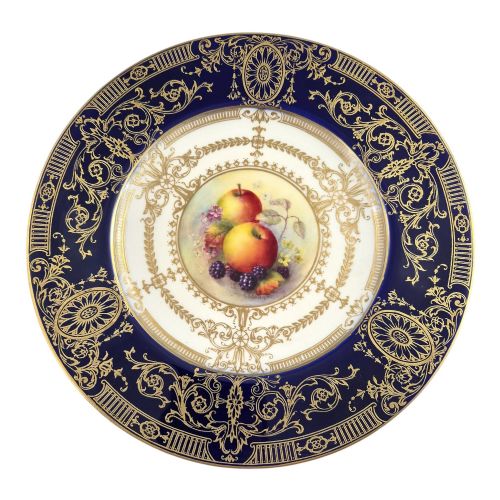
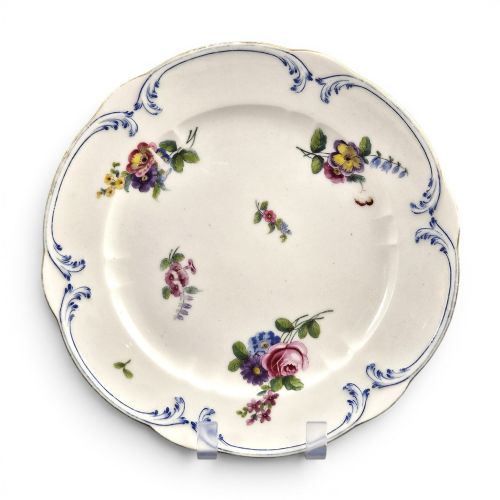
A blue porcelain cabinet plate is designed primarily for display in cabinets or on walls rather than for daily dining, often taking the form of cabinet plates, chargers, and dessert dishes. You will frequently encounter examples stretching from the eighteenth century through the Victorian period and into the twentieth century, reflecting diverse tastes from traditional English manufactories to continental European houses.
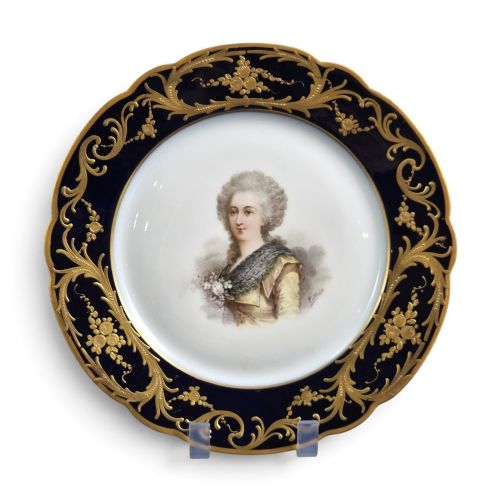
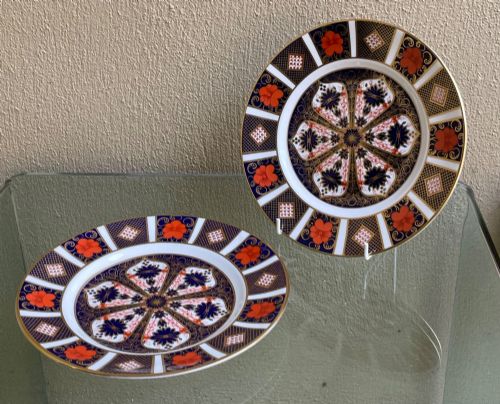
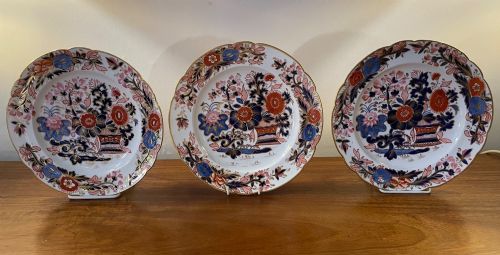
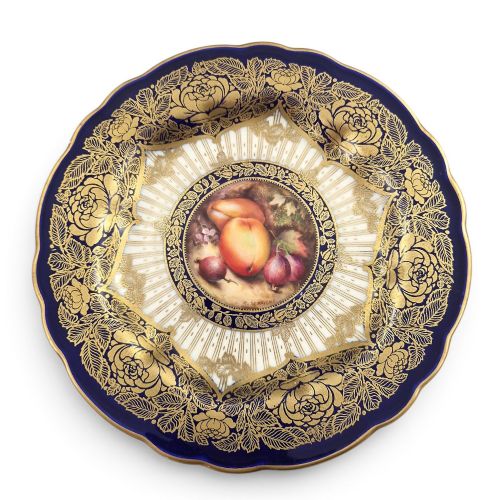
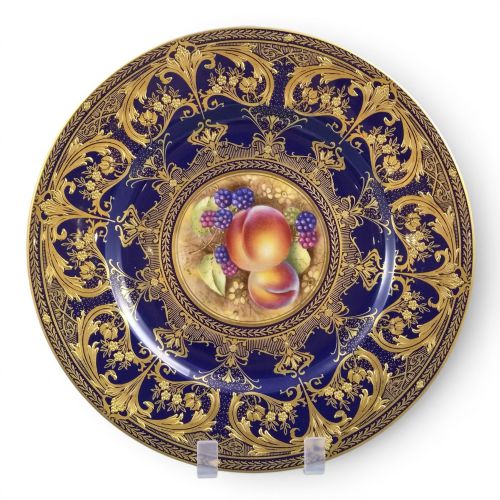
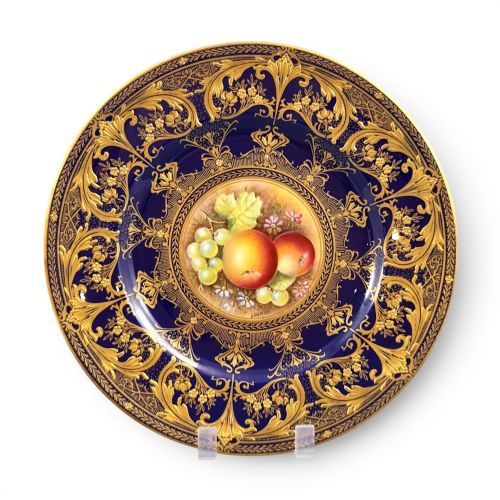
The aesthetic of a blue porcelain cabinet plate ranges from the deep cobalt underglaze of Japanese Imari exports and Russian Imperial services to the intricate hand-painted botanical scenes and fruit studies produced by English artists. These pieces capture shifting stylistic movements, moving from Rococo Revival curves through Georgian symmetry and Art Deco geometry.
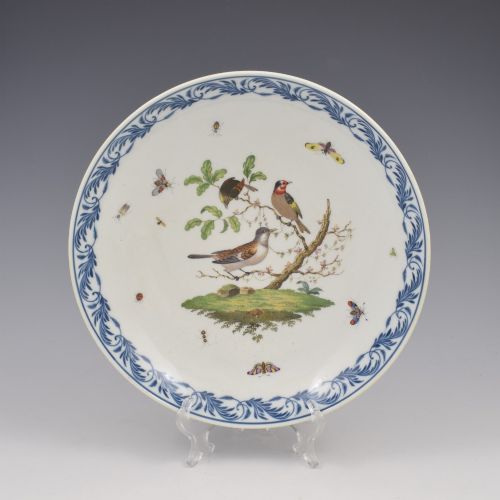
Makers represented span renowned European potteries and specialised decorators, incorporating bone china alongside hard and soft paste porcelain bodies. A blue porcelain cabinet plate might carry heraldic crests, mythological portraits, or ornithological studies, each denoting a specific period of manufacture and artistic intention.
Materials and technique
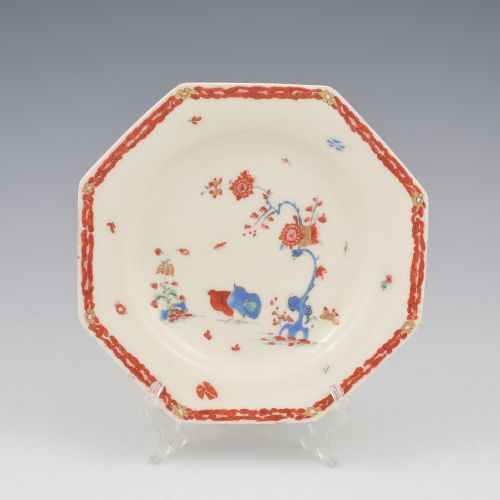
The foundation of these objects relies on refined porcelain and bone china bodies, shaped either by throwing on a wheel or pressing into moulds to achieve octagonal, scalloped, or standard circular profiles. Cobalt glaze is applied directly to the surface, frequently under the glaze to achieve a deep, permanent blue hue before secondary enamel colours are added.
Gilding and gold leaf punctuate the design, applied by hand and fired to create metallic borders or delicate highlights that frame the central painted motifs. Enamel pigments complete the pictorial elements, requiring multiple kiln firings to fuse the colours permanently to the ceramic body.
Listings feature porcelain forms spanning the eighteenth, nineteenth, and twentieth centuries, incorporating both English bone china and continental European hard paste.
Assessing quality and execution
Quality rests significantly upon the precision of the hand-painted artistry, where signed works by recognised painters command distinct attention for their anatomical accuracy and brushwork control. The depth and clarity of the cobalt glaze, alongside the crispness of the porcelain moulding, separate standard production items from exceptional exhibition pieces.
The application and preservation of the gilding further distinguish the hierarchy of these ceramics, with burnished gold leaf indicating superior workshop standards. The weight of the porcelain body and the complexity of shaped edges, such as pierced borders or moulded relief work, demonstrate the skill invested by the factory.
Royal Crown Derby·Royal Worcester·Meissen·Coalport·Aynsley
The Blue Porcelain Cabinet Plate Glossary
- Cabinet plate
- A decorative ceramic plate intended for display in a cabinet or on a wall rather than for practical table use. These pieces often feature elaborate painting, gilding, or shaped borders.
- Cobalt glaze
- A intense blue ceramic colour derived from cobalt oxide, capable of withstanding high kiln temperatures without losing its depth. It forms the primary visual foundation for many traditional blue and white designs.
- Imari palette
- A decorative style originating in Japan and later copied in Europe, characteristically utilising underglaze blue, iron red, and abundant gold leaf. It remains a cornerstone of antique ceramic decoration.
- Bone china
- A type of soft-paste porcelain incorporating animal bone ash, developed in England to improve durability and translucency. It permits thinner, more refined vessel walls than standard hard-paste porcelain.
- Gilding
- The application of gold leaf or powdered gold to the surface of ceramics to create decorative borders and highlights. It is typically fired onto the glaze to ensure permanence.
Blue Porcelain Cabinet Plate: Frequently Asked Questions
How were cabinet plates used historically?
Cabinet plates served primarily as decorative status symbols within wealthy households, displayed in glazed cabinets, on sideboards, or mounted on walls. They allowed families to showcase their taste, wealth, and alignment with contemporary artistic movements.
Unlike everyday tableware, these pieces avoided functional wear and tear, preserving their painted scenes and gilt borders in pristine condition for future generations of collectors.
How do I identify the date of a porcelain plate?
Dating relies heavily on factory backstamps, impressed marks, and painted pattern numbers found on the underside of the ceramic body. Many nineteenth and twentieth-century manufacturers utilised specific letter or symbol codes corresponding to exact years of production.
Stylistic indicators, such as the characteristic colour palettes of the Georgian or Victorian eras, also help narrow down the period when direct factory marks are absent.
Can these plates be hung on walls safely?
Hanging requires specialised spring-loaded plate hangers with rubber-coated prongs that distribute pressure evenly across the rim. Avoid wire or adhesive hangers that pull permanently on the glaze or compromise the structural integrity of the ceramic body.
Ensure the mounting hardware in the wall is anchored securely, and keep display locations away from direct sunlight and heavy foot traffic vibrations.
What is the difference between porcelain and bone china?
True porcelain relies on a mixture of kaolin and petuntse fired at extremely high temperatures to produce a dense, vitreous body. Bone china integrates calcined bone ash into the clay recipe, which lowers the firing temperature slightly while increasing whiteness and translucency.
Both materials produce resonant, high-quality cabinet plates, but bone china became a particular specialty of English potteries seeking a lighter, more refined aesthetic.