


Retail Counter Display Case
A retail counter display case transforms shop goods into visual treasures, combining clear glass and robust timber to draw the eye.
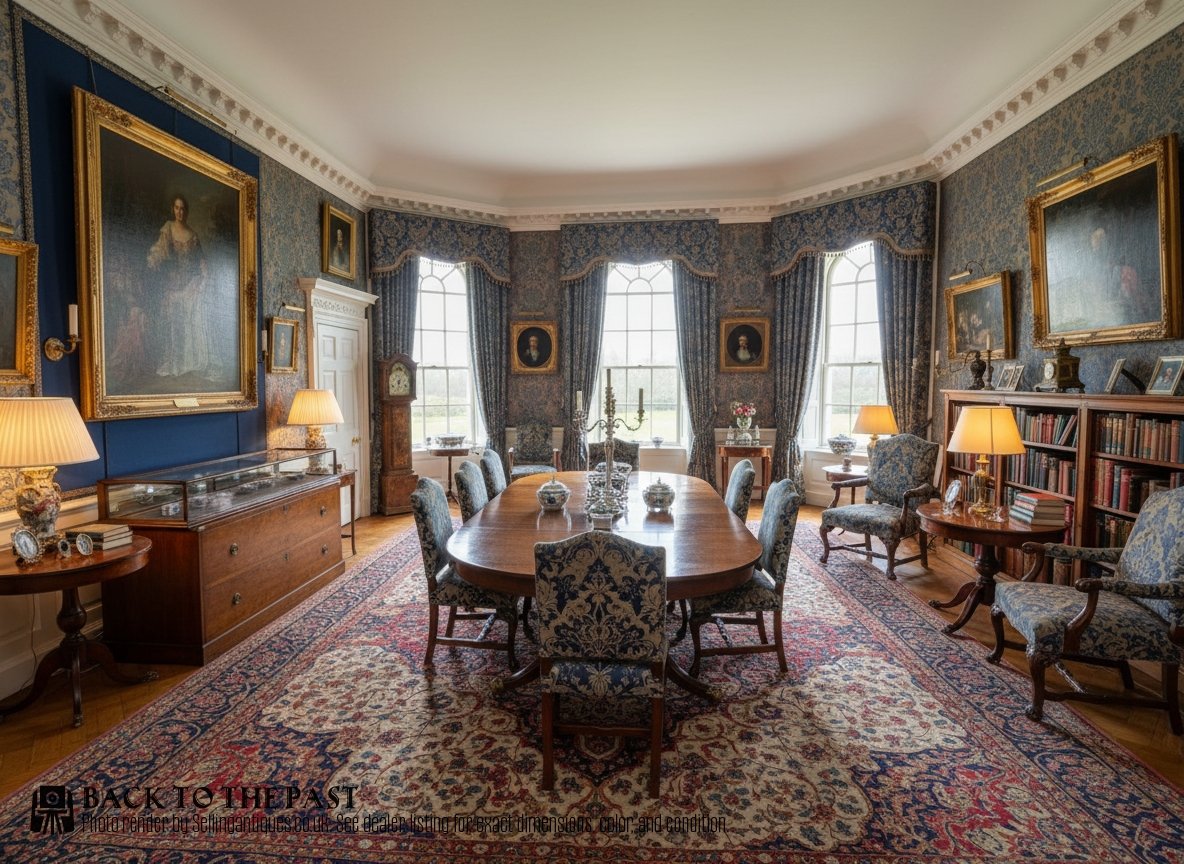
Retail Counter Display Case
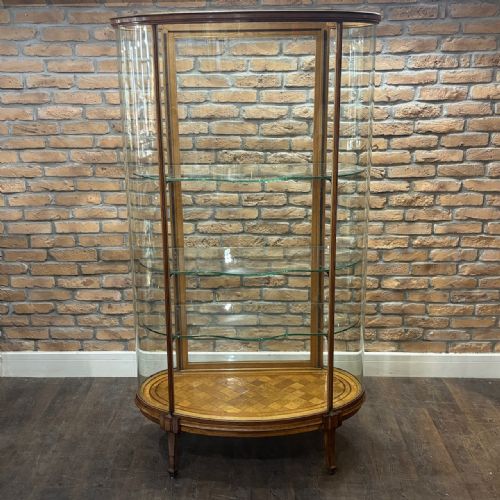
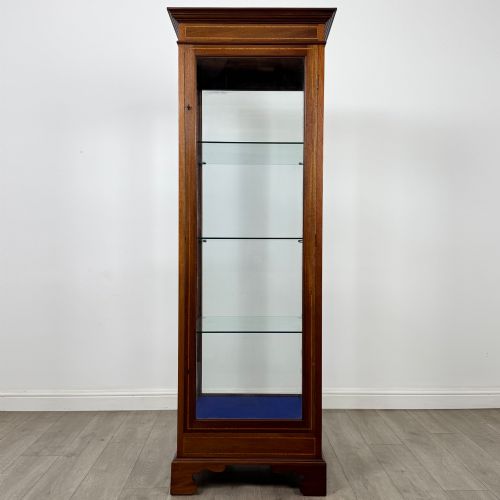
A retail counter display case serves to exhibit merchandise upon or behind shop counters, protecting small wares while keeping them visible to customers. The pieces seen here span the Victorian era, the Edwardian period, and the nineteen-twenties, reflecting a time when shop fittings were built for daily commercial endurance.
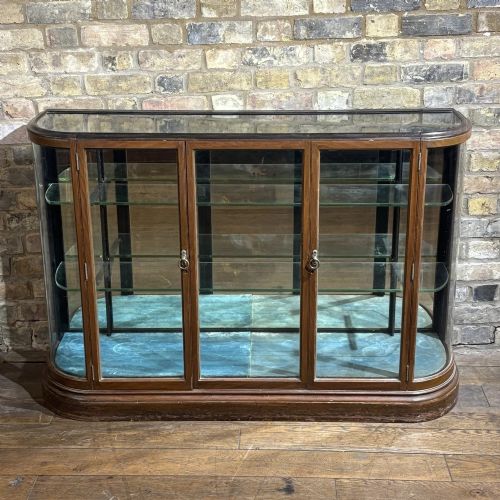
Most examples take the form of countertop tabletop boxes, tall freestanding cabinets, or substantial low shop counters fitted with glazed viewing areas. Mahogany and oak dominate the construction, often paired with brass or aluminium framing depending on the decade of manufacture.
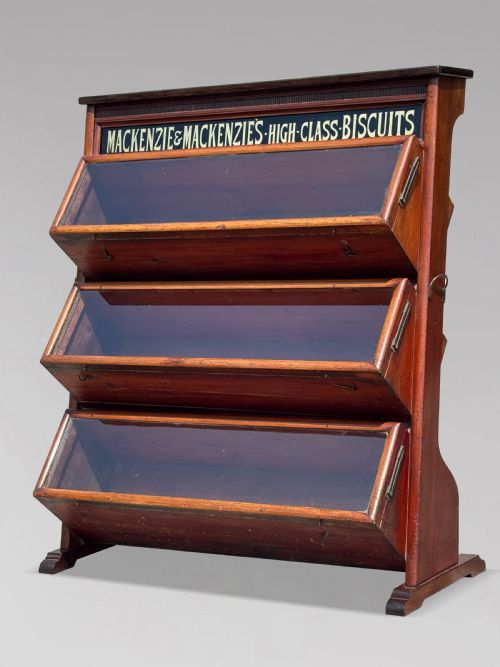
Commercial workshops produced these fittings for chemists, confectioners, and general merchants, incorporating maker plaques or brand lettering for houses like F. Sage and Co. Buyers encounter bow-ended shapes, pentagonal footprints, and mirrored interiors designed to maximise light and reflection within the shop interior.
Materials and construction
Cabinet makers utilised dense hardwoods like mahogany and oak for the structural frames and bases, ensuring the timber could withstand constant leaning by customers and the weight of stocked merchandise. Glazing formed the primary viewing barrier, fitted into timber rebates or held by metal frames made of brass and aluminium.
Internal surfaces frequently utilised mirrored glass to bounce ambient light through the display space, while velvet linings provided a soft bed for luxury items such as jewellery or chocolates. Joinery relied on tight mechanical joints and secure rebated doors, occasionally supplemented by ebonised finishes or gold leaf detailing.
Listings demonstrate that retail counter display cases span the Victorian, Edwardian, and Art Deco periods, utilising oak, mahogany, glass, and brass.
Quality differences
The distinction between standard commercial joinery and superior shop fitting lies in the choice of timber grain and the sophistication of the framing. Finer examples display carefully selected mahogany veneers, curved bow-end glass panels, and purpose-built maker plaques from established cabinet makers.
Hardware and metalwork separate utilitarian counters from luxury display pieces, with heavy cast brass hinges and slender framing profiles indicating superior workshops. The retention of original mirrored backs, working locks, and authentic manufacturer branding adds depth to the material history of an individual counter.
F. Sage and Co·Mackenzie's Biscuits·Fry’s Chocolate·John Stow Ltd·Cadbury’s·Rowntree’s Chocolates·Saml. Elliott & Sons
The Retail Counter Display Case Glossary
- Countertop display cabinet
- A glazed box designed to sit directly on top of a retail sales counter for close customer inspection of small goods. These units often feature rear sliding doors for staff access.
- Bow end
- A curved glass end panel that softens the rectangular profile of a cabinet. This curved glazing required specialist glass-bending techniques during manufacture.
- Ebonised
- Timber treated with chemical stains or dark finishes to imitate costly ebony wood. This dark finish gained popularity during the late nineteenth and early twentieth centuries.
- Advertising cabinet
- A retail display case bearing painted, etched, or transferred branding for commercial products like chocolate or tea. These pieces served dual roles as stockholders and point-of-sale marketing.
- Mirrored interior
- A mirrored back panel fitted inside a display case to multiply reflections and brighten objects held within. This technique made small items appear more prominent to shoppers.
Retail Counter Display Case: Frequently Asked Questions
What were counter display cases used for?
Shopkeepers utilised these glazed enclosures to exhibit high-value or delicate merchandise directly to passing trade while preventing handling and theft.
Goods such as confectionery, apothecary supplies, and small haberdashery items sat inside to catch the eye of customers standing at the serving counter.
How do I date a display case?
Dating relies on observing the timber species, framing materials, and construction techniques relative to known commercial eras.
Victorian and Edwardian pieces typically showcase solid oak or mahogany with heavy timber mouldings, whereas later nineteen-twenties and thirties models introduce metal framing and Art Deco geometric lines.
Where should I place a display case at home?
These cabinets suit living spaces, kitchens, or studies where their glazed panels can protect collections while remaining clearly visible.
Placing them away from direct sunlight helps preserve interior timber surfaces and any original fabric linings.
Are advertising cabinets authentic?
Many commercial cases bear sign-written lettering or brand plaques applied during their working life in chemists and sweet shops.
Evaluating the integration of the lettering with the surrounding timber and glass helps determine whether the branding belongs to the original period of manufacture.