


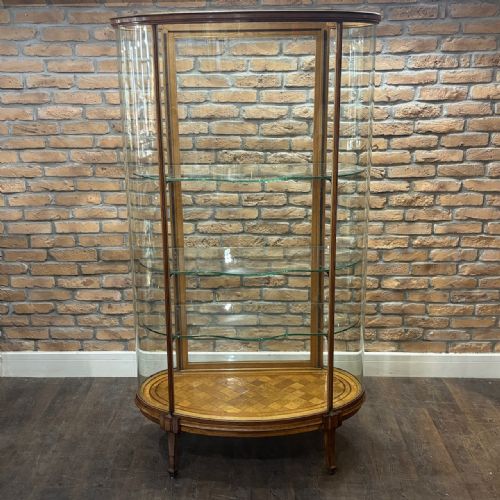




Retail Counter Case
These retail counter case pieces are original commercial fixtures designed to showcase goods, offering period character and practical tabletop or freestanding display.
Retail Counter Case
A retail counter case is a specialised commercial cabinet designed to sit upon a shop counter or stand independently on the floor. These pieces span the Victorian, Edwardian, and Art Deco eras, reflecting the changing needs of late nineteenth and early twentieth century merchants.
The selections encountered here range from compact mahogany and oak countertop boxes to large freestanding shop counters and glazed museum cases. Makers such as F. Sage and Co. produced many of these commercial fittings for pharmacies, grocers, and confectioners.
Specialist variations include chocolate advertising cabinets bearing names like Fry and Rowntree, alongside pharmacy counters and haberdashery displays. Buyers most frequently meet Edwardian and 1920s examples constructed for general retail trade.
How They Were Made
Makers built these commercial cases using solid timbers like mahogany and oak, frequently housing glass panels to maximise visibility for merchandise. Brass and aluminum frames emerged in later twentieth century designs, providing sturdy structural support for extensive glazing.
Interiors often incorporated mirrored glass to reflect light and enhance the appearance of displayed items, while velvet linings provided a contrasting background for small wares. Cabinetmakers joined timber frames with robust joints capable of withstanding daily retail use.
Retail Counter Case Retail Price Guide 2026
Typical asking prices for retail counter case among the pieces listed under this phrase on Sellingantiques today, from the lower quarter to the upper quarter. They describe what is for sale here now, not the wider market.
Pharmacy cabinets occasionally retain a faint scent of historical apothecary ingredients within their timber joints after a century of service.
What Varies in Quality
Quality rests upon the proportion of the cabinetry, the thickness of the timber, and the clarity of the original glass panes. Workshop execution distinguishes standard utility counters from pieces bearing specialised maker badges or sophisticated architectural details like bow ends and gold leafing.
The presence of original maker signatures, specialised advertising sign-writing, and intact internal mirrors elevates the standing of a piece within its period. Robust construction and unaltered hardware demonstrate the original commercial grade of the manufacturing.
F. Sage and Co.·Mackenzie's Biscuits·John Stow Ltd of Bradford·Saml. Elliott and Sons
The Retail Counter Case Glossary
- Countertop
- A cabinet designed specifically to sit upon an existing shop counter rather than stand on the floor. These units brought merchandise directly to eye level for customers.
- Bow end
- A display case featuring curved glass or timber at one or both ends. This shaping softened the rigid lines of standard rectangular shop fittings.
- Advertising cabinet
- A specialised display unit bearing the branding of a commercial manufacturer such as chocolate or pharmaceutical companies. These items served both to store goods and promote specific products.
- Ebonized
- Wood finished with a dark coating to imitate the appearance of ebony. This treatment was common in display furniture from the late nineteenth and early twentieth centuries.
- Haberdashery
- A retail category relating to small articles of trade such as sewing items, buttons, and ribbons. Cabinets intended for this purpose frequently utilise multiple shallow drawers or glazed compartments.
Retail Counter Case: Frequently Asked Questions
What were retail counter cases used for?
Merchants utilised these glazed cabinets to protect delicate goods from dust and handling while presenting them clearly to customers. They housed items ranging from confectionery and tea to pharmaceutical products and small drapery.
Shopkeepers placed them where transactions occurred to encourage impulse purchases. The interior shelving and mirrored backs helped catch the light in busy Victorian and Edwardian retail environments.
How do I date a retail counter case?
Dating relies on observing the materials, construction methods, and stylistic cues present in the woodwork and hardware. Edwardian and Victorian pieces often display rich mahogany or oak frames, while 1930s examples introduce aluminum framing and Art Deco geometry.
Maker plaques and original advertising sign-writing provide further historical markers. Comparing the joinery and glass bevelling helps place a piece within its manufacturing decade.
Can I use these cases in a modern home?
These cabinets suit modern domestic interiors for displaying collections, books, or tableware. Countertop versions fit easily onto sideboards or kitchen islands, while freestanding counters serve as statement storage furniture.
The glass panels protect personal items while offering high visibility. Their robust commercial construction ensures they remain practical for everyday home use.
What is an advertising display cabinet?
Advertising cabinets are specialised shop fittings branded with the name of a prominent manufacturer, such as chocolate or cocoa makers. Retailers received these units to promote specific goods on their counters.
Surviving examples often feature painted glass or sign-written panels bearing historic brand names. They represent a distinct intersection of commercial advertising and utilitarian shop furniture.