

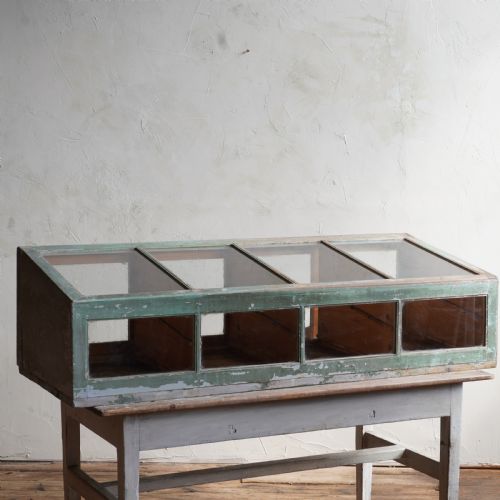


Countertop Vitrine
A countertop vitrine offers a neat glass stage for small treasures, catching the eye with clear panes and timber frames.
Countertop Vitrine
A countertop vitrine is a compact display case designed to sit upon a shop counter or tabletop to show off small goods. When you search for a countertop vitrine, you encounter practical glazed cabinets originating from commercial retail spaces and domestic settings alike.
The selections span distinct periods, including Victorian, Edwardian, and Art Deco eras, alongside industrial and rustic styles. Forms range from simple glass display cases to ebonised pharmacy units and Dutch table top variations.
How they were made
Construction relies on solid timbers such as mahogany and pine, often joined to brass hardware and clear glass panels. Makers shaped these materials to create sturdy frames capable of protecting delicate merchandise while offering all-around visibility.
Surface finishes vary from distressed paint and ebonised treatments to polished wood, reflecting the practical needs of Victorian and twentieth-century shopfitters. Mirror backs appear in certain designs to bounce light through the interior and enhance the display.
Countertop Vitrine Retail Price Guide 2026
Typical asking prices for countertop vitrine among the pieces listed under this phrase on Sellingantiques today, from the lower quarter to the upper quarter. They describe what is for sale here now, not the wider market.
Materials span glass, mahogany, brass, pine, mirror, and painted wood across Victorian, Edwardian, and Art Deco eras.
What varies in quality
Quality rests in the precision of the joinery and the selection of timber used for the structural frame. Finer examples display thoughtful proportions and careful glazing that frame the interior without obscuring the contents.
Commercial provenance also influences the character of a piece, with branded maker plates and specialised pharmacy fittings setting certain cabinets apart from standard retail boxes.
John Stow Ltd of Bradford·F. Sage and Co. London
The Countertop Vitrine Glossary
- Ebonised
- Wood finished with a dark stain or polish to imitate genuine ebony. This treatment was common on display pieces from the early twentieth century.
- Apothecary
- A historical term for a pharmacist, often associated with specialised storage cabinets featuring small drawers and glazed compartments.
- Victorian Dutch
- A style referencing nineteenth-century cabinetmaking traditions influenced by continental European display forms.
Countertop Vitrine: Frequently Asked Questions
What fits inside a countertop vitrine?
These compact cases suit small collectibles, pocket watches, silver trinkets, and natural curiosities. The internal space keeps delicate items safe from dust while remaining clearly visible.
Larger specimens accommodate taller bottles or apothecary jars, depending on the depth of the shelves and the height of the glass panels.
Where should I place a countertop vitrine?
A sturdy chest of drawers, a large side table, or an authentic shop counter provides a suitable foundation for these heavy glazed boxes. Natural daylight from a nearby window helps illuminate the interior.
Ensure the surface is level and stable, as the combination of timber framing and glass panels creates significant weight.
How do I date a countertop vitrine?
Clues lie in the construction materials, hinge types, and overall stylistic markers such as Art Deco geometric lines or Victorian mahogany moulding. Maker signatures or stamps on the timber frame offer the most precise chronological indicator.
Paint finishes, such as distressed historical layers or ebonised surfaces, also point directly to the manufacturing decade.
Are these cases secure?
Most antique countertop vitrines were built for retail display, meaning they often feature simple latches rather than heavy modern security locks. They function primarily to keep curious fingers at bay rather than as high-security vaults.
Collectors should inspect the specific door mechanism if security is a primary concern for their home setup.