


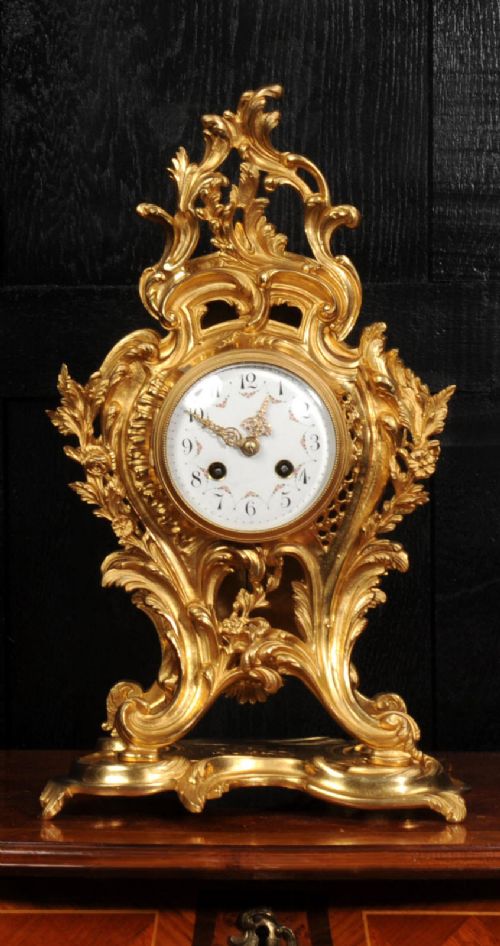


Restored French Mantel Clock
A restored french mantel clock brings precision engineering and intricate metalwork into a room, serving as both a functional timepiece and an ornate centrepiece.
Restored French Mantel Clock
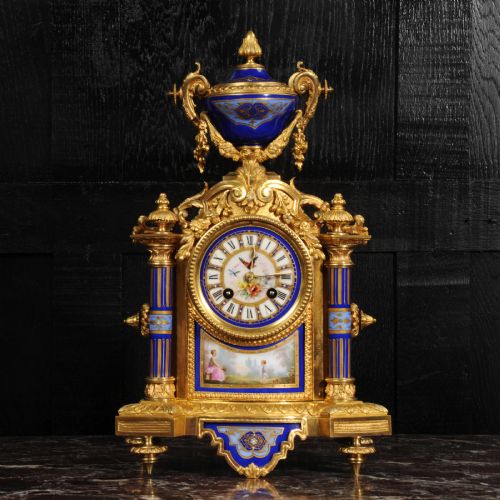
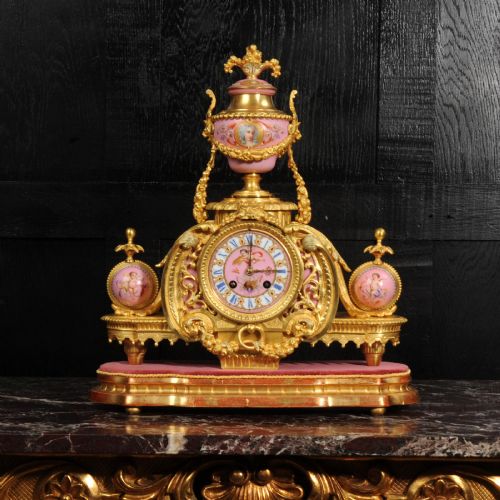
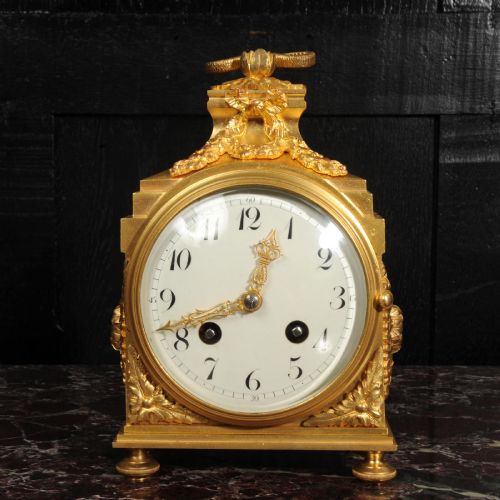
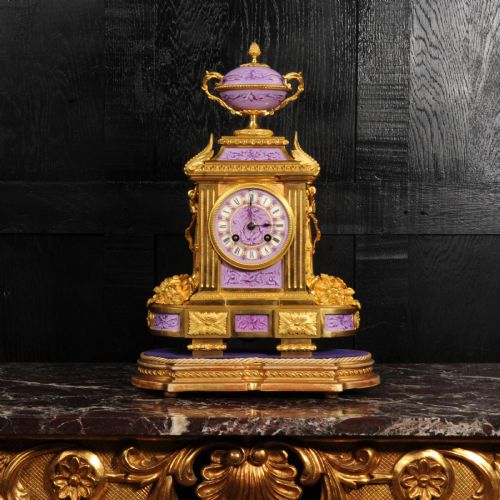
When you search for a restored french mantel clock, you encounter nineteenth-century timepieces originating from workshops active during the Victorian era and the Second Empire. The selection encompasses both substantial mantel clocks and portable carriage clocks housed in bevelled glass cases.
Mantel pieces often adopt ornate French Rococo or Louis XVI styling, featuring sculptural mounts and decorative panels. Carriage clocks frequently incorporate repeating mechanisms and enamel bandings for portable utility.
How they were made
Makers constructed these clocks using brass and bronze foundations, frequently applying ormolu or gilding to the metal surfaces. Sevres porcelain panels and painted enamel details were integrated into the design to add colour and texture.
Intricate clockwork movements were paired with heavy cast bronze or brass cases. Skilled artisans executed detailed chasing and polishing on the metalwork before movements were overhauled.
Some carriage clocks feature delicate enamel paintings of landscapes behind glass, turning a portable timepiece into a pocket-sized gallery.
What varies in quality
The sophistication of the movement largely dictates the standard of the piece, with grand sonnerie, date work, and moon-phase complications representing the more complex tier of engineering. Simpler time-only movements occupy the other end of the range.
The artistry and depth of the gilding, bronze casting, and hand-painted enamel elements separate standard production items from finer works produced by prominent horological firms.
Japy Freres·Achille Brocot·Drocourt·Alfred Drocourt
The Restored French Mantel Clock Glossary
- Ormolu
- Gilded bronze produced by applying a mixture of finely powdered gold and mercury to a bronze base, then heating it to drive off the mercury. This technique creates a durable golden finish characteristic of many nineteenth-century French pieces.
- Carriage clock
- A small, spring-driven timekeeper designed for travel, typically housed in a brass and bevelled glass case with a folding handle on top. These often feature repeating mechanisms to sound the hours and quarters on demand.
- Grand sonnerie
- A complex striking mechanism that automatically chimes both the hours and the quarters on every quarter hour, alongside a repeating function. It represents advanced horological craftsmanship in nineteenth-century clocks.
- Clock garniture
- A set comprising a central mantel clock matched with a pair of decorative side pieces such as urns or vases. These matching sets were designed to sit harmoniously upon a fireplace mantel.
Restored French Mantel Clock: Frequently Asked Questions
What is a repeater carriage clock?
A repeater carriage clock is a portable timepiece that chimes the hours and quarters when a button or lever on the case is pressed.
This function allowed owners to check the time audibly in the dark without needing to light a candle.
How do I wind my clock?
These clocks are powered by mainsprings that require winding using a specialised key inserted into the dial or back plate.
Care must be taken not to overwind the mechanism to avoid damaging the internal springs.
What styles are common in these clocks?
Common styles include French Rococo, Louis XVI, Baroque, and Second Empire designs from the nineteenth century.
These aesthetics emphasise ornate cast metal mounts, symmetrical or flowing scrollwork, and classical architectural motifs.
Are these clocks fully working?
The pieces listed have undergone professional restoration to service the movement and ensure proper function.
Restoration typically involves cleaning the gear train and regulating the escapement for accurate timekeeping.