



French Ormolu Pendulum Clock
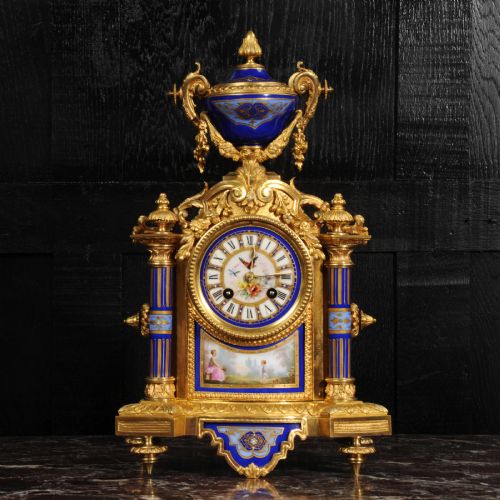
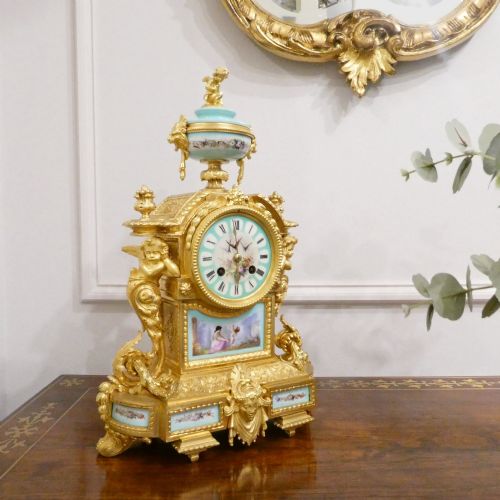
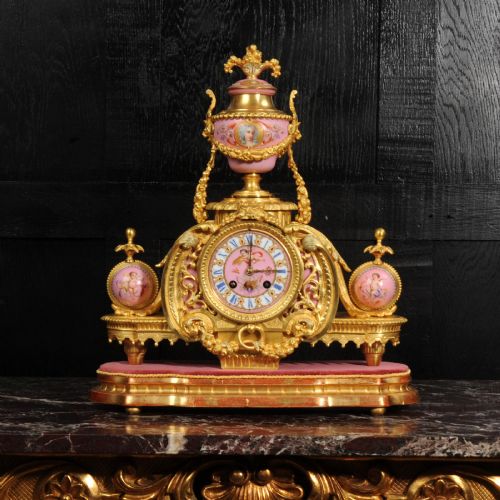
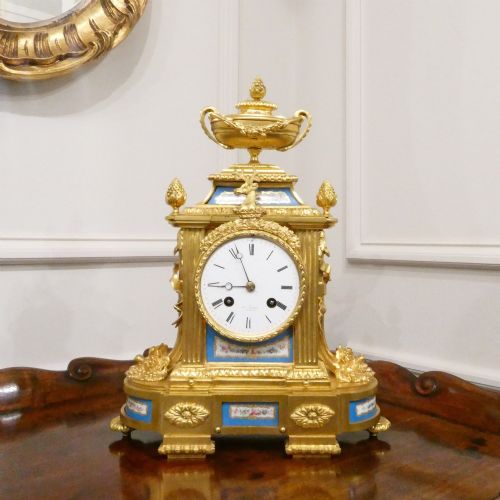
These heavy, gilded objects are french ormolu pendulum clock designs built to bring classical stateliness and reliable timekeeping to grand nineteenth-century interiors.
French Ormolu Pendulum Clock
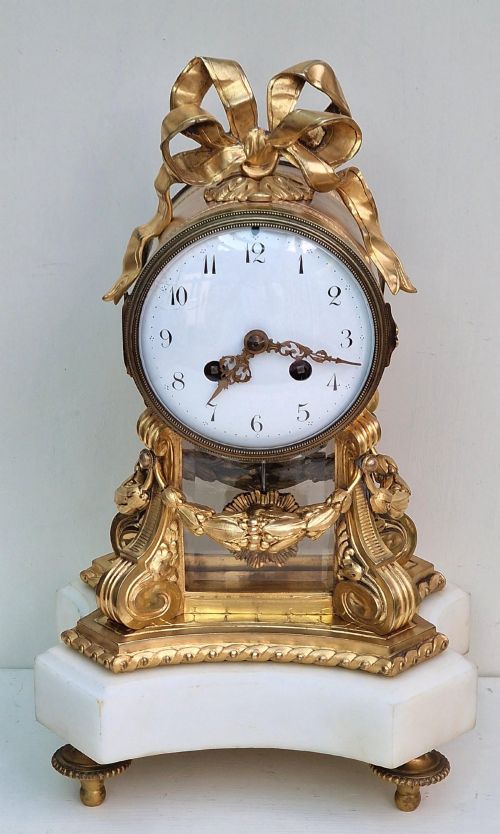
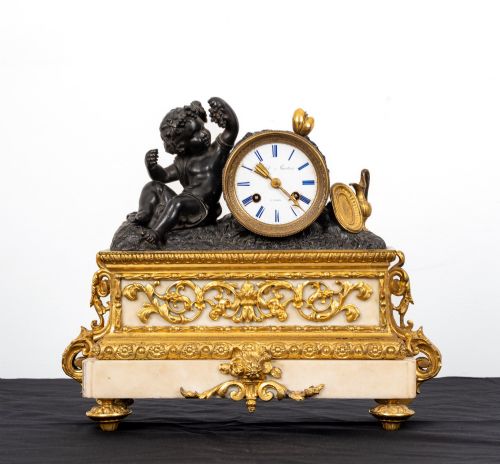
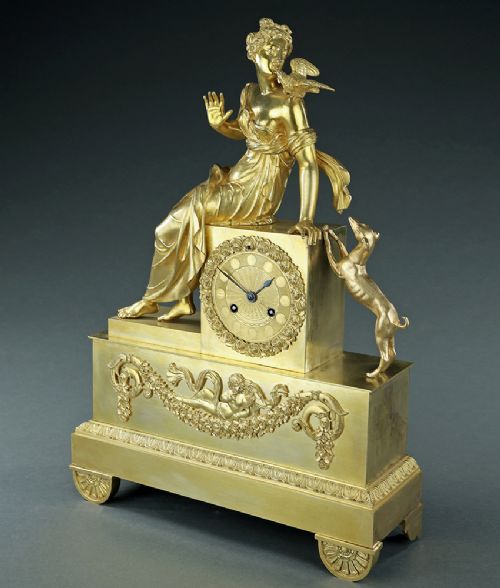
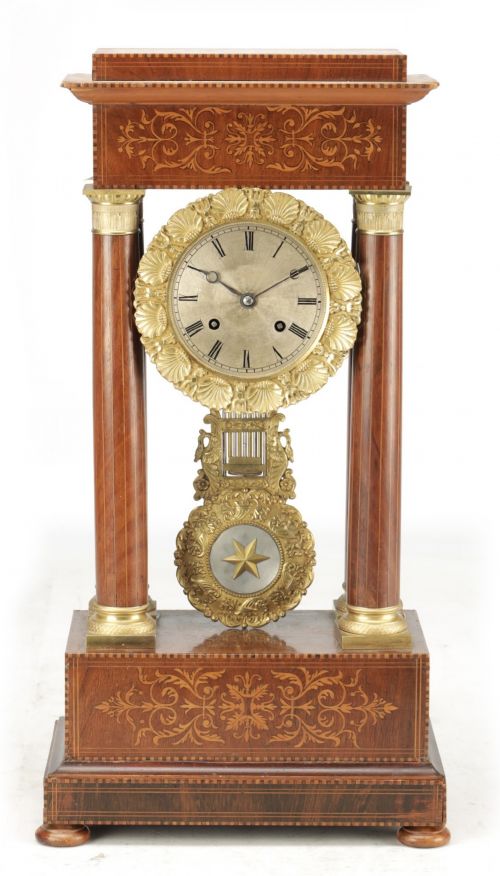
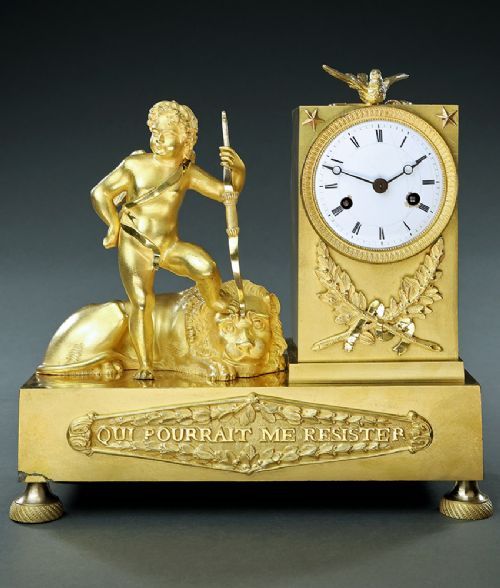
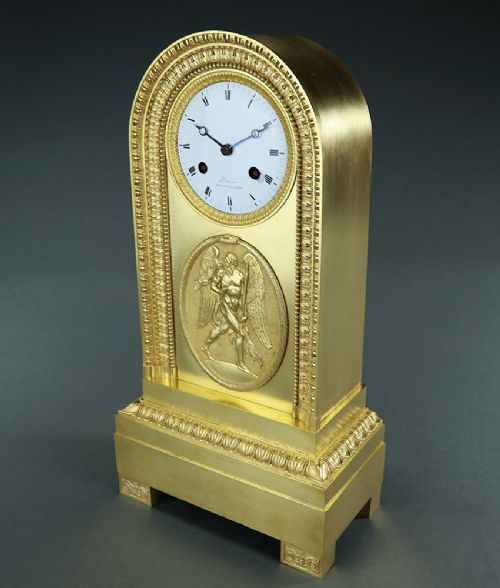
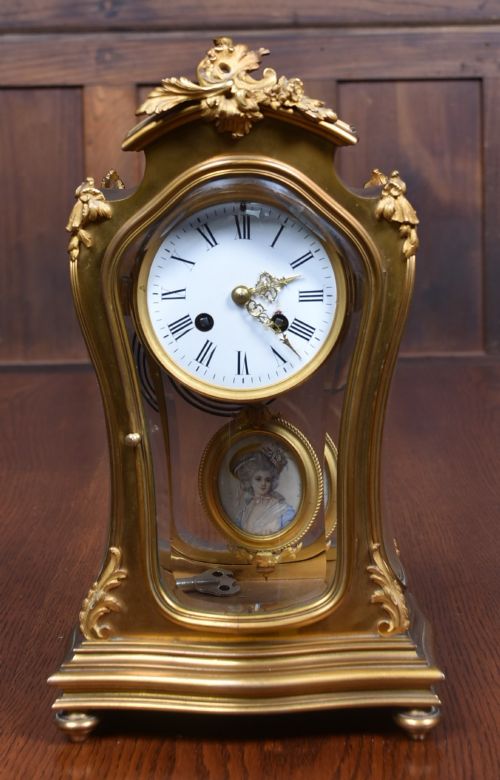
When you search for a french ormolu pendulum clock, you encounter mantel clocks, portico clocks, and four-glass pieces predominantly from the nineteenth century. The examples on this page span the Victorian era, the 1860s, 1870s, and 1880s, alongside earlier Charles X and French Empire expressions.
Most pieces combine metallic gilding with porcelain dial plates, enamel numerals, or marble plinths. Mantel clock formats dominate the selection, drawing on Louis XVI Revival, French Rococo Revival, and Baroque design languages.
Makers and horologists signed movements and dials, while sculptural subjects frequently depict mythological themes, allegories of love, and astronomical figures. The format ranges from compact drum head designs to tall portico clocks featuring cut crystal columns.
Materials and construction
The primary material identity rests on ormolu and gilt bronze, created through the application of finely ground gold leaf or mercury amalgamation onto a base of cast bronze or brass. This metallic shell provides a durable, lustrous surface that resists tarnishing over generations.
Clockmakers integrated decorative accents using white and red marble, cut crystal, tortoiseshell, and hand-painted Sevres porcelain plaques. Dials utilise enamelled copper or porcelain segments carrying delicate numerals, while movements rely on precision brass gears driven by pendulum regulation.
Listings feature periods from the nineteenth century alongside Victorian, 1860, 1870, 1880, 1890, 1900, and 1910 designations.
Distinctions in quality
The division between standard production and exceptional work lies in the crispness of the bronze casting and the depth of the mercury gilding. Superior examples display sharply chiselled acanthus leaves, scrollwork, and figural drapery that retain their highlights without softness.
Internal mechanical excellence separates ordinary pieces from those by celebrated Parisian makers. Movement reliability, signed backplates, and complete original garnitures or matched marble bases indicate higher workshop standards.
Japy Freres·Achille Brocot·Henry Marc·Siffel and Cartier·Le Roy Paris·Delettrez·Samuel Marti·Breguet·Emile Colin
The French Ormolu Pendulum Clock Glossary
- Ormolu
- Gilded bronze produced by applying a gold and mercury amalgam to a cast bronze object before heating to drive off the mercury. This technique gives nineteenth-century French pieces their deep, warm metallic finish.
- Portico clock
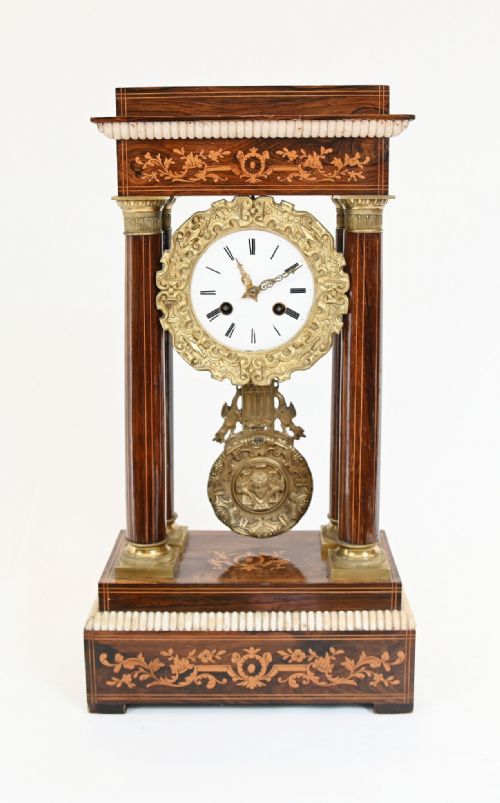
- A architectural clock style featuring a flat entablature supported by four columns, often made of marble or cut crystal. They were popular during the Charles X and French Empire periods.
- Sevres porcelain
- Soft-paste or hard-paste porcelain produced by the French royal manufactory, frequently incorporated into clock dials and decorative panels. Pieces often feature hand-painted floral motifs or classical scenes against coloured grounds.
- Garniture
- A set consisting of a central clock flanked by matching decorative objects such as vases or candelabra. These sets were designed to sit symmetrically on a mantelpiece.
- Boulle
- A marquetry technique using tortoiseshell and brass inlay developed in France. It appears on wooden clock cases and brackets associated with Louis XIV and later revival styles.
French Ormolu Pendulum Clock: Frequently Asked Questions
How do I wind a french ormolu pendulum clock?
Most movements require a specialised key inserted into winding holes on the enamel or porcelain dial face. Turning the key clockwise tensions the internal springs.
Care must be taken not to overwind the mechanism, stopping as soon as resistance is felt to protect the historical brass gears.
Where should I place a heavy marble mantel clock?
These pieces require a sturdy, level surface such as a heavy wooden sideboard or a stable slate mantelpiece. Because of the weight of the bronze and marble components, secure placement prevents tipping.
Keeping the clock away from direct sunlight and damp walls protects the delicate enamel dials and gilt surfaces.
Why does my clock run fast or slow?
Pendulum regulation controls the speed of the beat through a small adjustment nut located below the bob. Lowering the bob lengthens the pendulum and slows the beat, while raising it speeds up the timekeeping.
Environmental changes like temperature variations in a room can also alter the metal expansion and affect daily accuracy.
How do I identify a portico clock?
Portico clocks are defined by their architectural frame, typically featuring four vertical columns made of crystal or marble supporting a top lintel. The pendulum hangs freely in the open central space between the columns.
This neoclassical layout emerged strongly during the early nineteenth century under Charles X and French Empire aesthetics.
What is the difference between ormolu and gilt brass?
Ormolu uses a cast bronze substrate combined with a mercury-gilding process that bonds gold to the metal at a molecular level. Gilt brass usually involves a simpler electroplating method applied to a softer brass base.
Older nineteenth-century pieces more frequently employ traditional ormolu methods, yielding a heavier and richer visual depth.