



Repousse Silver Sugar Basin
A repousse silver sugar basin is a hammered vessel for the tea table, and you want one for its tactile relief work and historic weight.
Repousse Silver Sugar Basin
When you search for a repousse silver sugar basin, you find table vessels designed to hold loose sugar alongside the tea service. These pieces range from Georgian forms of the eighteenth century to Victorian creations produced towards the close of the nineteenth century.
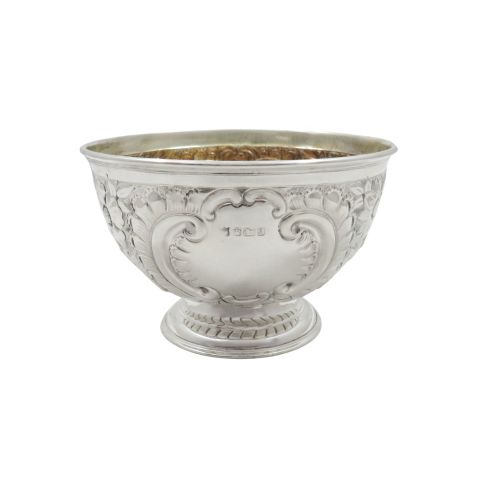
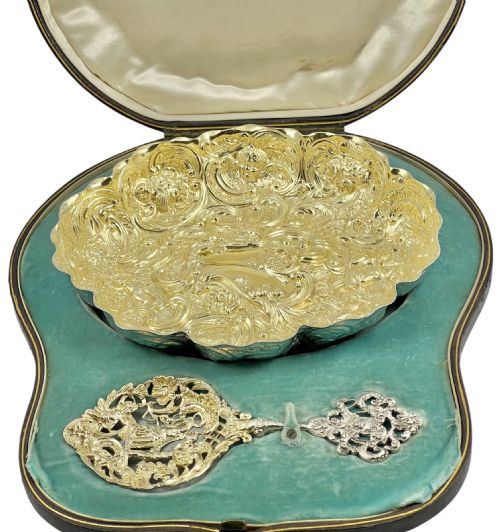
You are most likely to meet Victorian sterling silver bowls, baskets, and cased sets on this page. Examples take the form of footed pedestal bowls, handled baskets, and cased sets complete with sifter spoons.
Origins stretch across London, Birmingham, Ireland, and Scotland, reflecting varied British silversmithing centres. Forms include sugar bowls, decorative bowls, sugar baskets, and tea caddies spanning the Georgian and Victorian eras.
How they were made
Silversmiths shaped these vessels using sterling silver, silver gilt, and silver plate, often hammering the metal from the reverse side to create raised relief patterns. This repousse technique required precise hand control to push out floral, scroll, or rococo motifs while maintaining the structural integrity of the basin walls.
Interior finishes often incorporated gilt or silver gilt layers to protect the base metal from the corrosive nature of refined sugar. Selected pieces also utilised fitted velvet, silk, and leather cases, demonstrating the high standard of presentation applied to domestic tableware.
A Scottish maker hammered a sugar bowl in seventeen forty-five, ensuring your tea table carries Jacobite-era spirit.
What varies in quality
The distinction between standard domestic wares and superior examples lies in the crispness of the hammered relief and the weight of the metal. Deeper, more sharply defined repousse work demands greater skill from the silversmith than shallow, pressed imitation.
Quality also shows in the inclusion of original matching implements, such as sifter spoons, and whether the piece retains its fitted presentation case. Scottish and Irish eighteenth-century pieces display regional stylistic nuances that separate them from mass-produced Victorian equivalents.
John Kincard
The Repousse Silver Sugar Basin Glossary
- Repousse
- A metalworking technique where the design is hammered into relief from the reverse side. This method creates decorative three-dimensional patterns across the exterior of the bowl.
- Silver Gilt
- Silver that has been coated with a thin layer of gold on the surface. This treatment provides a rich interior finish and prevents tarnishing from food substances.
- Sugar Basket
- A footed or handled vessel designed to hold sugar lumps or loose sugar at the tea table. These often feature pierced or repousse decoration paired with a swinging handle.
- Tea Caddy
- A small container used for storing tea leaves securely before brewing. Examples from the Victorian period frequently share the same repousse surface decoration found on sugar basins.
- Sifter Spoon
- A perforated spoon designed for dusting sugar over food or beverages. These utensils commonly accompany sugar bowls in fitted presentation cases.
Repousse Silver Sugar Basin: Frequently Asked Questions
What is a repousse silver sugar basin?
A repousse silver sugar basin is a decorative table container shaped by hammering patterns into relief from the reverse side of the metal.
These vessels were made to serve sugar during tea service across the Georgian and Victorian periods.
How were sugar basins used?
These basins sat upon the tea table to hold lump or loose sugar for sweetening tea.
Many included matching sifter spoons to dispense the sugar cleanly into cups.
What materials are these basins made from?
The primary material is sterling silver, though silver gilt and silver plate also appear.
Interior elements and presentation cases sometimes incorporate velvet, silk, leather, and gilt.
How do I date a silver sugar basin?
Dating relies on stylistic clues like Victorian rococo revival motifs or earlier Georgian forms.
Assay marks and hallmarks stamped into the silver provide precise origin and period indicators.