






Victorian Silver Plate Service
A victorian silver plate service brings nineteenth century dining elegance to the table through tea sets, spirit kettles, and fitted canteens.
Victorian Silver Plate Service
A victorian silver plate service encompasses a broad range of dining and entertaining equipment, spanning tea and coffee sets, cruet sets, and fruit or dessert services. These pieces reflect the expanding social rituals of the nineteenth and early twentieth centuries, drawing on periods from the Regency era through to Edwardian times.
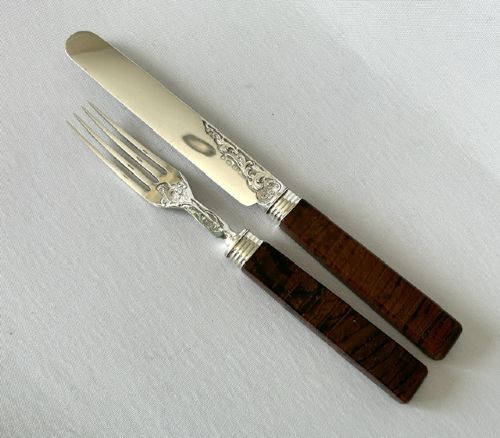
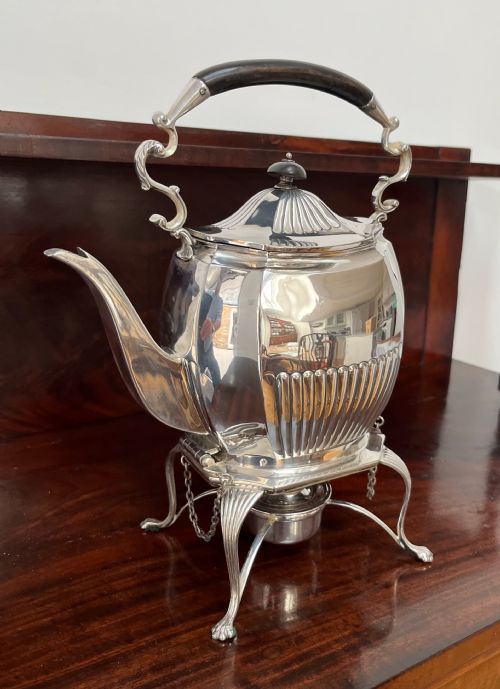
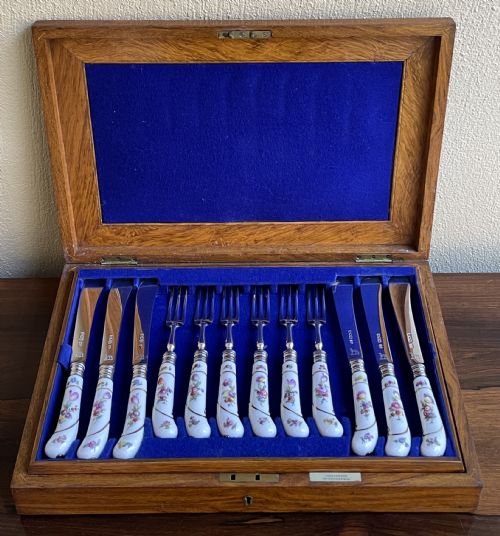
Buyers most frequently encounter large tea and coffee services, spirit kettles on stands, and multi-piece cutlery sets housed in fitted wooden boxes. Teaware and cruet sets dominate the selection, often accompanied by specialist items like butter dishes, meat covers, and communion sets.
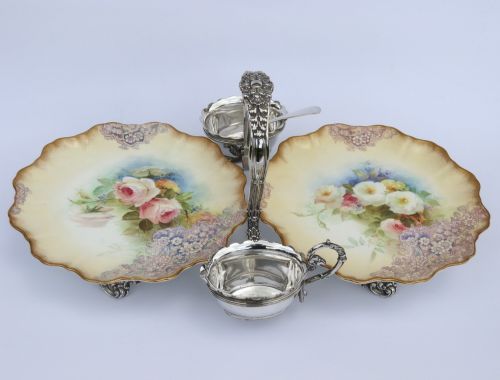
The aesthetic vocabulary stretches from restrained early Victorian designs to ornate Renaissance Revival and Victorian Revival interpretations. Makers utilised various accompanying materials such as porcelain, wood, bone, and glass to complement the plated metalwork.
Standards of Execution
Quality in a victorian silver plate service rests on the crispness of the chased or engraved ornament and the structural integrity of the base metal. Superior examples maintain the integrity of the silver layer without thinning over prominent edges or high-relief decoration.
The distinction between standard production and top tier output involves the weight of the piece and the quality of associated components, such as fitted wooden canteens, hand-painted porcelain inserts, or balanced spirit kettle frames. Complete, matching multi-piece services demonstrate a higher level of original commissioning than assembled groups.
Listings feature items spanning the nineteenth century through the Edwardian period, incorporating silver plate, porcelain, bone, and wood.
Walker and Hall·Carrington·Elkington Mason·Fenton Brothers·Frederik Ellis Tim and Co·Hukin and Heath·Elkington·Thomas Latham·Atkin Brothers·John Round and Sons
The Victorian Silver Plate Service Glossary
- Old Sheffield Plate
- A composite material made by fusing a thin sheet of silver onto a copper base before shaping. This technique preceded standard electroplating and is identified by thin lines of exposed copper on high points.
- Spirit Kettle
- A water kettle mounted on a metal stand above a small burner used to maintain water temperature at the table. These often feature hinged handles and insulated grips.
- Cruet Set
- A matched collection of glass bottles or jars mounted in a silver-plated frame for holding condiments, oil, vinegar, or sauces. They frequently appear with six or fewer bottles.
- Salver
- A flat tray, usually raised on small feet, designed for serving drinks or presenting dishes. They often display engraved surface decoration and cast decorative borders.
- Canteen
- A fitted box or case designed to store a complete set of cutlery or serving pieces securely. Interiors are typically lined with velvet or cloth to protect the silver plate.
Victorian Silver Plate Service: Frequently Asked Questions
What is included in a tea service?
A standard tea service from this period typically comprises a teapot, a coffee pot, a cream jug, and a sugar bowl. Larger configurations often add a matching tray and a spirit kettle.
These pieces were designed to match in style and decorative engraving, creating a uniform appearance for formal drawing room hospitality.
How were spirit kettles used?
Spirit kettles provided a steady supply of hot water during tea service without requiring trips to the kitchen. The integrated burner underneath used methylated spirit to keep the water warm.
They sit on dedicated metal stands featuring hinged frames that allow the vessel to tilt for easy pouring into individual teapots.
What are cruet sets used for?
Cruet sets held various condiments and sauces for dining table use, keeping vinegar, oil, pepper, and mustard within reach. The glass bottles slotted into a portable silver-plated frame with a central carry handle.
Victorian examples range from simple frames to elaborate multi-bottle arrangements intended for formal dining.
How do I identify Old Sheffield Plate?
Old Sheffield Plate involves a physical fusion of silver and copper rather than an electrical deposition. Close inspection often reveals subtle lines of exposed copper along edges where the outer silver layer has worn through over generations of use.
This method predates mid-nineteenth century electroplating processes and generally indicates an earlier nineteenth or late eighteenth century origin.