


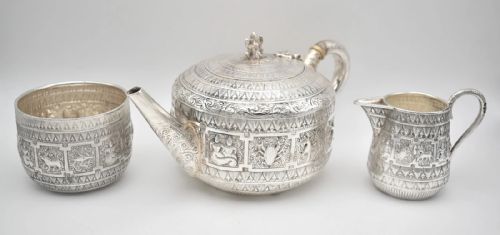

Chased Silver Milk Jug
These chased silver milk jug pieces combine tactile surface decoration with practical tableware utility, offering both Georgian restraint and Victorian exuberance.
Chased Silver Milk Jug
A chased silver milk jug brings domestic history directly to the table, taking forms from Georgian cream jugs to Victorian and Edwardian examples. Buyers searching this phrase look for small pouring vessels intended for milk or cream, distinguished by hand-hammered surface relief.
The pieces on this page span Georgian, Victorian, and Edwardian periods, alongside Chinese Export and later 20th-century items. One is most likely to meet Victorian sterling silver or silver-plated cream jugs, often appearing as individual vessels or alongside matching sugar bowls and tea sets.
Forms range from simple pear-shaped cream jugs to elaborate naturalist designs featuring bamboo handles or grapevine detailing. Makers from London workshops as well as international names like Luen Hing contribute to the variety found within these listings.
How they were made
Makers shaped sterling silver, solid silver, and silver plate by hammering and raising the metal from sheet form. Details such as bamboo handles and ebony additions provide contrasting textures against the polished or gilt body.
The characteristic chased decoration involves hammering the metal from the reverse or front to push out ornamental motifs without cutting the surface. Artisans then refined foliage, dragons, or zodiac scenes by hand before applying gilt highlights where required.
Listings span multiple eras, including Georgian, Victorian, Edwardian, and Chinese Export periods, using sterling silver, silver plate, and gilt.
What varies in quality
Quality rests on the crispness of the chased relief and the weight of the metal used in the body. Finer examples retain deep, sharp details in grapevine or dragon motifs, while simpler pieces show softer, shallower impressions.
The integration of handles and spouts separates standard production from superior work. Well-balanced proportions and secure mounting of organic elements like ebony or bamboo indicate higher workshop standards.
John Emes·Luen Hing·George Fox
The Chased Silver Milk Jug Glossary
- Chasing
- A metalsmithing technique where the artisan pushes metal from the front using punches to create raised surface designs. This differs from engraving, which removes metal.
- Sterling silver
- An alloy consisting of pure silver and other metals, traditionally copper, standardised for durability and use in tableware. Most British pieces carry hallmarks confirming this standard.
- Silver plate
- A base metal, such as nickel silver, coated with a thin layer of silver. Items marked as electroplated nickel silver fall into this category.
- Gilt
- Silver that has been coated with a thin layer of gold, often applied to the interior of milk jugs to protect the metal from dairy acids.
- Hallmark
- A series of official marks stamped onto precious metal objects indicating the maker, assay office, and year of testing. These marks provide reliable dating for British pieces.
Chased Silver Milk Jug: Frequently Asked Questions
What is a chased silver milk jug used for?
These vessels were designed to serve milk or cream during tea service, adding a decorative element to the table setting.
Today, they function as decorative cabinet pieces, small flower vases, or practical jugs for afternoon tea.
How do I identify the date of a silver jug?
British pieces typically rely on hallmarked date letters stamped directly into the metal by official assay offices.
Stylistic clues such as Georgian simplicity versus Victorian ornamentation also help narrow down the period of manufacture.
What is the difference between silver and silver plate?
Solid silver items consist of precious metal throughout, while silver-plated pieces use a base metal core covered in a thin layer of silver.
Listings specify materials like sterling silver or electroplated nickel silver to distinguish between the two.
Can I use an antique silver jug daily?
Sterling silver and silver-plated jugs tolerate regular use provided they receive gentle hand washing without harsh abrasives.
Acidic contents like dairy should not be left inside for extended periods to preserve any interior gilt finish.