





Repousse Metal Tray
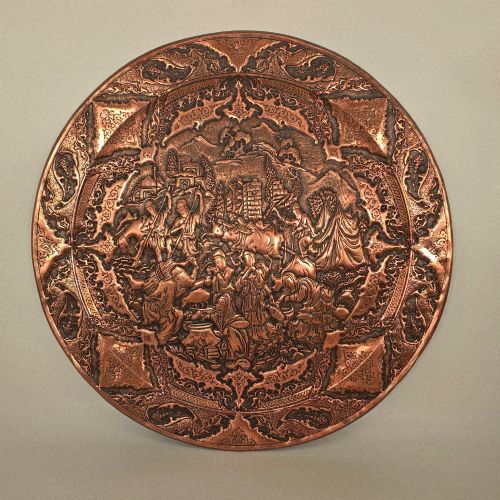
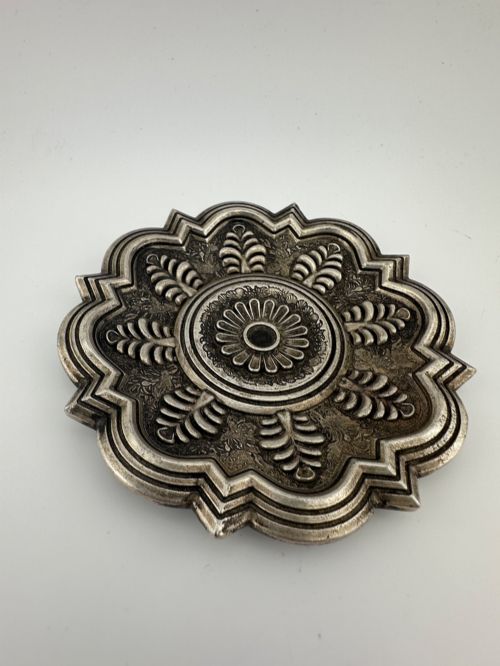
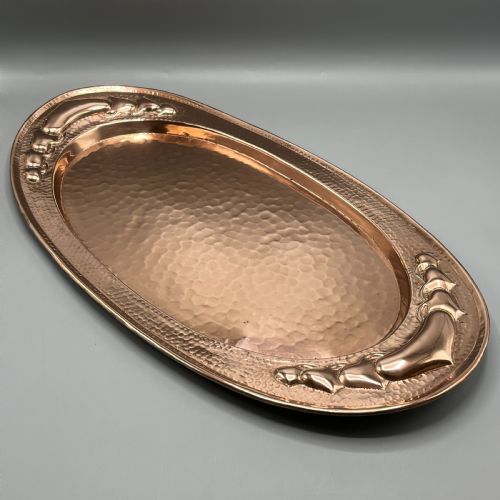
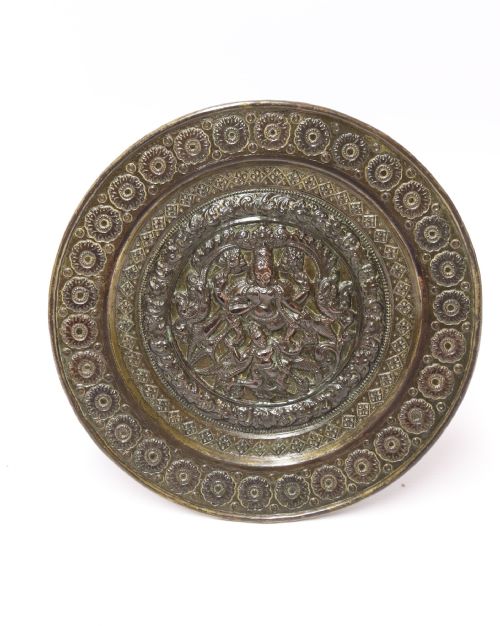
These repousse metal tray pieces bring texture and tactile craft into a room, fashioned from beaten copper, brass, and silver plate.
Repousse Metal Tray
A repousse metal tray encompasses chargers, decorative dishes, and wall plates spanning the eighteenth century through the twentieth century. These items manifest in styles ranging from Arts and Crafts and Art Nouveau to Persian, Anglo-Indian, and Chinese Export designs.
The version most commonly encountered on this page is the copper or brass tray produced around nineteen hundred. These pieces often feature floral motifs, animal subjects, or figurative designs raised from the reverse.
Forms vary from circular chargers and oval wall plaques to deep alms dishes and lotus dishes. They serve as decorative wall hangings or tabletop display surfaces.
How they were made
Makers shaped these objects using copper, brass, bronze, silver plate, white metal, and pewter. The primary technique relies on hammering or beating the metal from the reverse side to push the design into relief.
Workmen then refined the raised patterns on the front using chisels, punches, and engraving tools to add surface detail and texture. Some pieces incorporate piercing, patination, or silver plating over a base metal like copper or bronze.
Repousse Metal Tray Retail Price Guide 2026
Typical asking prices for repousse metal tray among the pieces listed under this phrase on Sellingantiques today, from the lower quarter to the upper quarter. They describe what is for sale here now, not the wider market.
Listings feature items spanning the eighteenth century, nineteenth century, and twentieth century, executed in copper, brass, silver plate, bronze, and pewter.
What varies in quality
The distinction between ordinary and superior examples lies in the crispness and depth of the hammered relief work. Skilled artisans achieved subtle gradations in the contours of foliage, animals, and figures, whereas simpler pieces show flat or uniform stamping.
Material thickness and finishing also dictate quality, as heavier gauge metals resist bending and hold sharper chisel marks. Workshop attribution, such as links to specific guilds or named makers, elevates the standing of individual chargers.
Faulkner Bronze Company
The Repousse Metal Tray Glossary
- Repoussé
- A metalworking technique where the design is hammered into relief from the reverse side of the sheet. This method creates three-dimensional patterns on trays and chargers.
- Charger
- A large decorative plate or tray intended for display rather than service. These items often hang on walls or sit flat on furniture.
- Patinated copper
- Copper that has been chemically treated to alter its surface colour and tone. This finish accentuates the hammered details of the design.
Repousse Metal Tray: Frequently Asked Questions
What is a repousse metal tray used for?
These pieces function primarily as decorative wall chargers, table centerpieces, or display dishes rather than for serving food or drink.
Their substantial weight and detailed surface work make them suited for mounting on walls or placing flat on large furniture.
How do I clean a copper tray?
Maintenance depends entirely on the existing finish and whether the metal possesses an intentional patination or silver plating. Aggressive polishing can strip away aged surfaces and historical character.
Dusting with a soft dry cloth is usually sufficient for regular upkeep, avoiding harsh chemical cleaners that damage patinated copper or brass.
Are these trays made by hand?
Many examples from the Arts and Crafts and Raj periods involve significant hand working, including hammering, chasing, and piercing.
Evidence of individual handcraft appears in subtle variations across the metal surface and the distinct tool marks left by the artisan.
How can I tell the age of a metal tray?
Dating relies on stylistic clues, manufacturing techniques, and material composition seen across periods from the eighteenth century to the twentieth century.
Art Nouveau and Arts and Crafts designs typically date around nineteen hundred, while alms dishes and certain plaques extend back into earlier centuries.