


Repousse Metal Charger
A repousse metal charger brings tactile weight and beaten metal texture to a wall or table.
Repousse Metal Charger
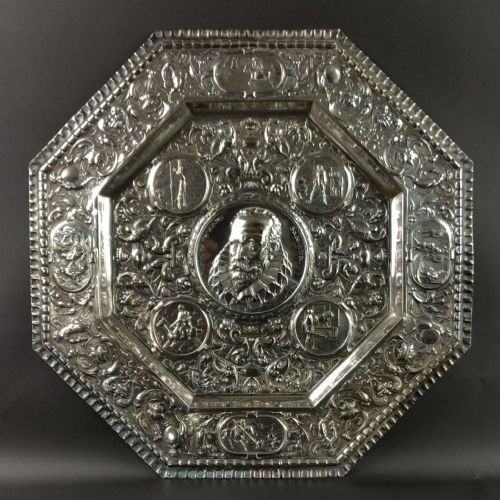
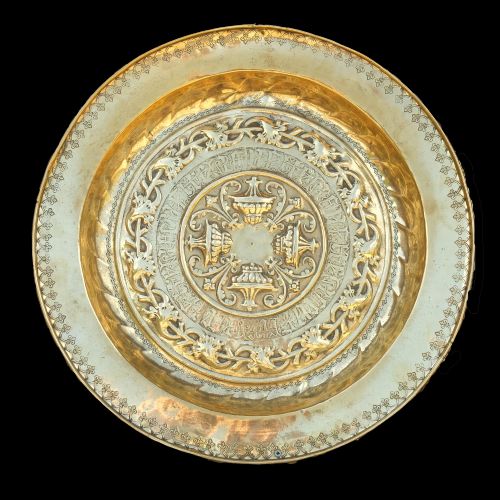
A repousse metal charger functions as a large decorative dish, platter, or wall plaque designed for display rather than dining. When searching for a repousse metal charger, buyers encounter pieces ranging from heavy sixteenth-century Nuremberg alms dishes to nineteenth-century Arts and Crafts wall plates.
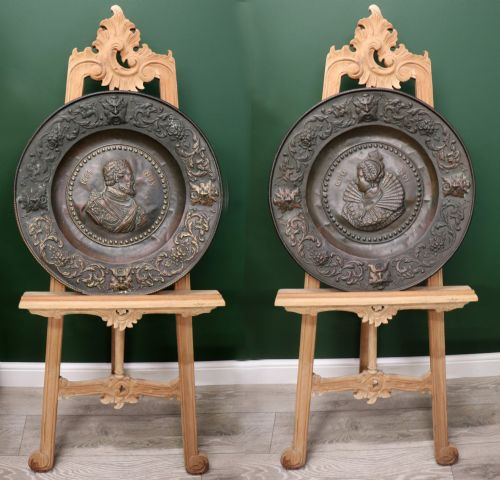
The selections span numerous origins and stylistic revivals, including Raj period Indian copper work, Persian engraved designs, and Gothic style portraits in brass. Most examples found on this page date from the nineteenth and early twentieth centuries, featuring circular trays and wall plaques shaped by hammering and embossing.
Makers and workshops across Europe and Asia produced these items in brass, copper, bronze, and silver plate. The forms vary from simple circular trays to deeply recessed dishes depicting historical figures, mythological scenes, and natural motifs.
How they were made
Artisans created these pieces by hammering sheet metal from the reverse side to push the design into relief, a technique known as repousse. Craftsmen then refined the details from the front using chasing tools, punches, and engraving to add crisp lines and textures.
The materials recorded in these listings include brass, copper, bronze, silver plate, pewter, and electrotype metal. Workshops often patinated the surface with chemicals or polished specific areas to create contrast between the raised motifs and the dark background.
Listings span centuries of metalworking, from sixteenth-century Nuremberg brass dishes to twentieth-century Art Nouveau pewter wall plates.
What varies in quality
The crispness and depth of the hammered relief separate simpler production items from masterwork examples. Superior pieces display confident hand-tooling that gives portraits and foliage a distinct three-dimensional presence, whereas lesser items rely on shallow stamping.
The choice of base metal and the preservation of the original surface finish heavily influence the overall character of the piece. Thick-gauge metals resist distortion and hold intricate chased details far better than thin, pliable sheets.
Faulkner Bronze Company·Elkington & Co·WMF
The Repousse Metal Charger Glossary
- Repousse
- A metalworking technique where the artisan hammers the design from the reverse side to form a raised relief on the front. This method allows for fluid, sculptural decoration on sheets of copper, brass, or silver.
- Alms dish
- A shallow metal basin historically used in churches for collecting monetary offerings or for charitable distribution. Many early examples feature embossed religious or heraldic motifs.
- Electrotype
- A replica or object formed through the electrodeposition of metal onto a mould, popular during the nineteenth century. This process captured microscopic surface details from original metalwork.
- Grand Tour
- A cultural journey undertaken by nineteenth-century Europeans to visit historical sites and acquire souvenirs. Resulting objects often featured classical Greek or Roman motifs.
- Latten
- A durable yellow metal alloy similar to brass, widely used in medieval and early modern Europe for domestic vessels and church plate.
Repousse Metal Charger: Frequently Asked Questions
How were metal chargers used historically?
Historic metal chargers served multiple functions in domestic and religious settings. Early examples acted as alms dishes in churches or as serving platters on noble dining tables.
Later nineteenth-century pieces shifted entirely to decorative use. Owners mounted them on walls as plaques or placed them on sideboards to showcase intricate metalwork.
How do I hang a wall charger safely?
Hanging a heavy metal charger requires a secure mounting system that distributes the weight evenly across the rim or base. Adjustable brass wall hangers with spring clips grip the edge securely without damaging the metal.
For exceptionally heavy copper or bronze pieces, mounting the charger on a custom wooden backing board provides stable support and prevents direct contact with the wall.
How do I clean an antique metal charger?
Cleaning antique metal requires a gentle touch to preserve the natural patina accumulated over centuries. Dusting with a soft, dry cloth is usually sufficient for routine maintenance.
Avoid aggressive metal polishes that strip away the dark recesses of repousse work. Preserving the original aged surface maintains both the visual depth and the historical integrity of the piece.
How do I distinguish Arts and Crafts chargers from earlier styles?
Arts and Crafts chargers focus on honest hand-beaten textures, visible hammer marks, and natural motifs such as pomegranates, fish, and foliage. These pieces reflect a philosophy that valued artisan craftsmanship over industrial perfection.
Earlier Renaissance Revival or Gothic styles feature formal symmetry, classical portraits, and complex heraldry. Understanding these stylistic shifts helps date the workshop origin accurately.