





Victorian Gothic Wall Plaques
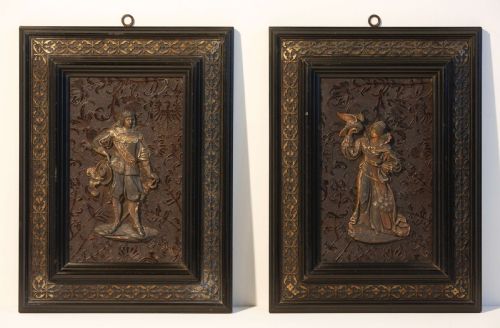
These victorian gothic wall plaques combine ecclesiastical weight with domestic scale, bringing carved timber and cast metal relief directly into the interior.
Victorian Gothic Wall Plaques
Victorian gothic wall plaques encompass a distinct genre of architectural fragments, carved wood panels, and cast metal reliefs spanning the nineteenth century. These items frequently draw upon medieval church motifs, heraldic crests, and Pugin designs tailored for nineteenth-century domestic interiors.
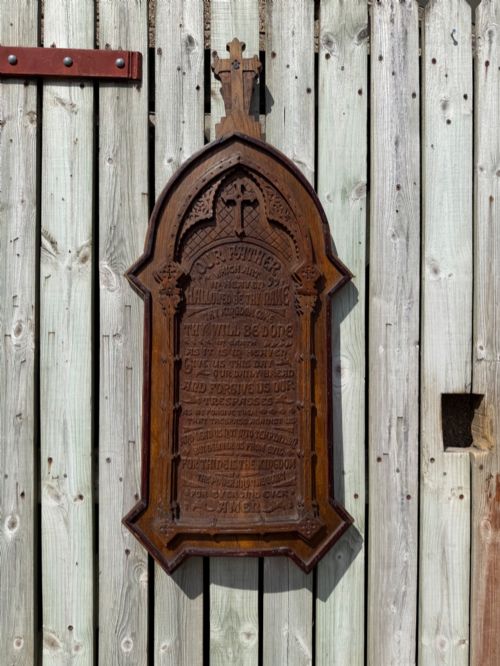
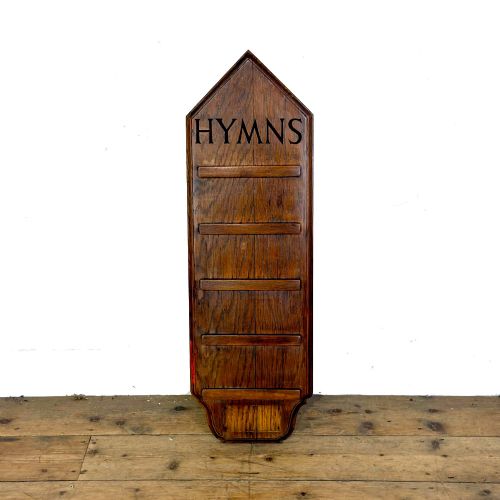
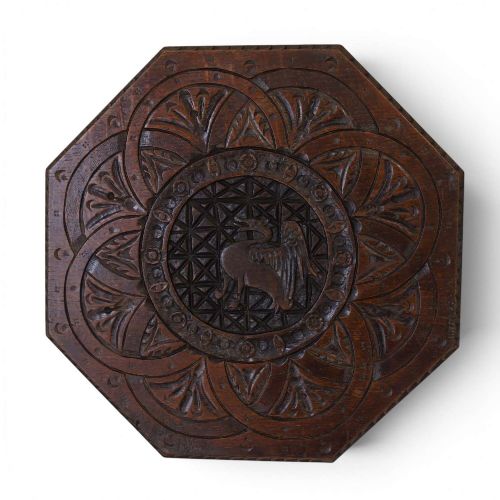
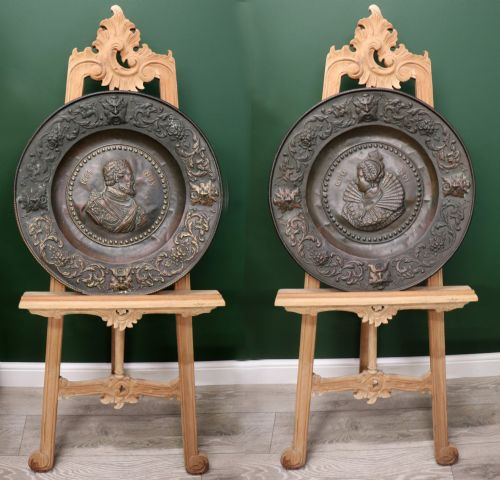
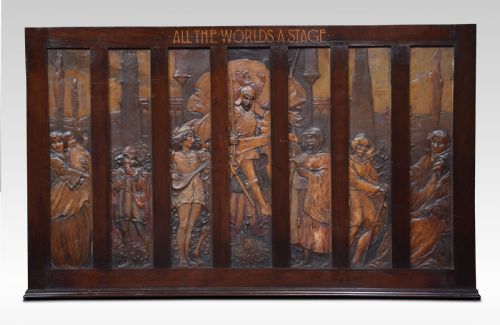
The objects on this page range from heavy tiger oak crests and carved lion masks to copper chargers and illuminated religious texts from tin tabernacles. Buyers will encounter both timber carvings mounted for display and composite items such as former tabletops or inset brass frames adapted for the wall.
Originating predominantly from the nineteenth century with occasional echoes of earlier styles like Baroque Revival or Neo-Renaissance, these pieces reflect the Victorian revival of historicism. They function primarily as striking wall decor, bringing a solemn, architectural character to a room.
What varies in quality
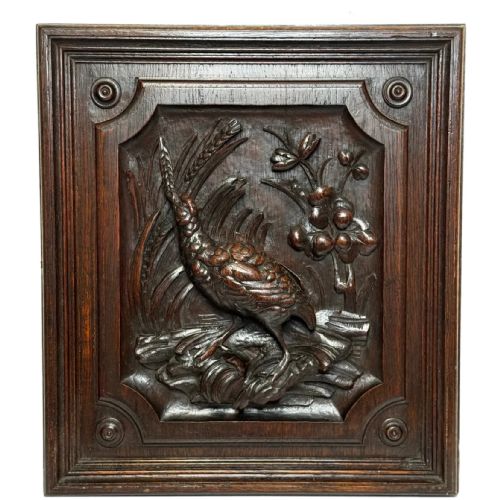
Depth and crispness of the carving distinguish finer pieces from simpler production, particularly in the rendering of facial expressions, fur on lion masks, and architectural tracery. The quality of a panel depends heavily on the carver's command of anatomy and proportion within tight relief spaces.
Materials and framing also dictate the standard of the piece, with solid oak and chased bronze representing a more substantial investment than painted plaster or composite materials. The integrity of the original surface, whether patinated timber or gilded relief, preserves the historical character.
Colonel Sir Edward Massey hangs immortalised in oak and fruitwood, keeping a stern, perennial watch over the Victorian hall.
The Victorian Gothic Wall Plaques Glossary
- Gothic Revival
- An architectural and decorative style popular in the nineteenth century that imitates medieval forms like pointed arches, tracery, and heraldry. It draws inspiration from English and European church building.
- Armorial
- Pertaining to heraldry or coats of arms. These panels display familial or institutional crests carved in wood or cast in metal.
- Pugin Design
- Work influenced by the architect and designer Augustus Pugin, a pioneer of the Gothic Revival. His style emphasises authentic medieval construction and ornament.
- Tin Tabernacle
- A prefabricated corrugated iron church popular in the late nineteenth century. Interiors often featured illuminated religious texts on panels.
- Tunbridge Ware
- Woodworking characterised by tiny mosaic tiles formed from differently coloured woods to create pictorial designs. It appears on specialist wall plaques from the mid-nineteenth century.
Victorian Gothic Wall Plaques: Frequently Asked Questions
How were these plaques originally displayed?
Many of these items originated as architectural salvage, church furnishings, or table tops before being adapted for wall mounting. Some served as crests above doorways or decorative panels within larger Victorian interior schemes.
Over time, owners repurposed these elements into standalone wall decor, mounting heavy timber carvings and metal chargers to display historic motifs in domestic spaces.
What wood is most common?
Oak is the predominant timber found in these nineteenth-century carvings, valued for its durability and strong grain. Tiger oak appears frequently, offering a distinctive figure that complements heraldic and gothic designs.
Walnut and fruitwood also feature in specific panels and portrait plaques, providing smoother surfaces for detailed figurative work.
Are metal plaques common?
Metal plaques form a notable segment of these listings, executed in copper, bronze, white metal, and cast iron. These often take the form of relief portraits, armorial shields, or decorative chargers.
They bring a reflective quality and patinated surface that contrasts with the heavier dark wood panels typical of the period.
How do I date a piece?
Dating relies on identifying the stylistic markers of the Victorian Gothic Revival alongside material evidence like tool marks, timber shrinkage, and metal casting methods. The nineteenth century saw a heavy concentration of these historicist revivals.
Inscribed dates, specific maker designs like those of Pugin, or contextual clues such as tin tabernacle origins help narrow the period of creation.