


Repousse Brass Vessel
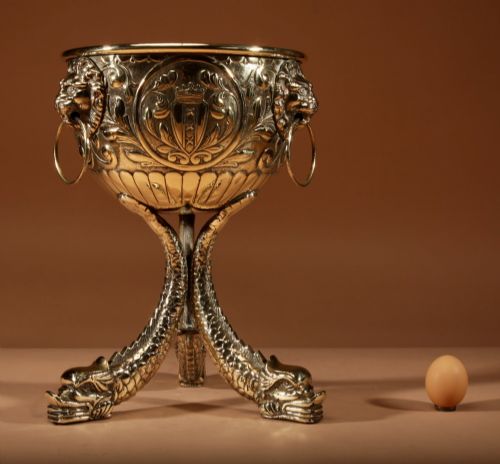
A repousse brass vessel brings hammered texture and warmth to a room, ranging from grand coal scuttles to domestic planters.
Repousse Brass Vessel
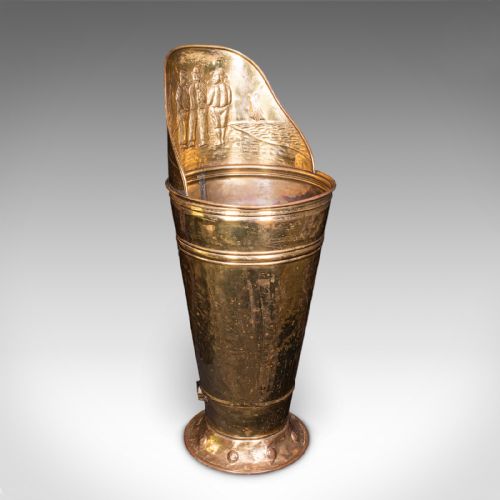
When you search for a repousse brass vessel, you encounter a wide array of domestic and decorative objects shaped by the hammer, most commonly found as jardinieres, planters, and coal buckets. These items span multiple eras, with Victorian and early twentieth-century examples appearing frequently alongside Dutch and French country house designs.
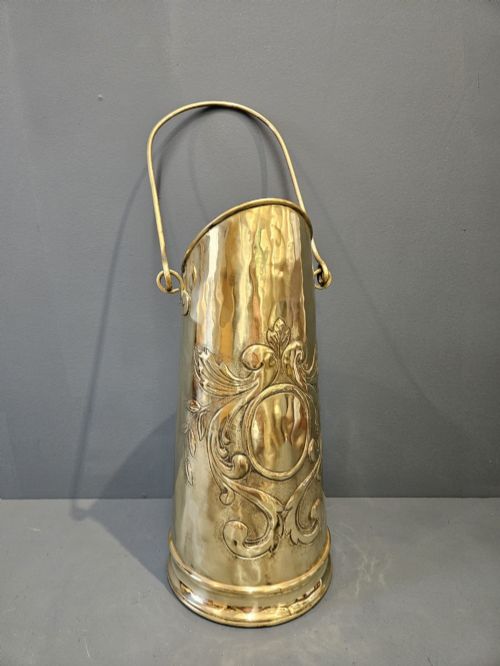
The functional forms extend from large umbrella stick stands and spirit kettles to ceremonial ewers and trophy vases, demonstrating how utilitarian vessels received decorative treatment. Many of these pieces combine brass with copper or ebonised wood mounts, creating varied tonal contrasts across the surface.
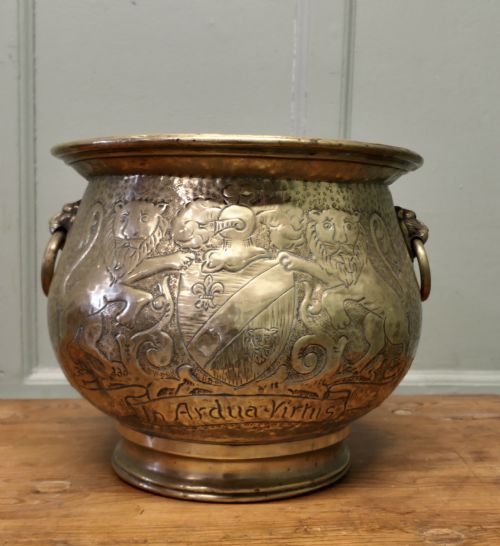
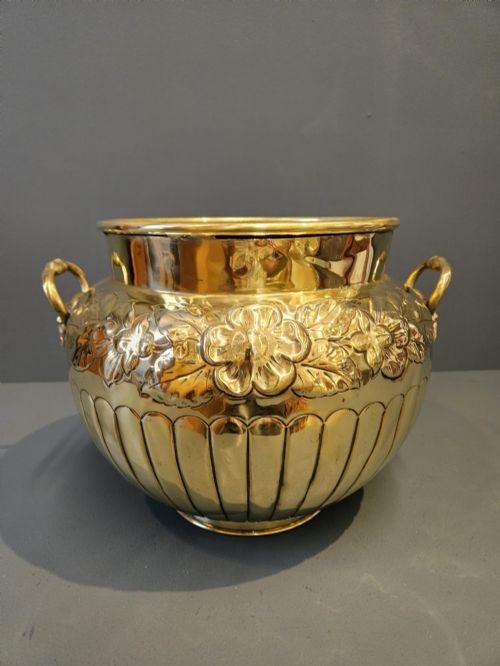
Origin and style dictate much of the character, as Dutch traditional models sit alongside Art Nouveau organic curves and Gothic Revival shields. The selection on this page shows both heavy fireplace accessories and smaller tabletop pieces intended to hold plants or display floral decoration.
How they were made
Makers shaped these objects primarily through hand-working sheet brass and copper, employing repousse and embossing techniques to push the metal from the reverse side and create raised relief designs. Chased detailing was then applied to the front surface using small punches and chisels to sharpen floral motifs, coats of arms, and geometric patterns.
Construction methods often involved joining rolled metal bodies to cast bases and handles with pins, rivets, or brazing, giving sturdy structural integrity to large jardinieres and coal scuttles. Some items also incorporate ebonised wood handles or silver plate accents, highlighting the mixture of metals common in period workshop production.
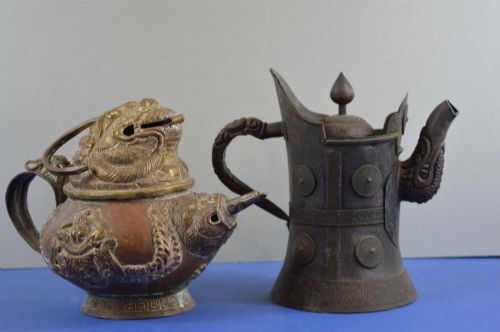
Several items carry Hebrew inscriptions or Buddhist monastic symbols, proving that heavy metal vessels travelled far from their original workshops.
What varies in quality
Quality rests principally on the crispness of the hand-hammered relief and the depth of the metal gauge used to form the body. Thicker sheet brass holds a sharper repousse design and resists denting, whereas thinner metal yields under pressure and lacks definition in the chased details.
The integration of handles, feet, and applied mounts further distinguishes finer examples from simpler utilitarian output. Well-executed pieces show careful finishing at the seams and robust construction that supports the heavy weight of water, earth, or coal over generations of use.
Benham & Froud
The Repousse Brass Vessel Glossary
- Repoussé
- A metalworking technique where the artisan hammers the design from the reverse side to form raised relief on the front. This method creates tactile depth across brass and copper surfaces.
- Dinanderie
- A term for medieval and later brass or bronze wares produced in the Meuse Valley region. The label often applies to European decorative metalwork and heavy domestic vessels.
- Jardiniere
- A large ornamental pot or stand designed to hold growing plants or flower arrangements. These pieces frequently feature chased floral decoration or heraldic shields.
- Coal scuttle
- A container specifically built for holding fireplace fuel, often fitted with a swing handle and a sloping opening. Many Victorian examples utilise heavy brass and copper construction.
- Chasing
- The complementary process to repoussé where small tools refine and detail the front surface of the metal. It adds texture and sharpens lines within the raised design.
Repousse Brass Vessel: Frequently Asked Questions
How do I clean a brass vessel?
Warm soapy water and a soft cloth suffice for removing surface dust without stripping the natural patina that accumulates over decades. Avoid harsh chemical polishes that can wear away delicate hand-chased details.
Dry the metal thoroughly after washing to prevent spotting. Leaving a thin layer of age on the recessed areas highlights the repousse relief work.
Can these vessels hold water?
Many jardinieres and buckets were designed for practical use, but soldered seams can weaken over long periods. Inspect the interior base for past repairs before filling the vessel directly.
Using a modern inner liner protects the historic metal from moisture and mineral deposits. This precaution keeps the original base intact while allowing you to display live plants safely.
How do I date a brass piece?
Construction marks, fastener types, and stylistic motifs provide the clearest clues to age. Heavy cast mounts and hand-beaten surfaces typically point to nineteenth-century workshop production.
Comparing the weight and gauge of the sheet metal against known period examples helps confirm origin. Maker stamps, where present, offer a direct link to specific firms.
Where should I place a jardiniere?
These pieces suit hearth sides, entrance hallways, or living spaces where their reflective metal surfaces catch natural light. Large jardinieres make strong focal points when placed directly on the floor.
Smaller vessels work well on tables or plant stands. Keep them away from damp exterior walls to protect both the metal and any wooden components.