
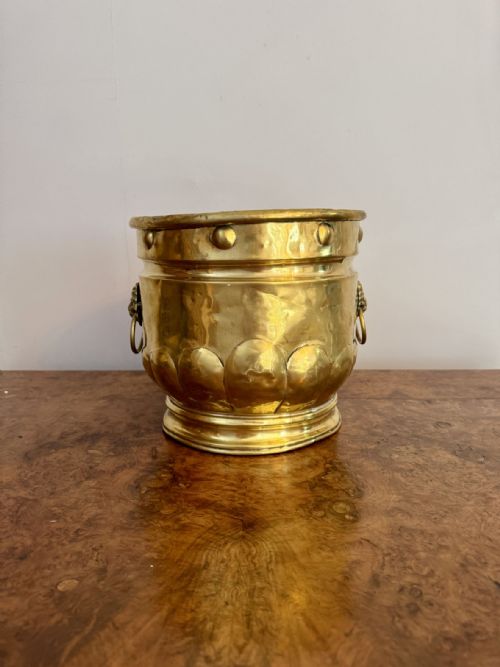
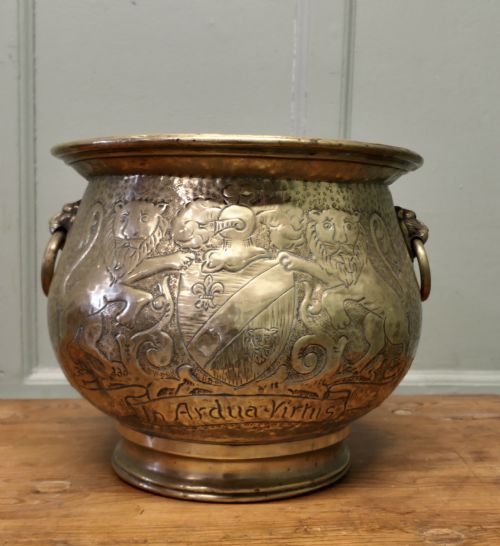
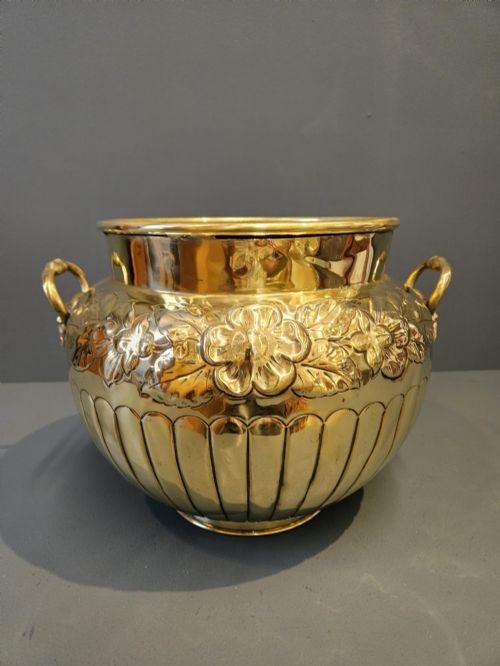
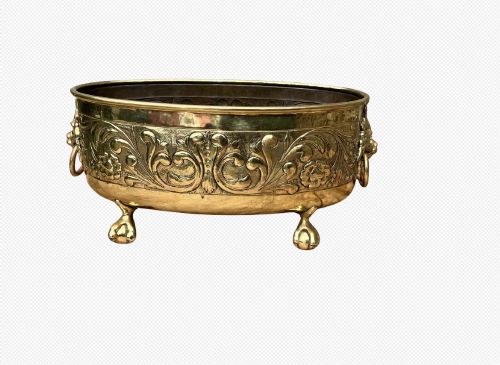
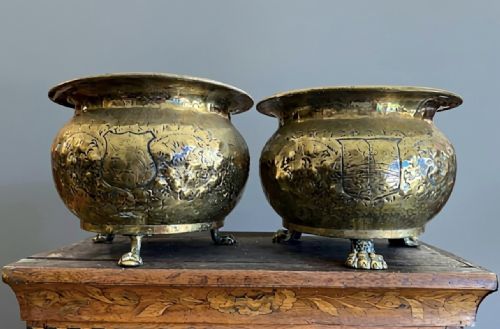
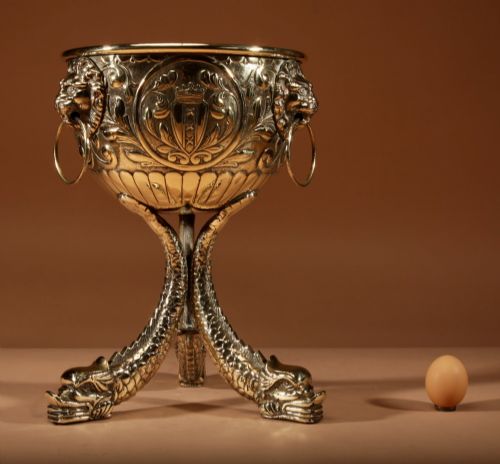


Repousse Brass Jardiniere
A repousse brass jardiniere brings heavy texture and rich metalwork to a room, holding indoor plants with traditional weight.

What They Are
The objects listed here include individual pieces as well as pairs of Dutch brass jardenaires. Origins span across Britain, Belgium, and the Netherlands. Each piece demonstrates the enduring utility of metal plant holders across multiple historical eras.
How They Were Made
These vessels utilise brass and iron as primary materials, shaped through embossing and casting techniques. The metal is hammered from the reverse side to create raised surface patterns characteristic of repousse and dinanderie work.
Craftsmen combined cast elements with embossed sheet metal to build rigid, decorative bodies capable of holding soil and plants. The resulting structures balance utilitarian strength with intricate surface decoration.
Retail Price Guide 2026
Typical UK retail prices for repousse brass jardiniere, calculated from the Sellingantiques database of over a million retail prices indexed since 2003. This retail price guide relies exclusively on Sellingantiques data; no external sources or auction records are used, so the figures do not describe the wider market.
Materials across the selection are primarily brass and iron, incorporating both embossed repousse surfaces and cast structural elements.
What Varies in Quality
Quality rests in the crispness of the hammered relief and the weight of the metal used in the body. Superior examples display deep, deliberate embossing that retains sharp definition across the entire surface.
The integration of cast mounts and handles further separates standard production from finer work. Heavier brass gauge and balanced proportions distinguish the most accomplished nineteenth-century and earlier pieces from later alternatives.
The Repousse Brass Jardiniere Glossary
- Repousse
- Metalworking technique where the design is hammered into relief from the reverse side. This method creates tactile, dimensional patterns across the brass surface.
- Jardiniere
- An ornamental pot or stand for holding plants or flowers. These receptacles are traditionally styled for interior display.
- Renaissance Revival
- Nineteenth-century artistic movement drawing inspiration from sixteenth-century forms. Pieces in this style often incorporate classical motifs and heavy cast detailing.
Frequently Asked Questions
What is a repousse brass jardiniere?
A repousse brass jardiniere is an ornamental plant container decorated with raised metalwork hammered from the reverse side.
These vessels range from eighteenth-century Dutch examples to Victorian and Edwardian pieces designed for indoor greenery.
How were these jardinieres used historically?
Historically, these brass vessels sat in domestic interiors to hold potted plants and large floral arrangements.
Their metal construction protected furniture surfaces while adding decorative weight and metallic sheen to nineteenth-century rooms.
How do I care for antique brass?
Antique brass requires gentle dusting and cleaning to preserve the natural patina accumulated over centuries of age.
Aggressive polishing should be avoided so that the historic surface character and hammered details remain intact.
How do I identify a Victorian piece?
Victorian jardinieres often display heavier casting and specific stylistic revivals typical of nineteenth-century British manufacture.
Comparing the manufacturing techniques and material weight helps distinguish these from earlier Dutch or later Edwardian examples.