


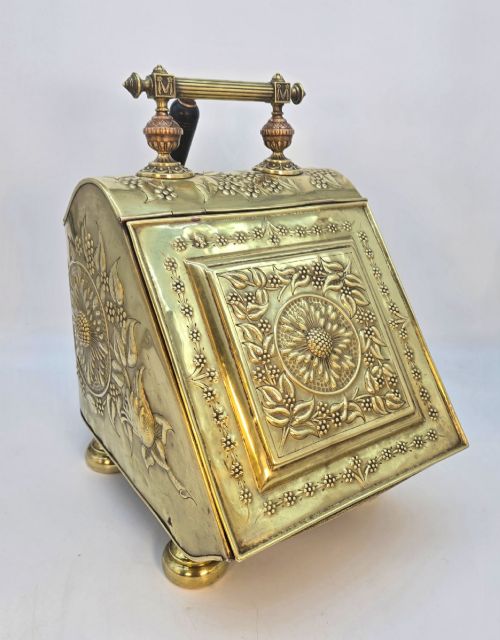
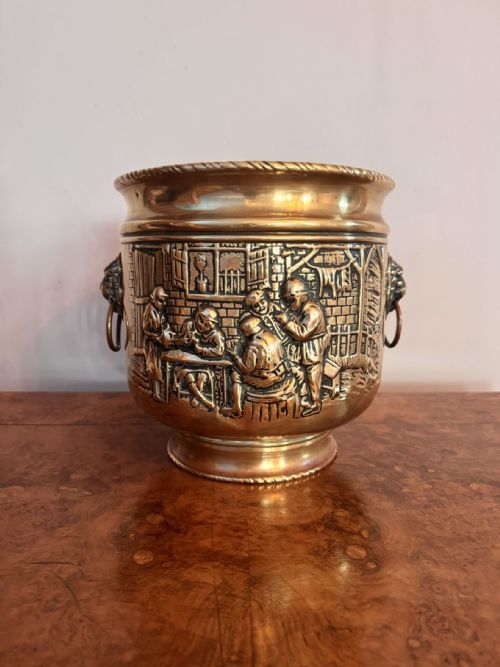
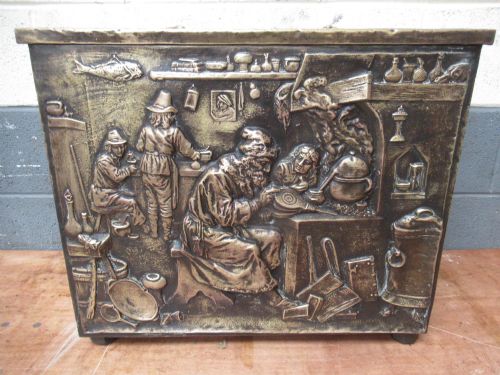
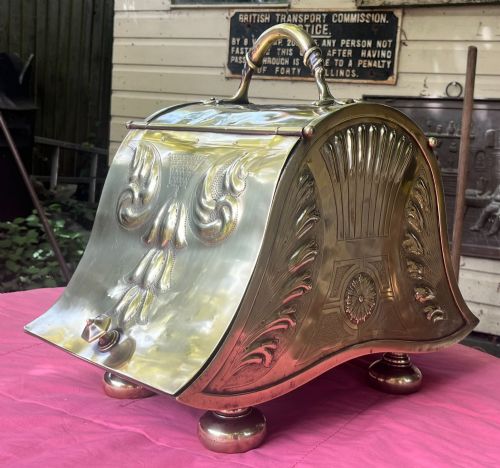


Repousse Brass Coal Bucket
A repousse brass coal bucket brings warmth and texture to a hearth, combining sturdy metal utility with detailed relief work.

Repousse Brass Coal Bucket
A repousse brass coal bucket is a functional fireside container designed to hold fuel near the hearth while adding decorative character to a room. These pieces appear in forms such as coal scuttles, log bins, coal helmets, and jardinieres utilised for fuel storage.
The examples seen on this page span the Victorian, Edwardian, and Regency periods, alongside later twentieth-century interpretations. Makers such as Henry Loveridge, Petrus Ramus, and Benham & Froud contributed specialised vessels to this tradition.
Makers shaped these items from brass, copper, and mixed metals, frequently incorporating ebonised wood handles or liners. Styles range from plain utilitarian models to elaborate Victorian, Arts and Crafts, Art Nouveau, Adam style, and Indo-Persian designs.
How they were made
Craftsmen hammered sheet brass and copper from the reverse side to push the metal outward, creating raised relief decoration known as repousse work. This technique allowed workshops to adorn hard metal surfaces with tavern scenes, floral motifs, and geometric patterns.
Makers joined metal panels using seams and rivets, often adding swing handles, drop handles, and wooden grips for lifting heavy loads of fuel. Additional elements like copper bands, ebonised wood details, and silver plate enhanced both the structure and the visual contrast of the container.
Repousse Brass Coal Bucket Retail Price Guide 2026
Typical asking prices for repousse brass coal bucket among the pieces listed under this phrase on Sellingantiques today, from the lower quarter to the upper quarter. They describe what is for sale here now, not the wider market.
Listings demonstrate materials including brass, copper, ebonised wood, and silver plate across Victorian and Edwardian periods.
What varies in quality
The crispness and depth of the hammered relief work distinguish standard vessels from finer workshop productions. Crisp detailing in figurative scenes or floral borders indicates skilled hand-tooling rather than hurried mechanical stamping.
Substantial gauge metal, secure joinery, and original handles or wooden grips determine the durability and integrity of a piece. Well-preserved liners and maker marks from firms like Benham & Froud add distinct provenance to the item.
Henry Loveridge·Petrus Ramus·Benham & Froud
The Repousse Brass Coal Bucket Glossary
- Repousse
- A metalworking technique where the design is hammered into relief from the reverse side. This method creates tactile surface decoration on brass and copper vessels.
- Coal Scuttle
- A metal container designed for carrying and storing domestic coal near a fireplace. These often feature a sloping body and a hinged lid or shovel.
- Jardiniere
- An ornamental pot or receptacle intended to hold plants, frequently repurposed as a log bin or fuel holder by the fireside. They appear in brass, copper, and mixed metals.
- Purdonium
- A specific type of coal container, often box-like with a sloping front and a matching shovel stored within. They became popular household items during the Victorian period.
- Dinanderie
- An old term for medieval and later brass or bronze wares, often applied to decorative domestic metalwork. It encompasses vessels formed by hammering and casting.
Repousse Brass Coal Bucket: Frequently Asked Questions
How were these buckets used?
These vessels sat beside the fireplace to store coal, logs, or peat for daily hearth maintenance.
Servants filled them from larger outdoor stores so fuel remained close at hand for the sitting room fire.
Can I use them for logs now?
Many people continue to use these metal containers for storing firewood or kindling beside a modern hearth.
Their robust construction handles logs easily, though checking for watertight integrity matters if moisture is a concern.
How do I clean brass safely?
Gentle dusting with a soft cloth preserves the existing patina on older metal surfaces without removing historic character.
Harsh chemical polishes can strip the subtle details created by the original hammered repousse work.
How do I date these pieces?
Stylistic clues such as Art Nouveau curves or Victorian ornamentation help narrow down the period of manufacture.
Maker marks, construction methods, and the presence of riveted seams offer further confirmation of age.