




Embossed Brass Fireside Bin
These embossed brass fireside bins are practical hearth vessels shaped by Victorian, Arts and Crafts, and early twentieth century hands to hold fuel and logs.
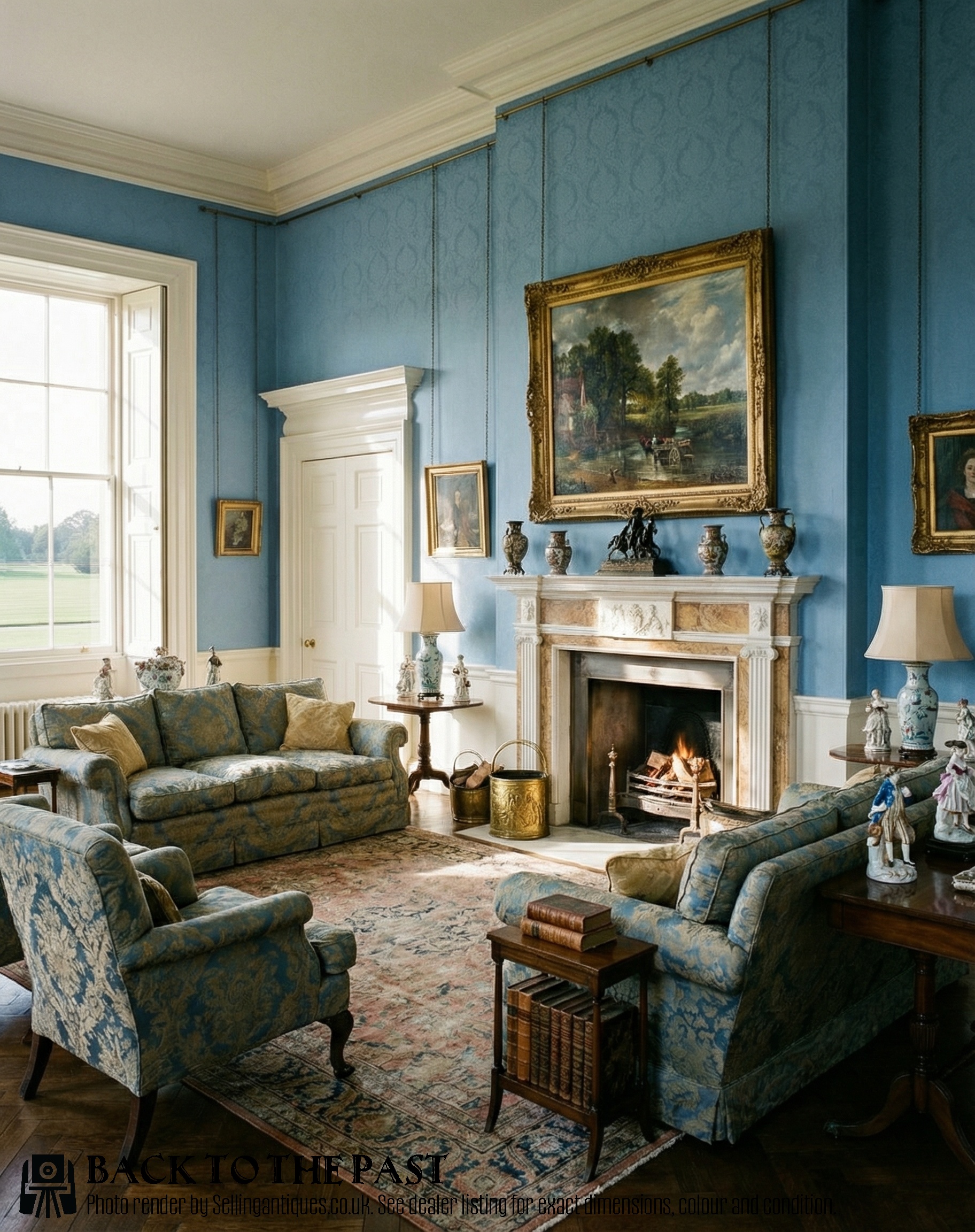
Embossed Brass Fireside Bin
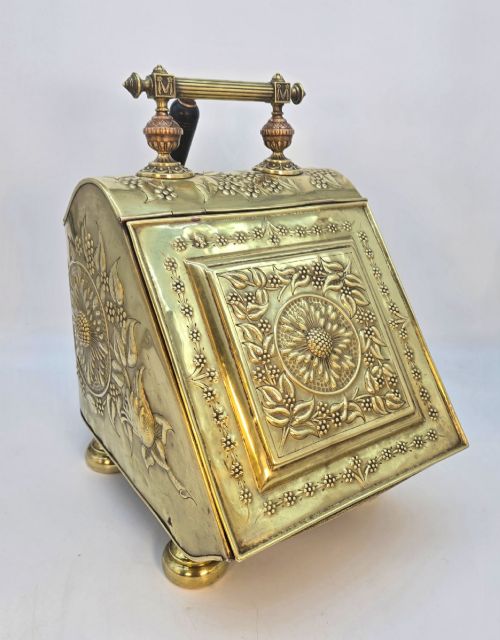
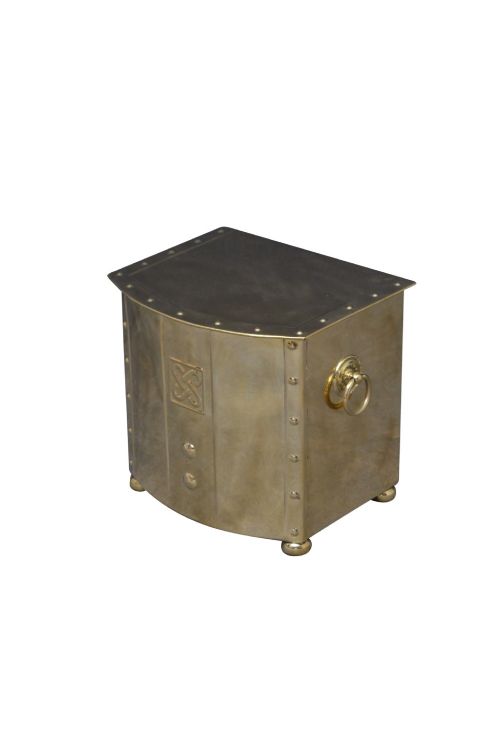
An embossed brass fireside bin is a heavy metal container designed to hold coal, logs, or kindling beside the fireplace. You are most likely to encounter Victorian and nineteenth-century examples alongside Arts and Crafts designs on this page.
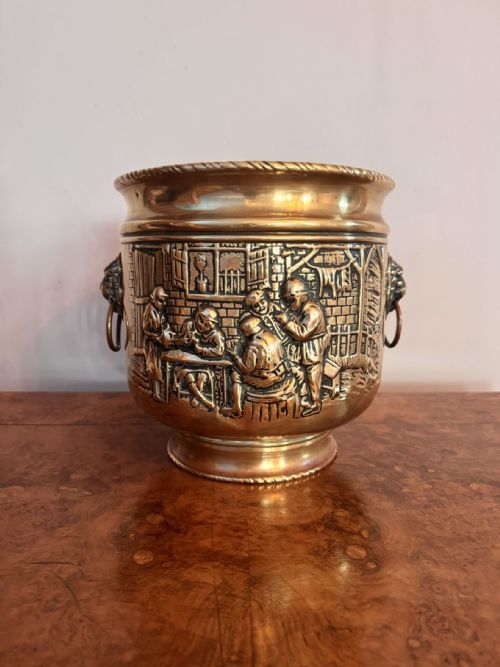
The forms range from circular coal buckets and double-lidded scuttles to log boxes, planters, and newspaper stands. Many pieces originate from British, French, and Belgian workshops, bringing decorative utility to the hearth.
Materials and Construction
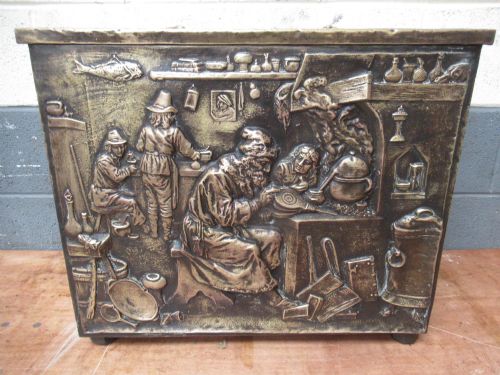
Makers shaped sheet brass and copper, frequently hammering, pressing, or stamping the metal with raised ornamentation, tavern scenes, and floral motifs. Some domestic vessels incorporate wooden elements, ebony details, or galvanised metal inner linings.
Handles, hinges, and bands are fastened to the metal bodies to withstand the daily weight of coal and logs. Polished finishes highlight the warm metallic tones of the brass and copper construction.
Embossed Brass Fireside Bin Retail Price Guide 2026
Typical asking prices for embossed brass fireside bin among the pieces listed under this phrase on Sellingantiques today, from the lower quarter to the upper quarter. They describe what is for sale here now, not the wider market.
Some nineteenth-century bins bear spirited tavern scenes, giving your firewood a watchful audience of tiny hammered revellers.
Assessing Quality and Execution
The distinction between ordinary utility items and superior pieces lies in the crispness of the embossed detail and the sturdiness of the metal gauge. Heavier brass plates and deeply chased or stamped designs hold their definition far better across centuries of use.
Proportion and hardware also separate the ranges, where neatly fitted lids, solid handles, and harmonious secondary materials like copper bands or ebony accents elevate the craftsmanship of the fireside container.
Petrus Ramus
The Embossed Brass Fireside Bin Glossary
- Embossed
- Decorated with raised patterns or designs pressed into the surface of the metal. This technique creates tactile relief across the brass body.
- Scuttle
- A metal bucket or coal scuttle designed with a hinged lid or sloping mouth for carrying and pouring fuel onto the fire. Many feature swing handles for lifting.
- Arts and Crafts
- A design movement valuing handcraftsmanship and simple forms over mass production. Pieces from this style often display hammered textures and vernacular motifs.
- Planter
- A deep vessel adapted to hold potted plants or greenery. These containers share the waterproof metal construction of coal buckets.
Embossed Brass Fireside Bin: Frequently Asked Questions
What were brass fireside bins used for?
These metal bins served as practical containers to store coal, logs, or kindling right beside the hearth. They kept fuel tidy and close at hand for tending domestic fires.
Over time, many of these sturdy vessels found secondary uses as planters or magazine racks in living spaces.
How do I clean an antique brass bin?
Gentle dusting with a soft cloth preserves the accumulated patina on older brass surfaces. Harsh chemical polishes strip away the aged character that collectors value.
If cleaning is necessary, use a mild, non-abrasive metal cleaner specifically formulated for historical brass.
Are these bins waterproof?
Many examples feature original inner linings or solid metal construction designed to contain damp coal or logs. However, prolonged contact with standing water can harm older soldered seams and wooden components.
Using a modern plastic insert protects the historic interior if you utilise the bin as a planter.
How do I distinguish Victorian from Arts and Crafts bins?
Victorian bins often lean toward ornate decoration, polished finishes, and formal decorative motifs. They frequently take the form of scuttles or lidded boxes.
Arts and Crafts pieces emphasise hammered textures, tavern scenes, and simpler, sturdier proportions inspired by vernacular design.