

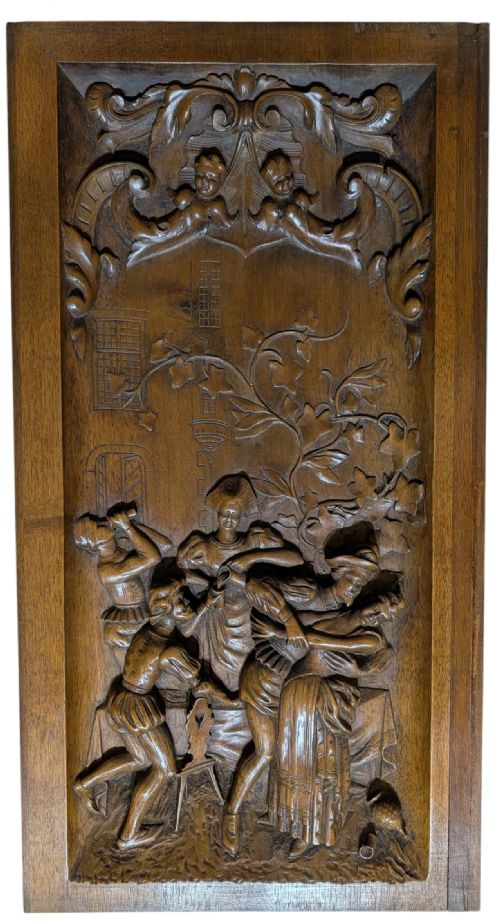


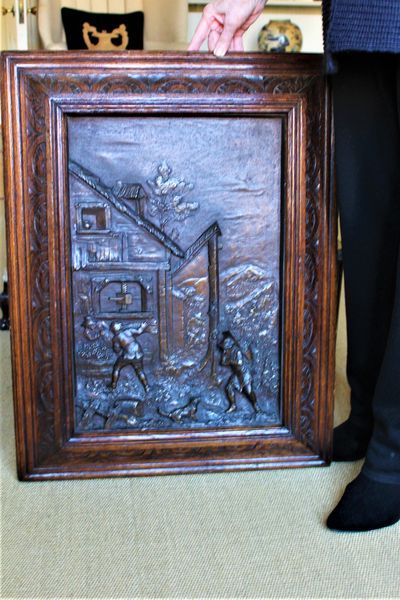
Renaissance Revival Oak Panel
These renaissance revival oak panel pieces bring nineteenth-century historicism into rooms through rich carving and architectural presence.
Renaissance Revival Oak Panel
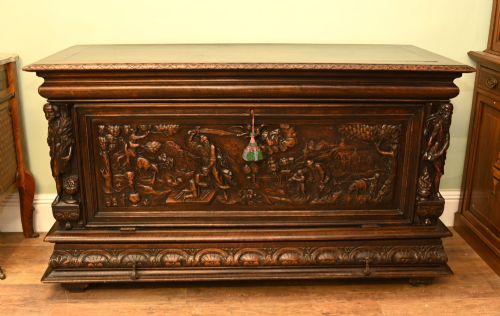
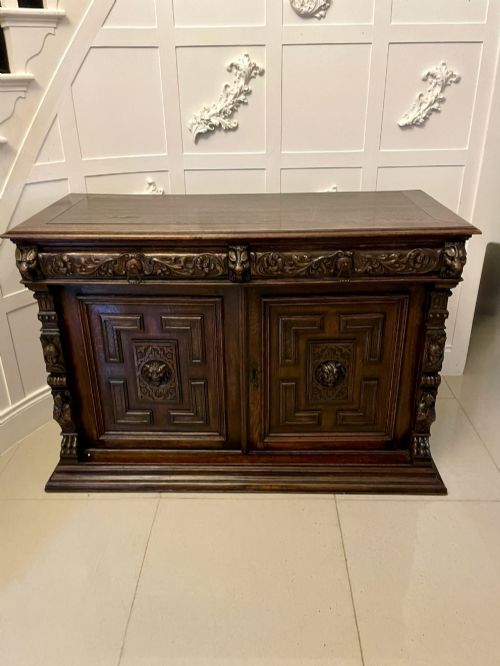
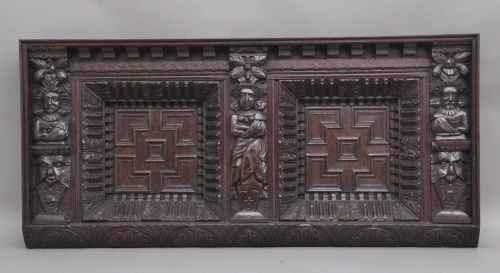
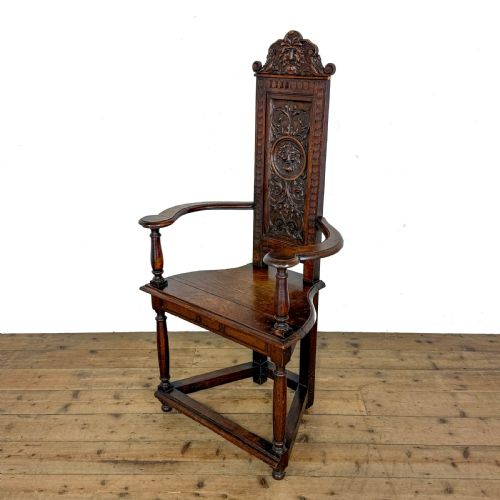
A renaissance revival oak panel brings historicist design and heavy woodwork into domestic interiors, drawing on seventeenth-century motifs and later nineteenth-century interpretations. These items range from wall carvings and architectural salvage to fitted sideboards, settles, and armchairs.
The versions most commonly met on this page date to the nineteenth century, particularly around the 1880s and 1890s, alongside earlier seventeenth-century elements incorporated into later pieces. Makers combined architectural formats with deep relief carving to evoke earlier European styles.
How they were made
Makers utilised solid oak as the primary structural and carving material, sometimes pairing it with walnut, brass, and glass to create functional furniture and decorative panels. Artisans employed hand-carving techniques to shape complex foliage, figures, and geometric patterns directly into the timber.
Surface treatments included applied pigment and tooling on leather elements, while structural assembly relied on traditional joinery methods suited to heavy nineteenth-century and earlier forms.
What varies in quality
The distinction between tiers rests upon the depth, sharpness, and fluency of the wood carving rather than mere ornamentation. Superior examples display crisp relief work and balanced architectural proportions that reflect accomplished hand-craftsmanship.
Integration of secondary materials like brass panels and glass demonstrates the maker's attention to detail, separating standard production items from more ambitious architectural pieces.
The Renaissance Revival Oak Panel Glossary
- Renaissance Revival
- A nineteenth-century design movement that reinterpreted sixteenth-century classical and vernacular forms in architecture and furniture. It draws heavily on Italian and Northern European motifs.
- Architectural Salvage
- Building elements rescued from older structures for reuse or display as wall decoration. These pieces often form the central decorative panels in later furniture.
- Caquetoire Armchair
- A sixteenth-century style chair with a high, narrow back and trapezoidal seat designed for conversation. Nineteenth-century revivals faithfully copied these ergonomic proportions.
- Overmantle
- A large mirror or carved panel designed to hang directly above a fireplace mantelpiece. They anchor the visual weight of a domestic hearth.
Renaissance Revival Oak Panel: Frequently Asked Questions
How do I hang a heavy panel?
Heavy carved timber panels require secure attachment directly into wall studs or masonry using appropriate steel brackets. Distributing the weight prevents strain on the timber frame.
Professional installation ensures the piece remains stable and safe against the wall surface over time.
How do I clean dark oak furniture?
Dust the carved surfaces regularly with a soft, dry cloth to prevent particulate buildup in the recesses. Avoid harsh chemical cleaners that strip the natural patina of the wood.
Apply a microcrystalline wax sparingly when the timber appears dry, buffing gently to maintain a soft sheen.
What rooms suit these panels?
These substantial wooden items suit dining rooms, libraries, and hallways where traditional architectural details provide context. Their dark tones balance well against high ceilings and plastered walls.
Placing them in spaces with stable humidity protects the oak from warping or cracking due to environmental shifts.
Are these pieces genuinely seventeenth century?
Many items combine seventeenth-century carved elements with nineteenth-century structural frameworks created during the revival period. Makers frequently incorporated older salvaged panels into newly built furniture.