
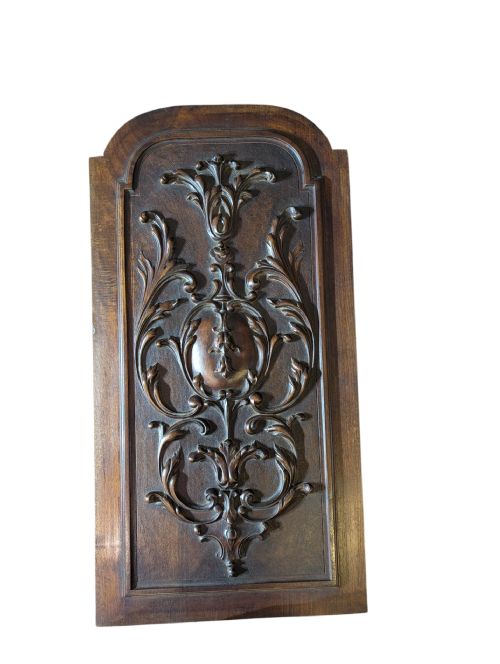


Brown Oak Carved Frieze
These pieces of brown oak carved frieze are architectural fragments and panels carrying centuries of hand-carved detail, sought after for bringing genuine historic depth to an interior.
Brown Oak Carved Frieze
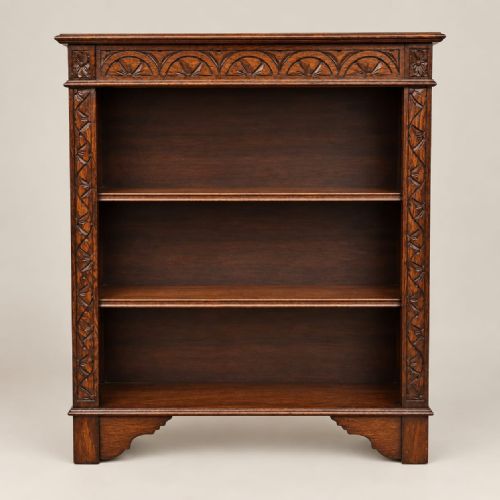
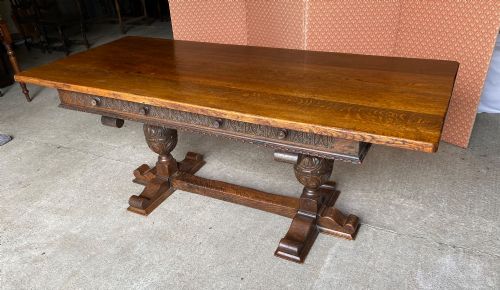
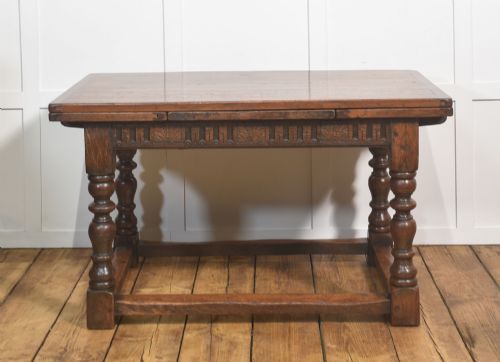
A brown oak carved frieze typically presents as a decorative horizontal band removed from larger furniture pieces, wall panels, or architectural interiors. The listings here span from the seventeenth century through to the Edwardian period and the 1920s, capturing both genuine early work and later revival movements.
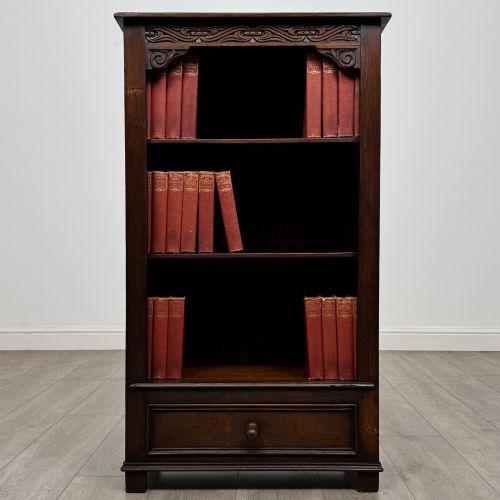
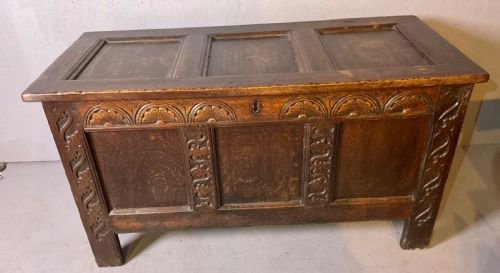
Most examples you encounter on this page appear integrated into items like small bedside cabinets, coffers, and architectural salvage panels. Oak is the primary medium across these pieces, occasionally accompanied by walnut and iron fittings.
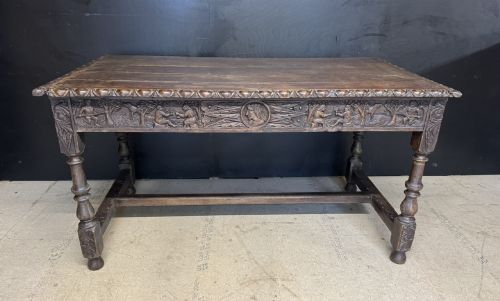
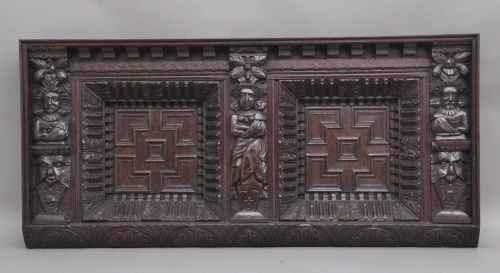
The decorative vocabulary draws heavily from Jacobean, Renaissance Revival, and Gothic styles. This means you will frequently find relief carvings ranging from simple geometric strapwork to more figurative motifs.
How they were made
Makers utilised dense native oak for these panels, selecting timber with strong grain patterns that took deep hand-chiselled relief work cleanly. The carving was executed entirely by hand using gouges and chisels, producing crisp undercut edges that cast sharp shadows across the frieze.
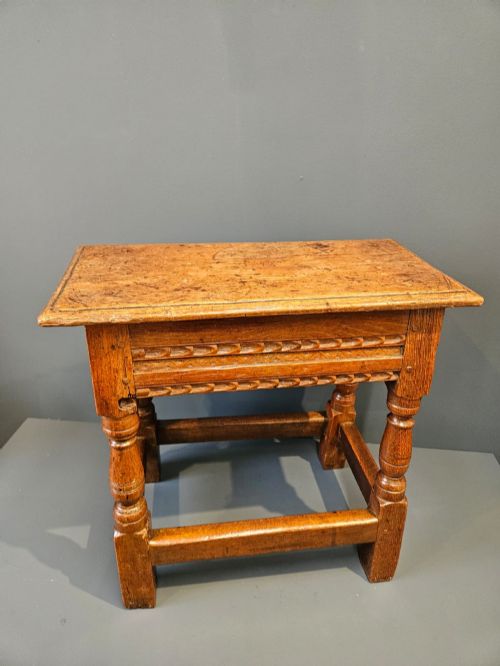
Joinery techniques on the surrounding furniture pieces typically involved pegged mortise and tenon joints. Surface finishes developed through decades of wax application and natural oxidation, deepening the characteristic brown tone of the timber.
One seventeenth-century panel even preserves the specific names Oliver and Joanna Dickonson carved directly into the timber.
What varies in quality
The distinction between ordinary and exceptional pieces lies primarily in the depth and crispness of the chisel work. Friezes carved with confident, varied relief display a liveliness that mechanical or hurried copies lack.
Proportion and the integrity of the timber also dictate value. Pieces retaining their original surface patination without excessive modern sanding or inappropriate chemical stripping hold significantly more visual presence.
The Brown Oak Carved Frieze Glossary
- Frieze
- The wide central section of an entablature, or any decorative horizontal band on a piece of furniture or architecture. It is usually the focal point for carved ornament in these pieces.
- Strapwork
- A type of ornamentation consisting of intersected ribbon-like bands folded into geometric patterns. It is frequently seen on seventeenth-century panels and revival pieces.
- Coffer
- A large wooden chest used historically for storage, often fitted with a hinged lid and heavily carved front panels. Many surviving examples incorporate decorative friezes into their upper rails.
- Joint stool
- A sturdy, traditionally constructed wooden stool joined by pegs rather than glue. These items often showcase period turning and carved rail details.
Brown Oak Carved Frieze: Frequently Asked Questions
What is a carved frieze?
A carved frieze is a decorative horizontal band of timber featuring sculptural relief work. It traditionally sits near the top of architectural structures or major pieces of case furniture.
In older interiors, this element drew the eye across the upper portion of a room or cabinet, often displaying the specific aesthetic of its period.
How do I date an oak frieze?
Dating relies on examining the tool marks left by the carver, the species of timber, and the style of the ornamentation. Seventeenth-century work typically shows broader, less uniform chisel marks than later Victorian revivals.
The overall colour and oxidation of the oak also offer clues, as genuine centuries-old wood develops a distinct patina that modern staining struggles to replicate.
Where were these panels placed?
These panels originated as parts of larger architectural schemes, staircases, overmantles, or substantial pieces of furniture like cabinets and dressers. Salvaged sections are often reframed for display on modern walls.
Their original placement dictated the scale and orientation of the carving, with high-status rooms receiving deeper and more complex relief work.
How do I care for antique oak?
Maintain antique oak by keeping it away from direct heat sources and dramatic humidity fluctuations, which can cause the timber to split. Apply a microcrystalline wax sparingly to nourish the wood surface.
Avoid modern liquid polishes containing silicone, as they build up over time and dull the historic patinated finish of the carvings.