
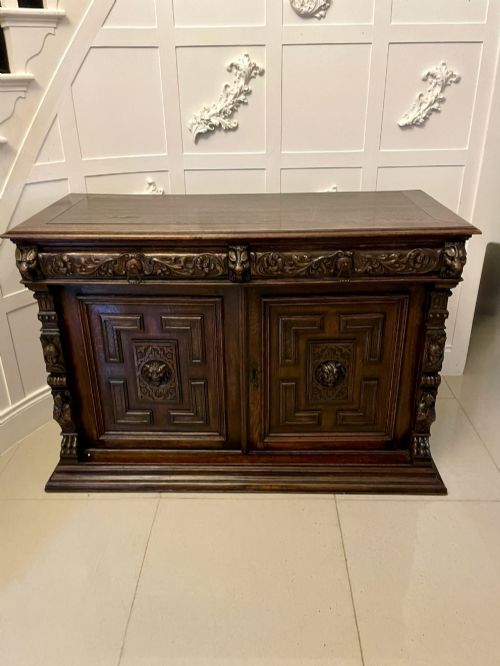
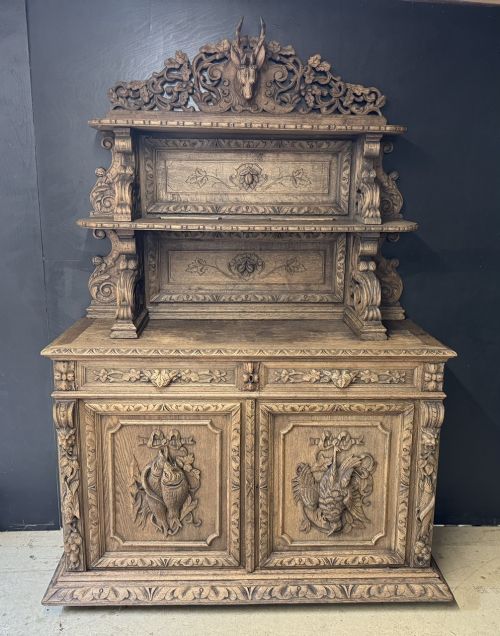
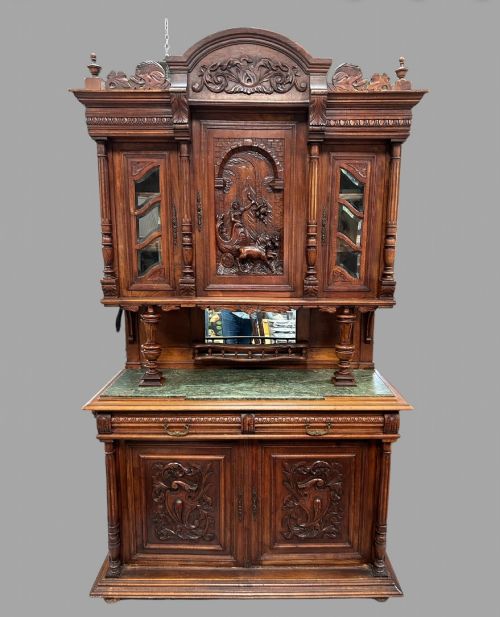
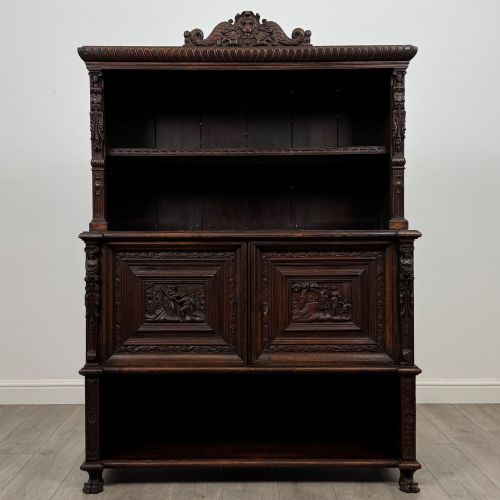


Renaissance Oak Sideboard
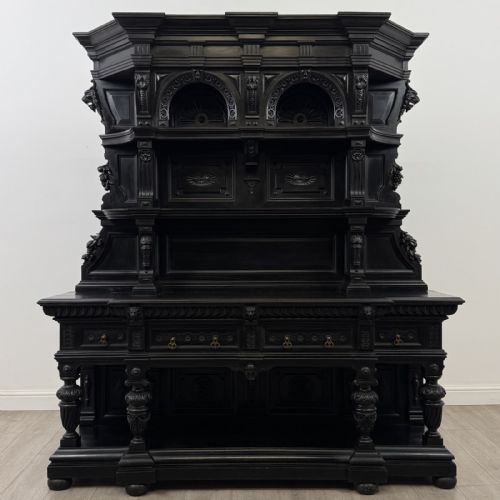
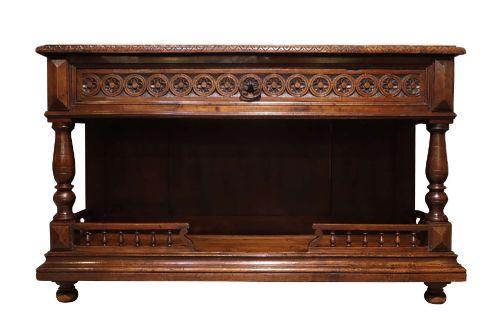
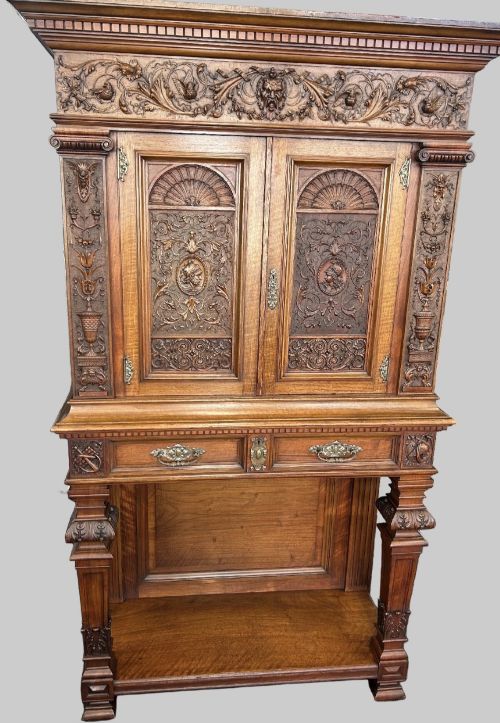
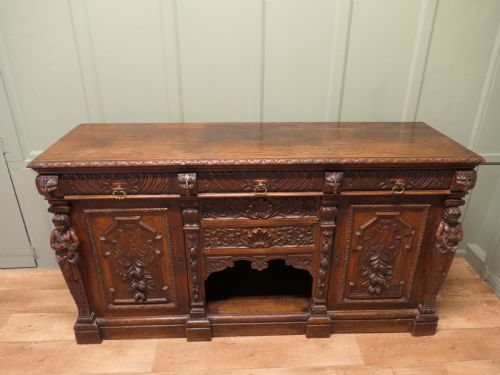
A renaissance oak sideboard is a substantial storage piece defined by heavy carving and architectural presence, bringing immediate gravitas to a dining room or hall.
Renaissance Oak Sideboard
A renaissance oak sideboard is a heavy storage piece typically encountered in nineteenth-century revivals rather than the sixteenth or seventeenth centuries. These pieces appear as sideboards, buffets, cabinets, and dressers, often featuring mirror backs, marble tops, or pedestals.
The versions most commonly met on this page date from the Victorian era, particularly the eighteen-eighties, drawing on French and Flemish styles. Buyers also encounter earlier surviving examples from the seventeenth and sixteenth centuries alongside later nineteenth-century interpretations.
Makers and cabinetmakers of the Victorian period adopted heavy architectural detailing, incorporating motifs like Green Man carvings, lion masks, and elaborate panel work into large hall cupboards and dining room buffets.
Assessing quality
The depth, crispness, and relief of the hand carving separate standard production from superior pieces. Finely articulated figures and balanced proportions indicate skilled cabinet work rather than hurried mechanical replication.
Structural integrity of the timber and the integration of secondary materials such as bevelled glass or brass hardware determine the overall standard. Original surface patination preserved on the oak remains a primary marker of a superior piece.
Listings feature oak predominantly, supported by occasional walnut furniture alongside iron, brass, and glass elements.
The Renaissance Oak Sideboard Glossary
- Renaissance Revival
- A nineteenth-century architectural and decorative style drawing inspiration from sixteenth-century forms. This aesthetic dominates the majority of nineteenth-century sideboards and cabinets.
- Buffet de Corps
- A large, two-tier regional French cupboard used for storing food and tableware. These pieces often feature heavily carved doors and central serving surfaces.
- Green Man
- A sculptural architectural motif depicting a face carved with leaves, vines, or foliage emerging from the mouth. It appears frequently on Victorian oak carvings and furniture.
- Marquetry
- Inlaid wood patterns creating decorative pictures or geometric designs on furniture surfaces. This technique appears on select Victorian hall cupboards.
Renaissance Oak Sideboard: Frequently Asked Questions
Where should I place a renaissance oak sideboard?
These large storage pieces require substantial wall space and high ceilings to balance their heavy proportions and dark timber. Dining rooms, wide hallways, and grand reception spaces suit them best.
Because many examples include mirror backs or grand crowning elements, measure vertical clearance carefully before positioning one against a wall.
How do I care for antique oak furniture?
Maintain the wood by applying traditional wax polish sparingly to nourish the dry timber and preserve the historic finish. Avoid placing heavy oak pieces near direct heat sources or in fluctuating humidity.
Protect the surface from moisture and direct sunlight to prevent the timber from splitting and to keep the original patination intact.
How can I tell a nineteenth-century revival from an earlier piece?
Nineteenth-century revival pieces often incorporate modern conveniences like bevelled mirror glass, machine-sawn backing boards, and standardised iron hardware. Their carving tends to be deep and consistent across the entire surface.
Sixteenth and seventeenth-century examples display tool marks from hand-rived timber, pegged joints, and uneven wear patterns consistent with centuries of domestic use.
What is the difference between a sideboard and a buffet?
Sideboards generally function as serving and display surfaces with integrated drawers and lower cabinets, sometimes featuring raised mirror backs. Buffets historically emphasise enclosed cupboard storage across two tiers.
In nineteenth-century cataloguing, the terms often overlap depending on whether the piece includes a serving top or upper display shelving.