


Flemish Renaissance Cabinet
A flemish renaissance cabinet is a robust timber storage piece, bringing heavy carved panels and centuries of continental craft into a room.
Flemish Renaissance Cabinet
When you search for a flemish renaissance cabinet, you encounter substantial storage furniture spanning several centuries, dominated by nineteenth century revivals. The forms range from grand sideboards and hall cupboards on stands down to compact table cabinets.
The material record on this page shows oak as the primary timber, alongside walnut, ebony, brass, glass, iron, and gilt wood. Examples extend from sixteenth and seventeenth century origins through eighteenth century pieces and nineteenth century interpretations in Renaissance and Baroque styles.
Buyers most frequently meet nineteenth century oak cabinets featuring carved details like lion masks, mirror backs, and stained glass panels. These pieces serve as focal points in large rooms, offering deep shelving and enclosed display space.
How they were made
The construction relies heavily on solid oak and walnut, joined with traditional framing and panel methods to support the heavy timber superstructure. Carpenters utilised dense hardwoods to build structural carcases that could bear deep relief carvings.
Surface decoration involves detailed hand carving directly into the timber, accompanied by contrasting inlays of ebony and highlights of gilt wood. Hardware elements incorporate cast brass and forged iron for hinges, locks, and handles.
Glazing techniques integrate plain glass and stained glass into doors and upper sections, while mirror glass is fitted into the backs of sideboard buffets. These varied materials are assembled to create textured facades with deep shadow lines.
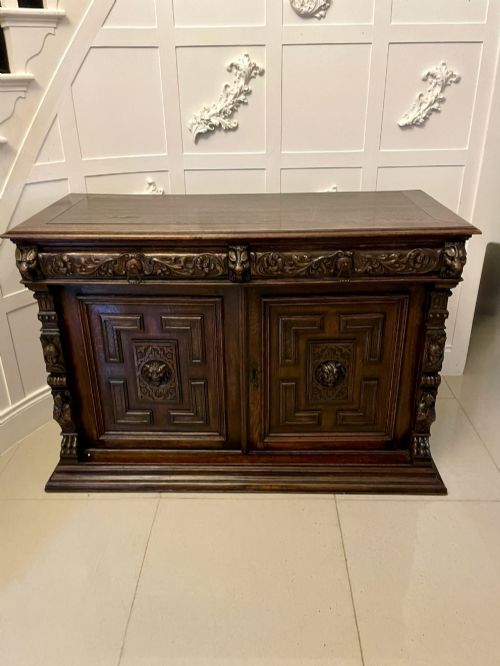
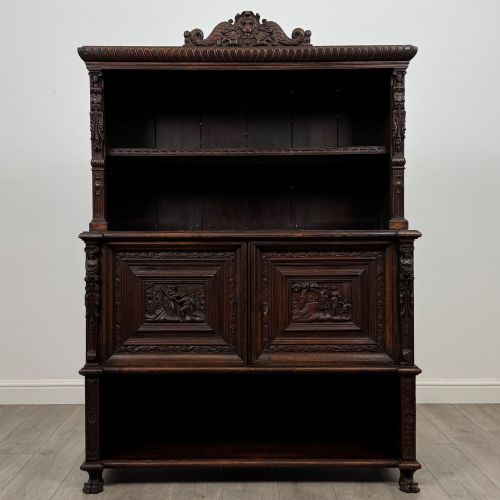
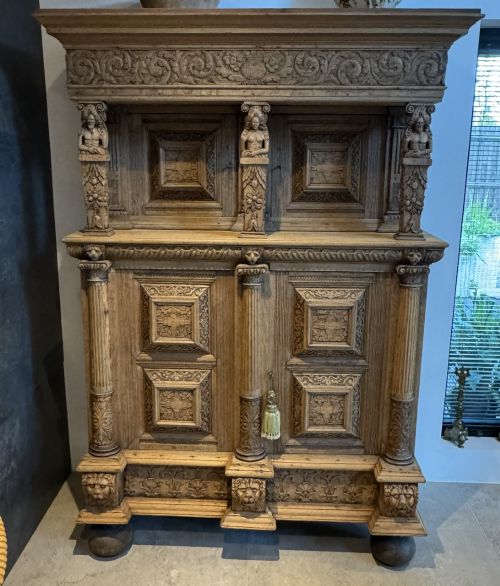
Several fierce lion masks stare out from the woodwork, keeping a watchful eye over the contents of the sixteenth and nineteenth century cupboards alike.
What varies in quality
The depth and crispness of the hand carving separate simpler production pieces from superior examples. Sharp relief work on figures, foliage, and lion masks indicates a higher standard of workshop execution.
The selection of timber grain and the integration of contrasting woods like ebony and walnut affect the visual impact. Better pieces maintain structural stability in their heavy doors and stands without relying on excessive modern reinforcement.
The inclusion of specialist elements such as stained glass panels or original brass and iron hardware influences the overall coherence and authenticity of the cabinet.
The Flemish Renaissance Cabinet Glossary
- Cabinet on stand
- A main storage box elevated on a distinct frame or base with legs. This form lifts the primary compartment off the floor.
- Sideboard buffet
- A long low storage unit combining cupboard space and surface display. These pieces often incorporate mirror backs and tiered shelving.
- Renaissance Revival
- A nineteenth century design movement copying sixteenth century classical motifs. The style favours symmetry, columns, and heavy relief carving.
- Lion mask
- A carved feline face used as a decorative motif on furniture corners or drawer pulls. This element appears frequently on nineteenth century pieces.
- Stained glass
- Coloured glass pieces joined with lead cording to form decorative windows within cabinet doors. This technique adds colour and opacity to upper compartments.
Flemish Renaissance Cabinet: Frequently Asked Questions
How do I date a carved oak cabinet?
Dating relies on examining the joinery, tool marks, and timber preparation inside the carcase. Earlier pieces show hand sawn boards and pegged joints, whilst later revivals may display machine cut elements.
Style also guides the dating process, as nineteenth century makers reinterpreted sixteenth and seventeenth century motifs with heavier proportions and distinct surface finishes.
Where should I place a large hall cupboard?
These tall timber pieces require a sturdy wall and adequate floor space to balance their visual weight. Placing them in a spacious hallway, dining room, or large reception area allows the carved details to be seen properly.
Avoid positioning them in direct sunlight or near heat sources, as extreme temperature changes can cause the old oak panels to split or warp.
What is the difference between a buffet and a sideboard?
A sideboard generally functions as a serving and storage surface, whilst a buffet often includes upper tiers or enclosed cupboards for display. Both forms appear frequently in nineteenth century revival furniture.
In this category, many examples combine these terms to describe pieces featuring lower cupboards and upper mirror backs or shelving.
How do I care for antique walnut and oak furniture?
Regular dusting with a dry lint free cloth prevents dirt accumulation in the deep crevices of the carvings. Applying a quality beeswax occasionally nourishes the timber without building up sticky residue.
Keep the humidity in the room stable to protect the wood joints and prevent the brass or iron hardware from corroding.