
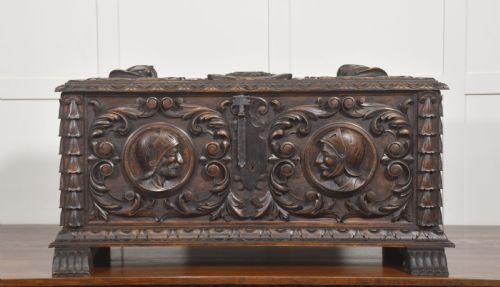
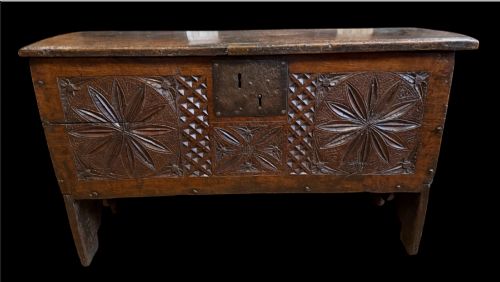


Renaissance Carved Chest
A renaissance carved chest brings heavy timber, deep relief work, and centuries of domestic storage history directly into a modern room.
Renaissance Carved Chest
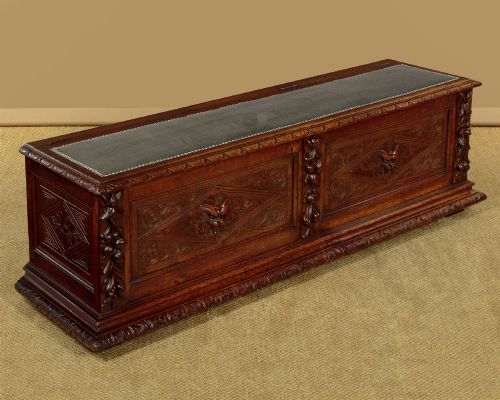
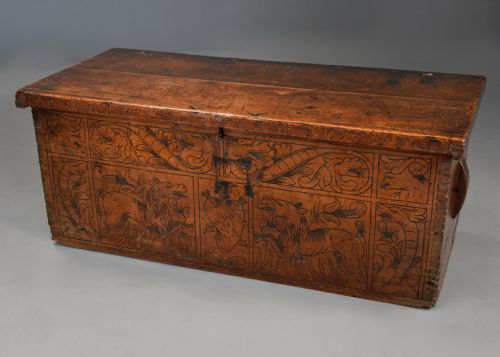
A renaissance carved chest represents solid domestic storage formed across several centuries, with walnut and oak providing the primary structural timber for surviving examples. Buyers searching this phrase encounter heavy coffers, marriage chests, and cassones originating mainly from Italian, Spanish, and German workshops.
The inventory on this page spans authentic sixteenth and seventeenth-century pieces alongside nineteenth-century revival interpretations. Early forms concentrate on plank construction and figural medallions, while later revival pieces lean into heavy relief carving and architectural motifs.
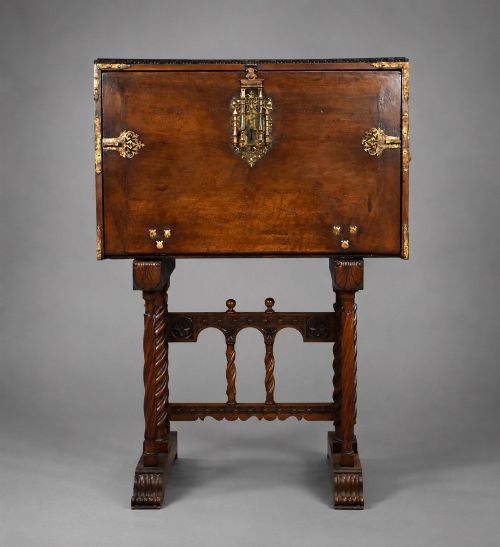
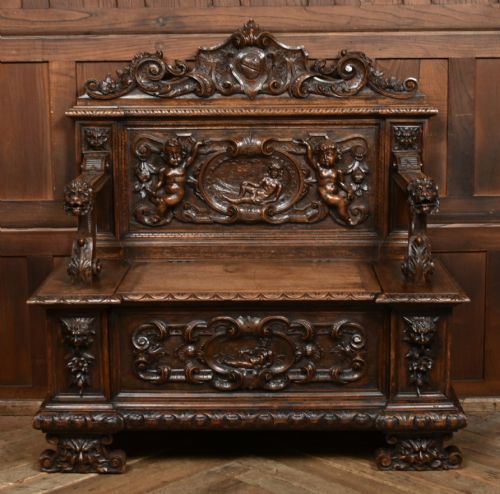
Beyond traditional storage chests, the selection includes cassapanca benches, bargueño cabinets, and coffer fronts repurposed from larger furniture. These hybrid forms combine seating or writing surfaces with the deep carved panels characteristic of the period.
Materials and construction
Carpenters built these pieces using dense hardwoods such as oak, walnut, cypress, and fruitwood, often joining thick planks with dovetails, pins, or iron hardware. Wrought iron and brass featured heavily in structural hinges, straps, and carrying handles designed for heavy use.
Carvers applied chisel and gouge directly to the timber surface to create figural medallions, scrolling foliage, and armorial crests. Gilding, iron inlay, and leather added secondary decorative layers to select Italian and German pieces.
Some marriage chests feature secret compartments hidden behind carved putti for stashing love letters.
Distinctions in quality
Quality rests in the depth and crispness of the relief carving, where confident chisel work separates master workshops from routine production. Original patination on walnut and oak surfaces indicates proper age and careful handling through centuries.
The integrity of the timber construction, including original hardware, hinges, and base panels, determines the historical value of each piece. Later nineteenth-century revivals vary according to how faithfully they replicate sixteenth-century proportions and joinery.
The Renaissance Carved Chest Glossary
- Cassone
- An Italian chest, often ornately carved or gilded, traditionally used as a marriage gift to hold a bride's trousseau. These large receptacles frequently featured figural medallions or mythological scenes.
- Cassapanca
- An Italian wooden bench featuring a high back and arms, with a deep chest integrated into the seat base. It combines domestic seating with secure storage.
- Bargueño
- A type of cabinet on a stand originating in Spain, designed with a drop-front panel revealing numerous small drawers and compartments. They utilised rich walnut and complex ironwork.
- Coffer
- A heavy wooden box used for storing valuables, clothes, or documents, often reinforced with iron straps. Early examples relied on solid plank construction.
- Papillero
- A small tabletop cabinet or chest with multiple drawers intended for storing papers and small luxury items. These pieces often match the aesthetic of larger vargueno cabinets.
Renaissance Carved Chest: Frequently Asked Questions
How do I clean a carved wood chest?
Dust the deep recesses of the carving regularly with a soft natural bristle brush to prevent dirt accumulation.
Apply a microcrystalline wax sparingly once or twice a year to feed the dry timber without building up a heavy residue.
Can I use a antique chest as a coffee table?
Lower chests function well as coffee tables provided the top boards remain flat and stable under daily use.
Protect the ancient wood surface with coasters and avoid placing hot items directly onto the dry timber.
How can I tell a sixteenth century chest from an 1890 revival?
Examine the tool marks and construction joints inside the box, as hand-cut dovetails and adze marks differ from mechanical joinery.
Check the timber shrinkage and patina, noting that sixteenth-century pieces display centuries of oxidation while revival pieces show nineteenth-century workshop methods.
What were these chests originally used for?
Households utilised these heavy boxes to store textiles, tapestries, silver, and legal documents away from damp floors.
Marriage chests specifically transported a bride's dowry to her new home before serving as permanent furniture in the main hall.