
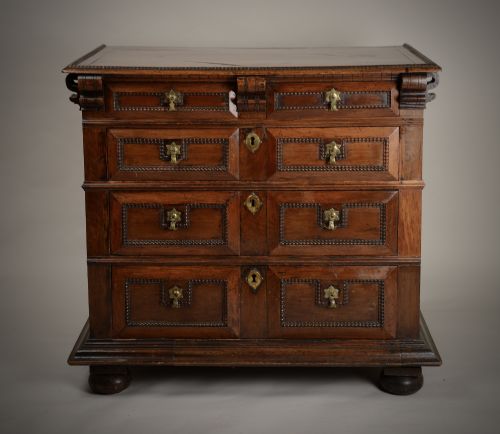
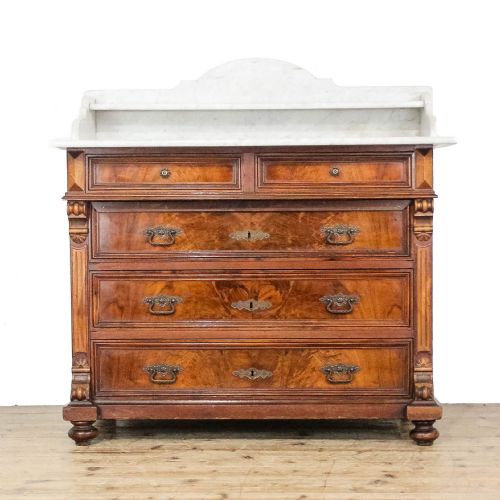


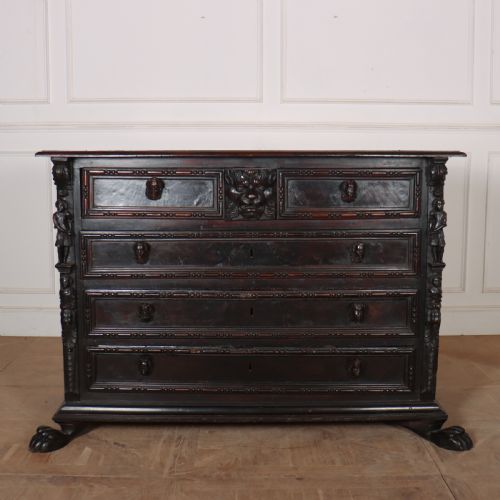


Continental Carved Walnut Commode
These continental carved walnut commode examples bring heavy timber and sculptural presence to a room, offering deep grain and classic proportions.
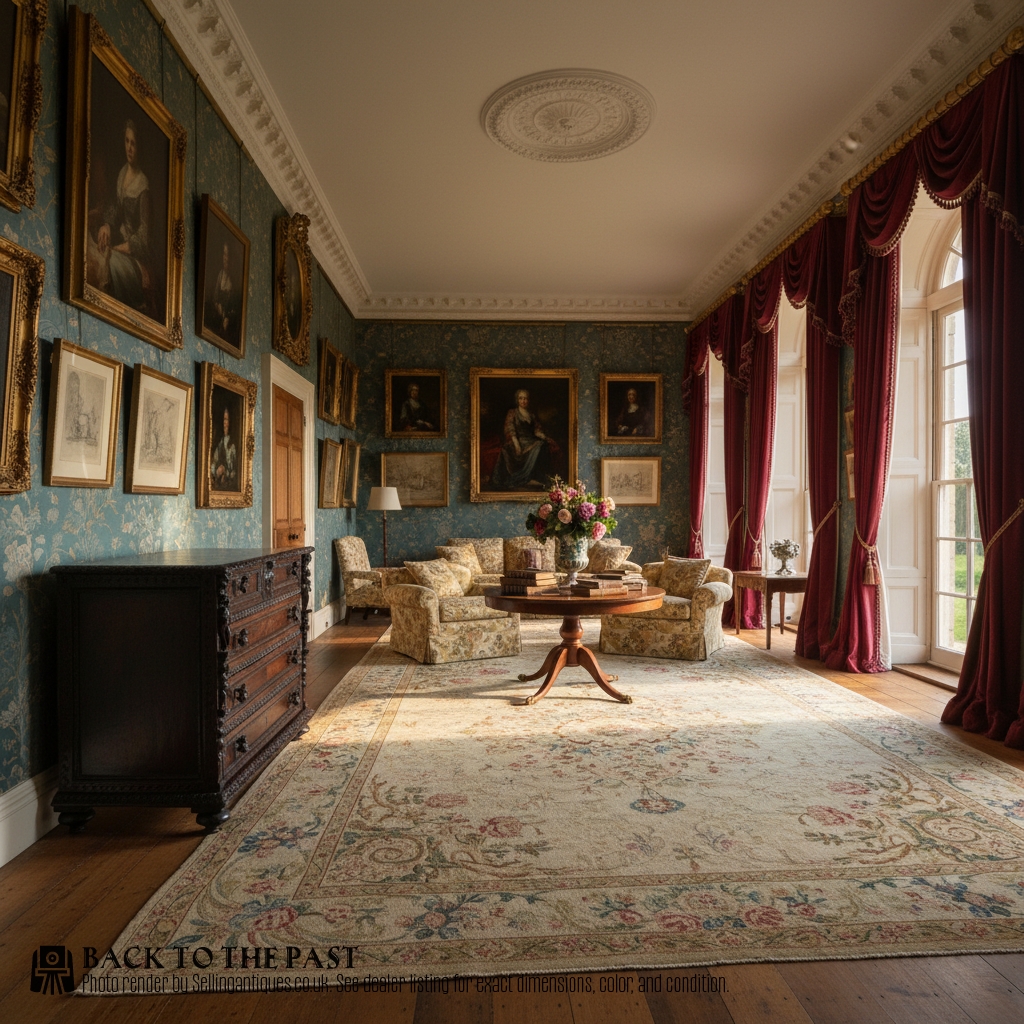
Continental Carved Walnut Commode
A continental carved walnut commode stands as a substantial storage chest, originating from European workshops across several centuries. You encounter forms spanning from the seventeenth century through to the early twentieth century.
The selection ranges from seventeenth century baroque and Italian renaissance models to eighteenth century rococo and serpentine shapes. Many examples incorporate specific regional expressions including Italian and Swedish origins.
Most pieces function as chests of drawers, often featuring shaped fronts, bombé profiles or marble tops. The primary form combines robust carcases with decorative timber veneers and carved details.
How they were made
Construction relies heavily on solid walnut, burr walnut and olive-wood, frequently paired with secondary timbers like oak and birch. Marquetry veneer techniques create patterned surfaces across drawer fronts and sides.
Carving defines the stylistic periods, shaping the wood into rococo curves or baroque reliefs. Selected pieces incorporate fitted marble tops and brass hardware to complete the assembly.
Materials span walnut, burr walnut, olive-wood, fruit-wood, oak, birch, marble and brass.
What varies in quality
Quality rests in the depth of the carving and the complexity of the timber selection, particularly where burr walnut or marquetry veneer is employed. Pieces with sophisticated serpentine or bombé outlines demand greater cabinetmaking skill.
The presence of original marble tops and integrated brass mounts elevates an example. Age adds patina, distinguishing seventeenth and eighteenth century pieces from later nineteenth and twentieth century interpretations.
The Continental Carved Walnut Commode Glossary
- Commode
- A low chest of drawers or cabinet developed in France during the seventeenth century. It typically stands on short legs and serves both utility and display.
- Serpentine
- A furniture front or surface curved in a wave pattern, convex at the centre and concave at the ends. This contour requires precise timber shaping.
- Bombé
- A swelling, bulging outward profile characteristic of baroque and rococo case furniture. This voluminous shape demands advanced joinery techniques.
- Marquetry
- The art of applying thin decorative veneers in wood and other materials to form geometric or pictorial patterns. It creates striking surface designs on drawer fronts.
- Burr walnut
- Timber taken from a tree growth featuring intricate, swirling grain patterns. Highly prized for decorative veneer work on high status furniture.
Continental Carved Walnut Commode: Frequently Asked Questions
What is a continental commode?
A continental commode is a drawer chest originating from mainland Europe rather than Britain. These pieces often feature bolder carving and more pronounced serpentine or bombé shapes than their British equivalents.
They function primarily as storage furniture while acting as decorative focal points in principal rooms.
How do I date a walnut commode?
Dating relies on examining construction methods, timber choice and stylistic motifs such as baroque or rococo carving. Earlier pieces from the seventeenth and eighteenth centuries show hand-cut joinery and specific regional characteristics.
Later nineteenth and twentieth century examples often adapt these historical styles with different manufacturing tolerances.
Where should I place a commode?
These pieces suit living rooms, hallways or bedrooms where their sculptural wood grain and marble tops can be appreciated. Ensure the floor space accommodates the substantial depth of shaped or bombé fronts.
Keep them away from direct heat sources to protect the walnut timber and any veneer work.