



Religious Wood Relief
Religious wood relief carvings bring sacred devotion and centuries of master craftsmanship directly into domestic spaces through deeply expressive timber panels.
Religious Wood Relief
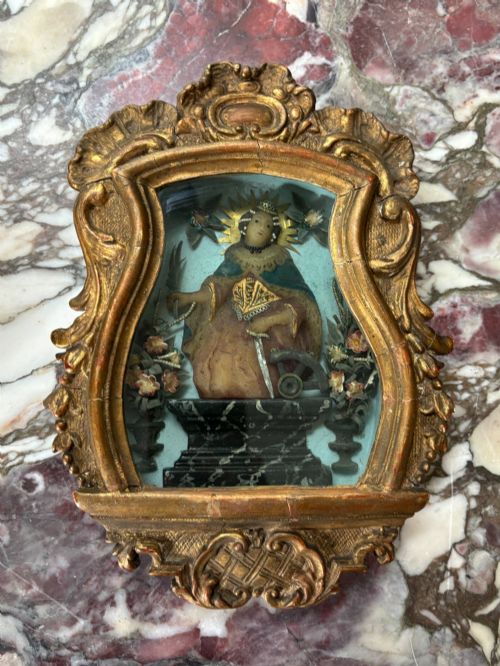
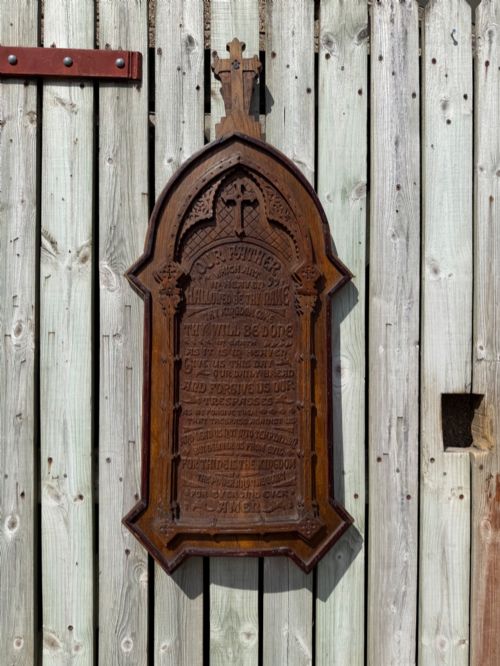
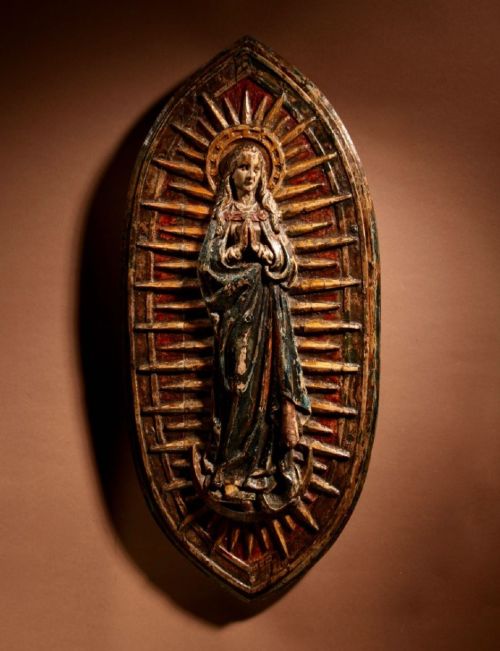
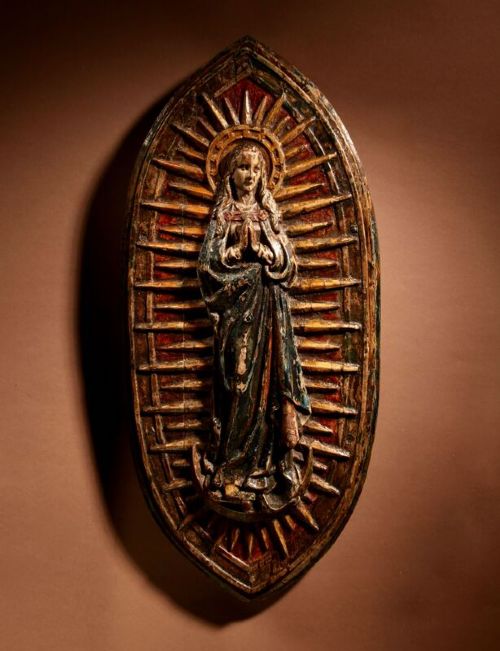
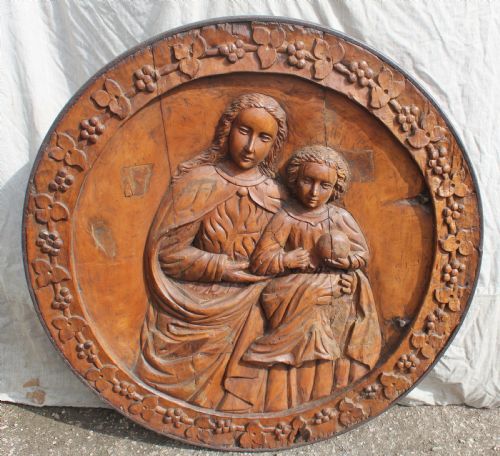
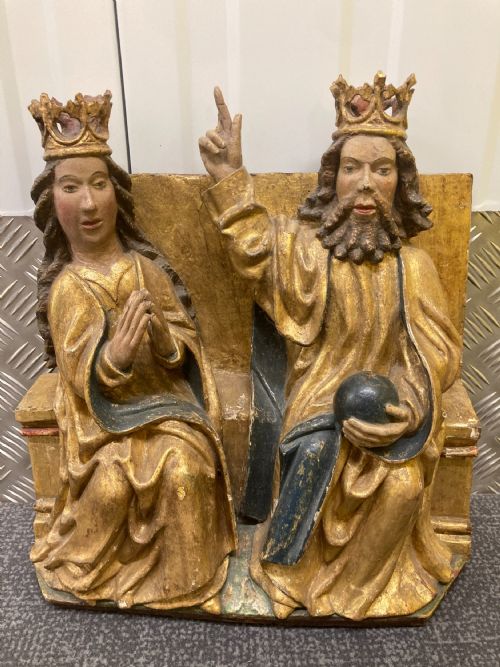
A religious wood relief captures sacred scenes and figures carved into timber, functioning historically as altarpieces, tabernacles, or devotional wall panels. Buyers seeking these works encounter pieces that range from medieval figures to Baroque allegories.
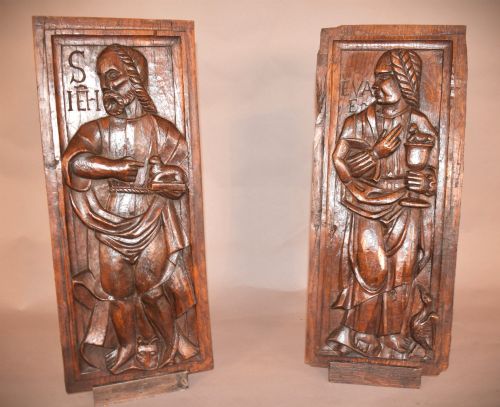
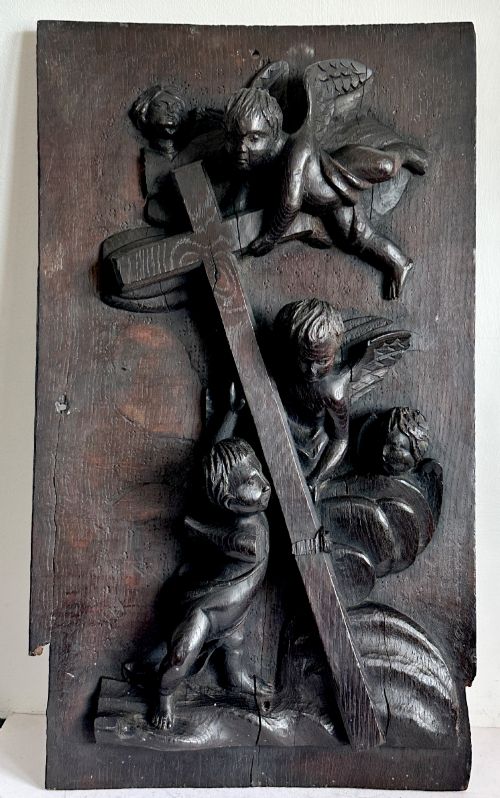
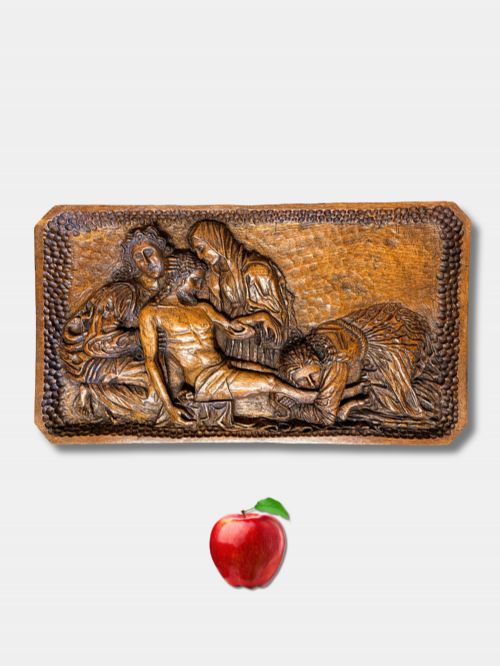
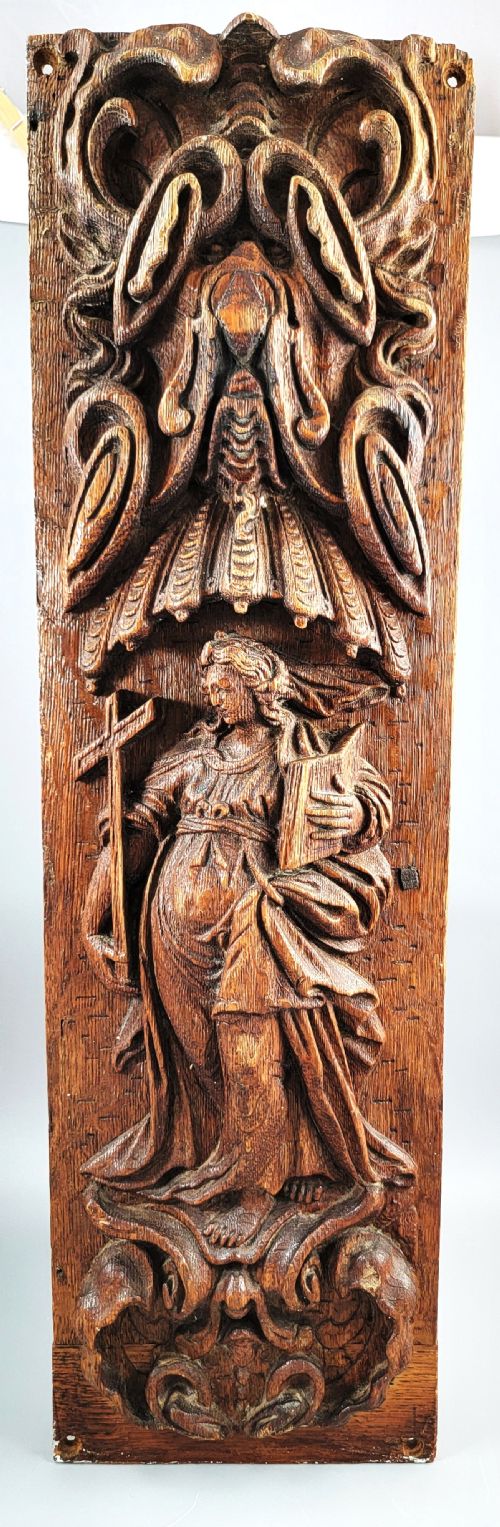
The most common examples on this page are seventeenth-century oak panels and sixteenth-century devotional carvings. These items frequently depict biblical narratives, saints, and cherubs with distinct regional characteristics from Flemish, German, and Italian workshops.
Earlier pieces from the pre-sixteenth century and seventeenth century display deep ecclesiastical roots, whereas later nineteenth-century works and Qing Dynasty ritual figures expand the stylistic range available to collectors.
Materials and construction methods
Carvers predominantly utilised oak and walnut for their strength and fine grain, allowing intricate detailing in high relief wall panels and sculptures. Chestnut also appears in seventeenth-century Italian panels, providing a warm substrate for sculptural forms.
Surfaces were frequently enhanced with polychrome paint, gesso, and gold leaf to highlight sacred figures and architectural elements. These applied finishes transformed raw timber into luminous devotional objects intended for contemplative spaces.
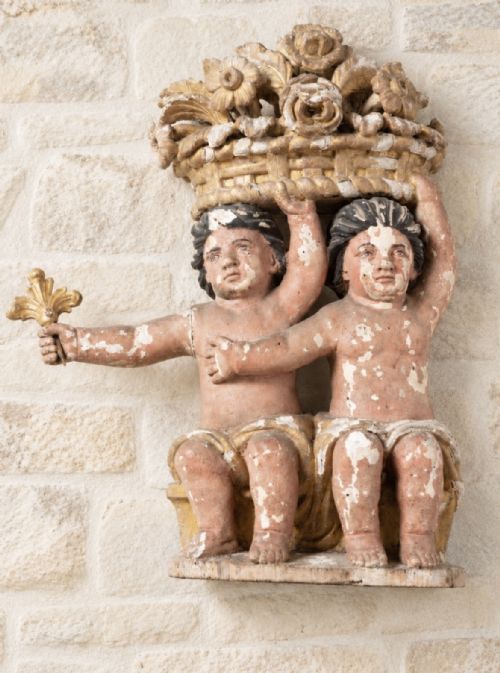
Among the solemn saints and biblical scenes, a watchful cherub putto peers out with distinctly worldly curiosity from a seventeenth-century Italian panel.
Factors determining quality
The survival of original polychrome paint and giltwood layers significantly impacts a piece's historical integrity. Works retaining authentic surface decoration offer a more complete view of period aesthetics compared to stripped timber.
The Religious Wood Relief Glossary
- Relief
- A sculptural technique where figures project from a flat background. High relief involves figures standing out substantially from the timber plane.
- Polychrome
- The practice of decorating sculptural wood with multiple colours of paint. This finish was widely applied to medieval and Renaissance church carvings.
- Giltwood
- Timber coated with a thin layer of gold leaf or gold powder. It creates a luminous surface common on altarpieces and tabernacles.
- Tabernacle
- An ornate architectural structure designed to house sacred items. Italian examples from the seventeenth century often feature detailed framing around a central recess.
- Gesso
- A white paint mixture consisting of a binder mixed with chalk or gypsum. It served as a smooth preparation layer for gilding and polychrome paint.
Religious Wood Relief: Frequently Asked Questions
How were these panels originally displayed?
Many of these pieces formed parts of larger church altarpieces, architectural tabernacles, or monastic wall fixtures. They served as focal points for prayer and religious instruction within sacred interiors.
Over time, surviving sections were removed from their original ecclesiastical settings and adapted for secular architectural display in private collections.
What wood types are most common?
Oak and walnut dominate the selection, chosen by historical carvers for their durability and reliable grain structure. Chestnut and general carved wood also appear in continental European examples.
These timbers allowed artisans to execute deep undercutting and fine facial details without risking structural failure in the panel.
How do I identify a period piece?
Dating relies on stylistic markers such as Gothic architectural tracery, Renaissance proportions, or Baroque theatricality. Tool marks, timber shrinkage, and the ageing of gesso and paint layers offer further clues.
Comparing the specific subject matter, such as biblical scenes or allegorical figures, helps align the carving with known regional aesthetics from the sixteenth to nineteenth centuries.
Are painted surfaces original?
Determining original finish involves examining the craquelure, wear patterns, and interaction between the gesso and underlying timber. Many medieval and Renaissance carvings retain traces of their historic polychrome scheme.
Professional inspection under magnification helps distinguish original pigment application from later decorative restoration efforts.