
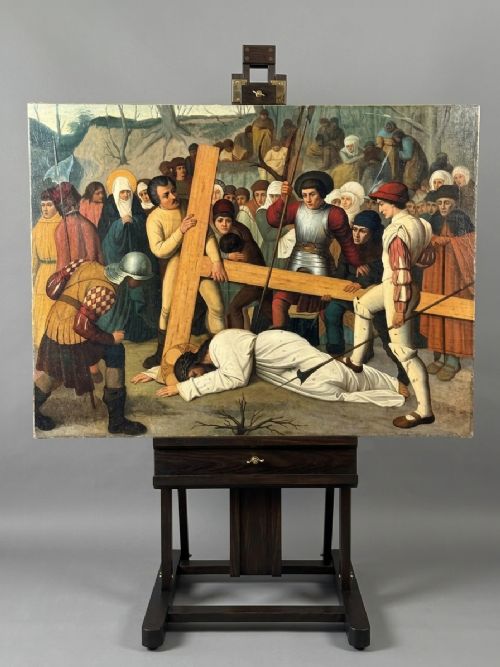
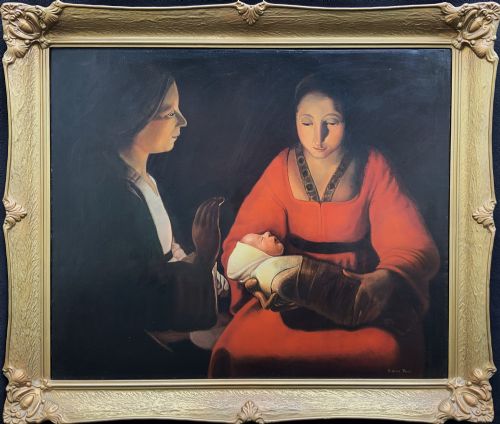
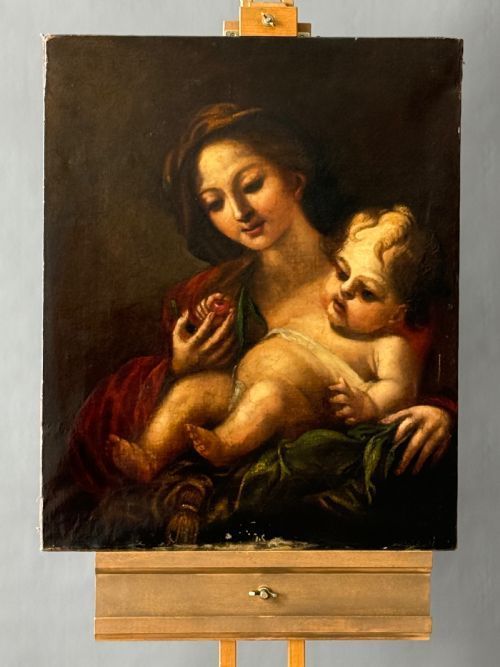
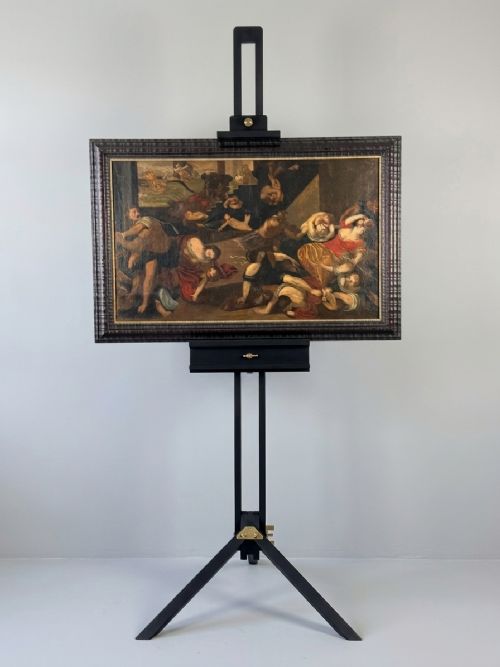
Religious Art on Canvas
Religious art on canvas brings devotional subjects, saints and biblical narratives into the domestic interior through centuries of European painting tradition.
Religious Art on Canvas
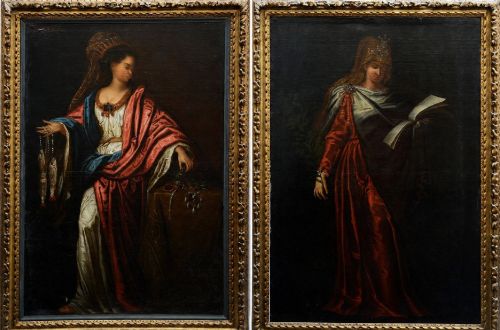
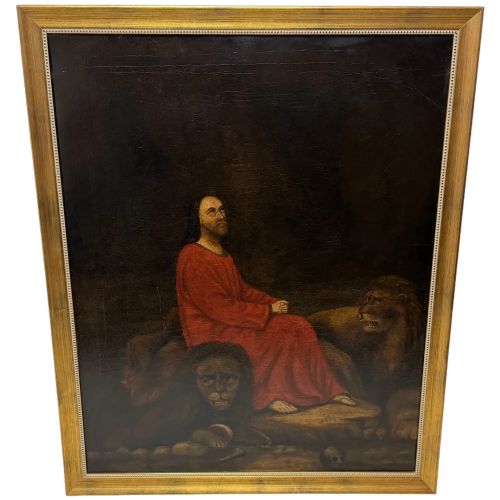
Buyers exploring religious art on canvas encounter devotional oil paintings, icons and narrative scenes originating from Italian, Spanish, French and English workshops. The selections span from the sixteenth century through the nineteenth century, encompassing Renaissance compositions, Baroque drama and later revivals.
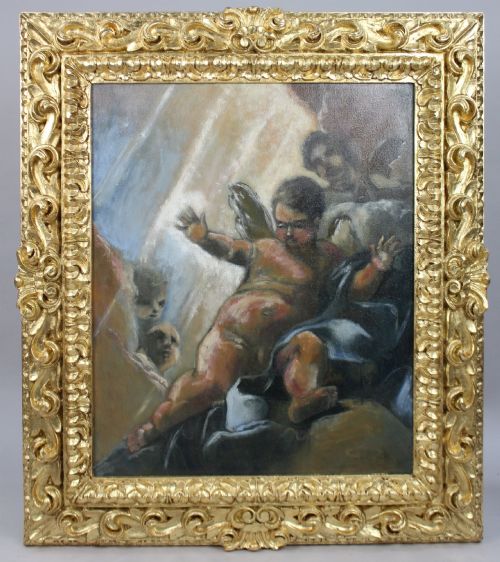
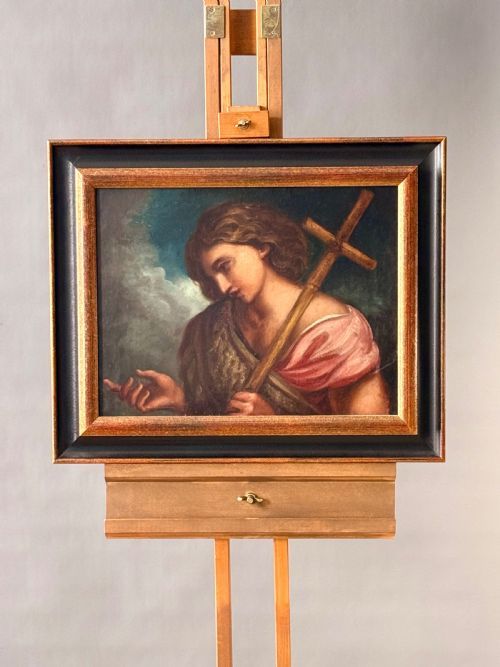
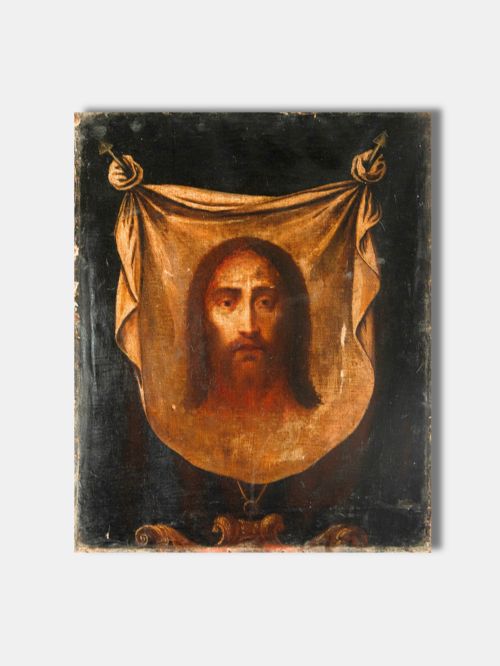
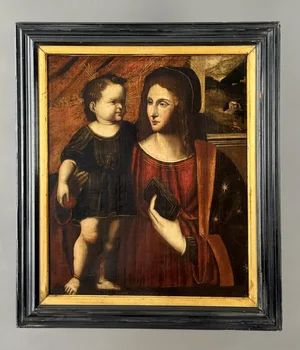
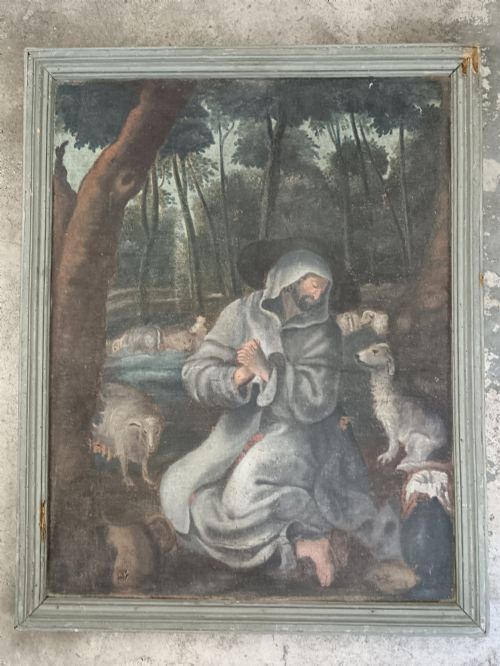
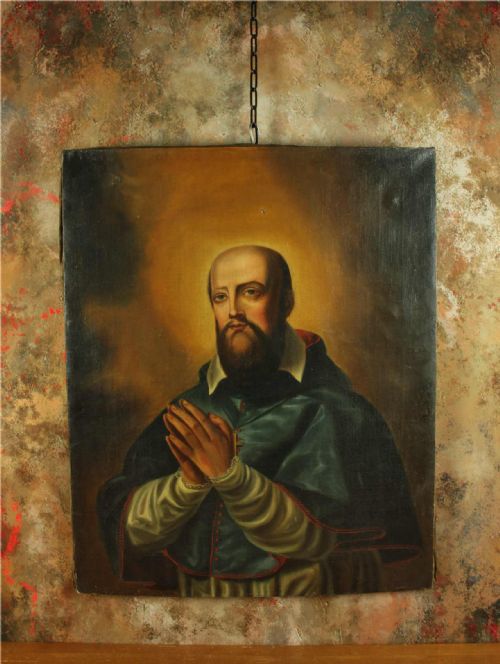
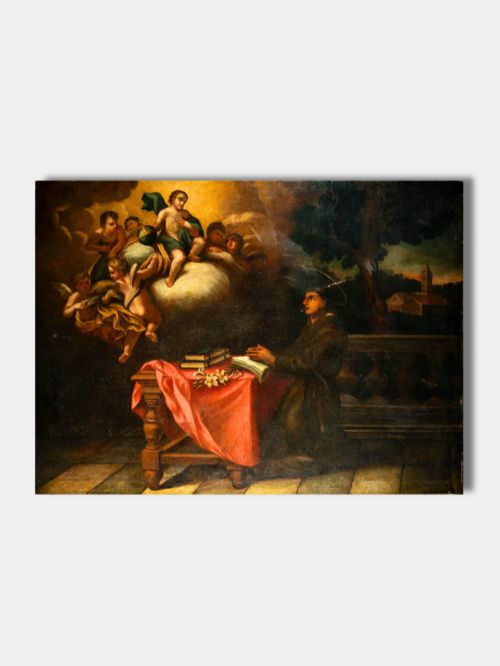
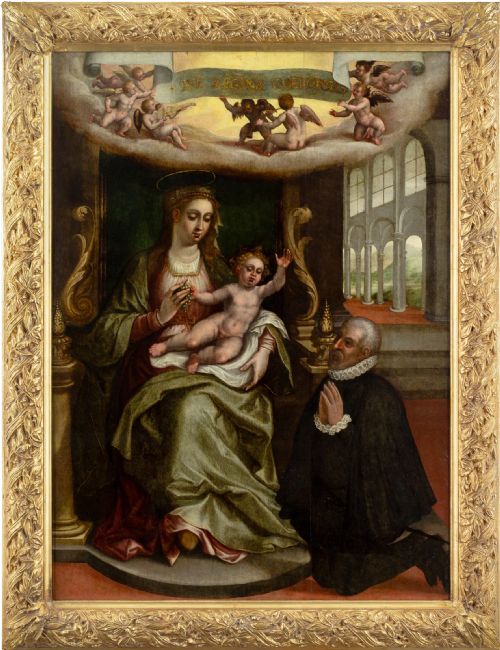
Most pieces portray figures such as the Virgin and Child, the Holy Family, or various saints including Francis of Assisi, Mary Magdalene and John the Baptist. Canvases range from small domestic devotional works to monumental altarpieces set within carved giltwood frames.
Materials and technique
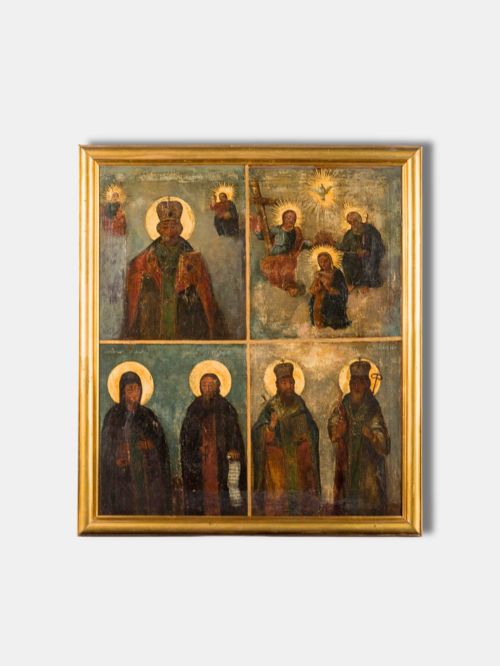
These works rely primarily on oil paint applied to woven canvas supports, occasionally incorporating tempera and gold leaf in iconographic traditions. Pigments are built up across wooden stretching frames, sometimes accompanied by preparatory sketches or visible pentimenti revealing altered compositions beneath the surface.
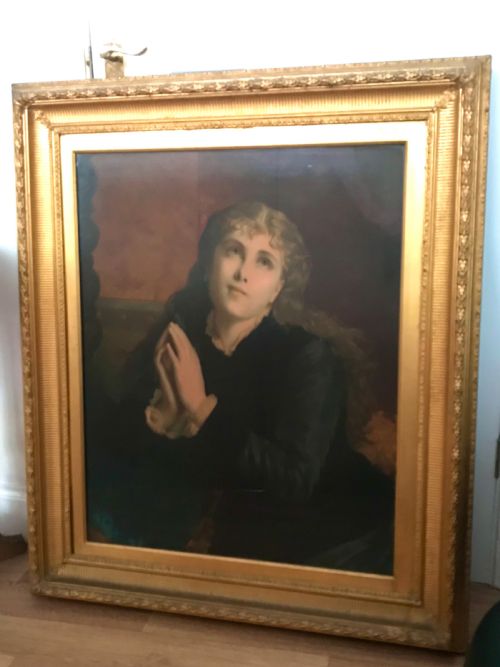
Framing often involves carved and gilded wood, which enhances the devotional focus of the paintings. Certain examples employ alternative mediums such as oleograph prints under glass to emulate traditional oil painting techniques.
Listings feature religious art on canvas executed in oil, tempera and gold leaf across Italian, Spanish, French and English school traditions.
Assessing quality and execution
Quality rests upon the autonomy of the brushwork and the expressive depth of the figures, distinguishing master hands from standard school copies or later followers. Superior pieces demonstrate confident handling of anatomy, drapery and light, particularly in complex multi-figure narratives.
The sophistication of the compositional source material also dictates the standing of a canvas. Works originating directly from established European schools or close circles of known painters carry greater artistic weight than routine devotional productions.
Georges de La Tour·Bernardino Luini·Francesco Solimena·Miguel Barroso·Gian Lorenzo Bertolotto
The Religious Art on Canvas Glossary
- Pentimento
- Alterations in a painting's composition visible as earlier layers show through the final paint surface. This phenomenon often confirms the authentic evolution of an artist's design during the creative process.
- Old Master
- A European painter of skill working before the nineteenth century, or a painting produced by such an artist. The designation also encompasses recognised followers and regional school workshops from those eras.
- Baroque
- An artistic style prevalent from the seventeenth century characterised by dramatic lighting, deep shadows and intense emotional movement. Paintings from this movement typically emphasise theatrical gestures and dynamic compositions.
- Tempera
- A permanent, fast-drying painting medium consisting of coloured pigments mixed with a water-soluble binder material such as egg yolk. It frequently serves as a foundational layer beneath gold leaf in traditional icons.
- Giltwood
- Wood that has been coated with a thin layer of gold leaf or gold paint. Carved frames utilising this finish frequently accompany significant devotional paintings.
Religious Art on Canvas: Frequently Asked Questions
How do I identify sixteenth-century canvases?
Sixteenth-century canvases generally display Renaissance characteristics, focusing on balanced compositions, idealized human forms and subdued palette choices often associated with Italian and Spanish schools.
Closer inspection of the canvas texture, preparation layers and stylistic adherence to known masters helps verify the period origins of these early works.
What subjects are most common?
The most frequent subjects include the Madonna and Child, the Holy Family, and narratives from the Gospels involving saints like John the Baptist and Mary Magdalene.
Patrons commissioned these devotional images for personal prayer, contemplation and institutional display across various European religious traditions.
How should I care for old canvas?
Maintain stable environmental conditions with moderate humidity and temperature to prevent the canvas from slackening or the oil paint from cracking. Keep paintings away from direct sunlight and consult a professional conservator for cleaning.
Avoid using liquid cleaners or abrasive cloths on the painted surface or the carved giltwood frames.
What is a school attribution?
An attribution to a specific school indicates that an anonymous artist worked within the geographic region, period and stylistic manner of a master painter. These works reflect the broader techniques and aesthetic values of that particular artistic community.
Such designations help contextualise pieces created by followers or workshop members rather than the primary master.