

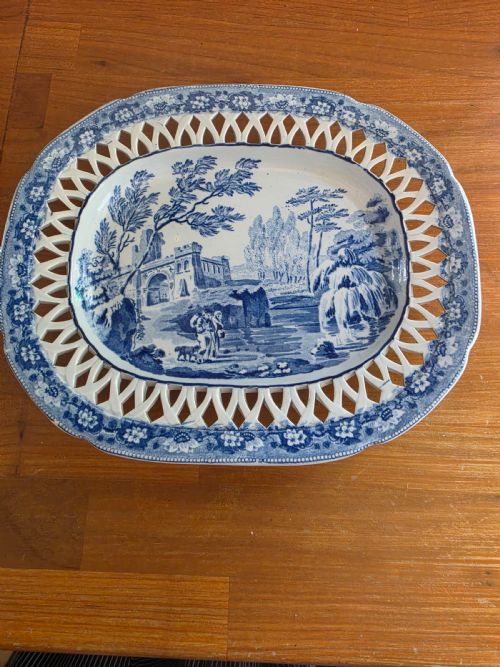
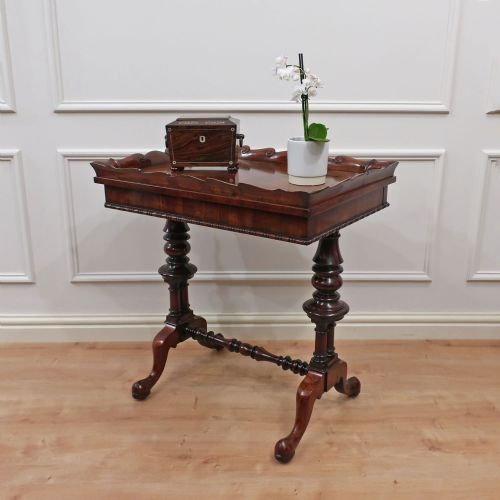
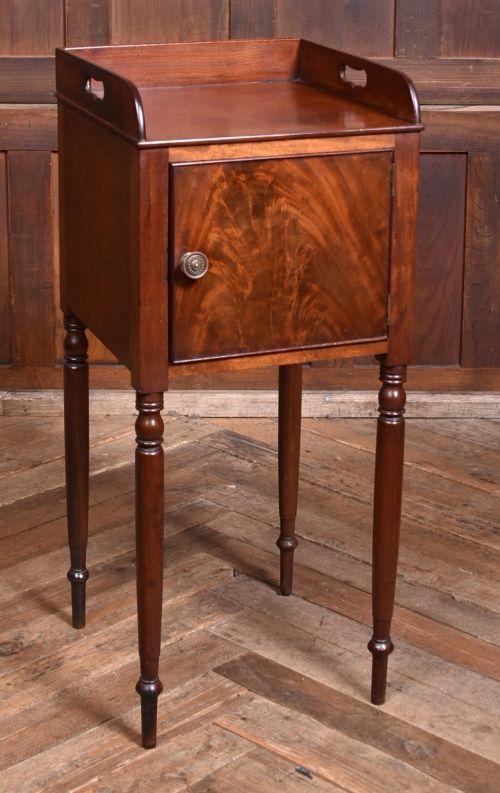
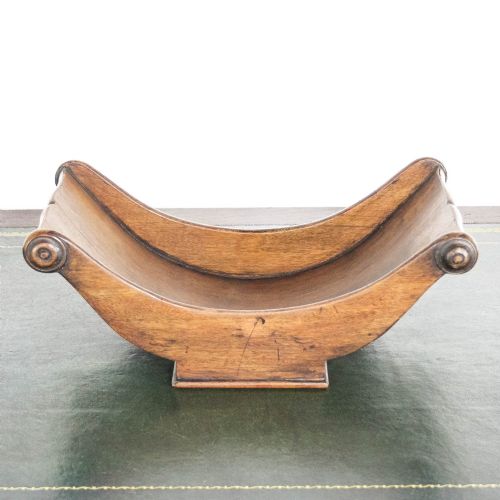
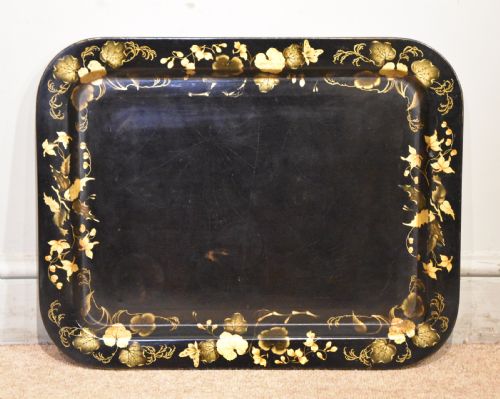

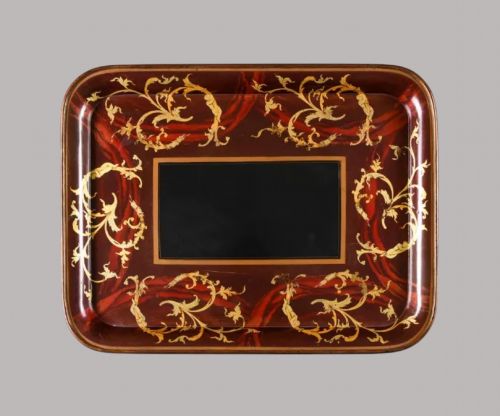
Regency Tray
A regency tray offers a glimpse into early nineteenth-century dining and display, combining utility with decorative finish.
Regency Tray
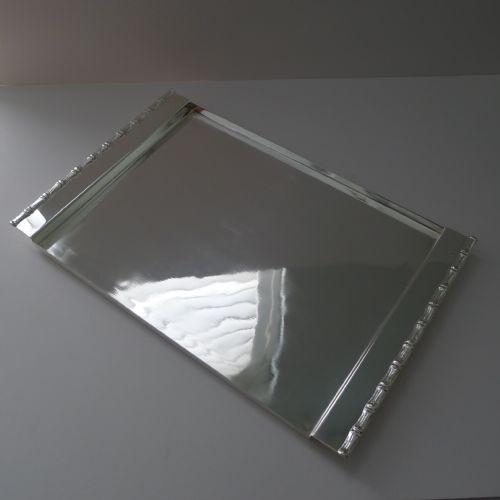
When searching for a regency tray, buyers encounter serving pieces, folding stands, and low book troughs originating primarily from the nineteenth century. These objects function as portable serving surfaces or sit atop dedicated stands to form occasional tables.
The material range spans rich dark timbers, painted metalwork, and pressed paper pulp finished with lacquer and gilding. Pieces from this period often reflect formal dining habits and domestic service requirements of the Georgian and Regency eras.
Materials and Construction
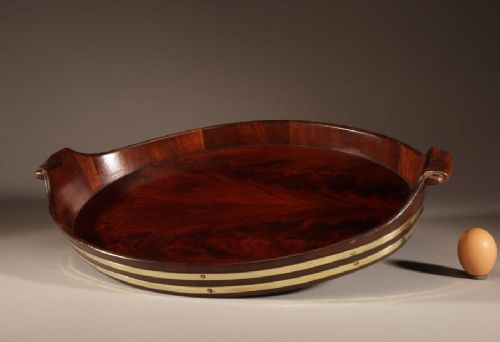
Makers utilised solid mahogany for sturdy butler trays and side pieces, sometimes incorporating brass handles or coopered joints for strength. Rosewood and satinwood appeared on refined serving surfaces and smaller book troughs.
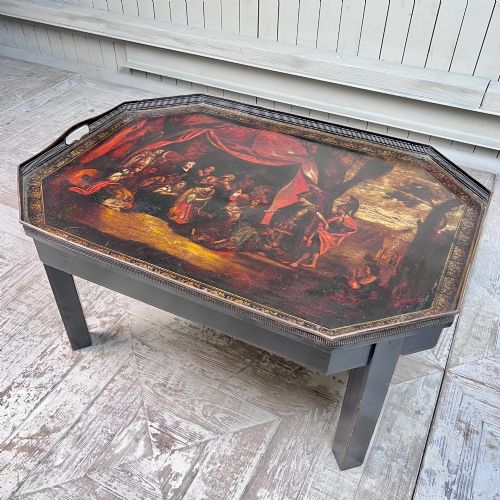
Papier-mâché and japanned toleware required layers of paper pulp or metal sheets treated with dark varnishes, then decorated with gold leaf, hand-painted motifs, or mother-of-pearl inlay.
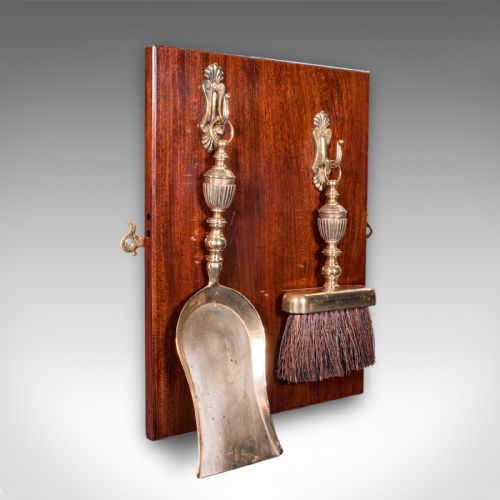
Maids once relied on dedicated fireside maintenance sets to keep early hearths tidy, proving even coal shovels deserved a touch of Regency style.
Evaluating Quality and Detail
Quality rests upon the preservation of original surface decoration, particularly on japanned and papier-mâché examples where gilt details and painted scenes are prone to rubbing. The crispness of turned gallery edges and the integrity of fitted brass mounts signal superior workshop execution.
Structural stability matters significantly for folding stands and tray tables, distinguishing utilitarian daily items from finer drawing-room pieces retained for display.
Henry Clay·Jennens and Bettridge
The Regency Tray Glossary
- Papier-mâché
- A composite material made from paper pulp mixed with glue and resin, pressed into moulds and baked before receiving layers of lacquer and paint. It provided a smooth, lightweight base for intricate decoration.
- Toleware
- Painted or lacquered tinplate and sheet metal items produced in workshops during the eighteenth and nineteenth centuries. These pieces were often decorated with botanical or classical scenes.
- Japanned
- A European imitation of East Asian lacquerwork, created by applying successive coats of dark varnish and curing them under heat. It frequently featured raised gold ornamentation.
- Butler tray
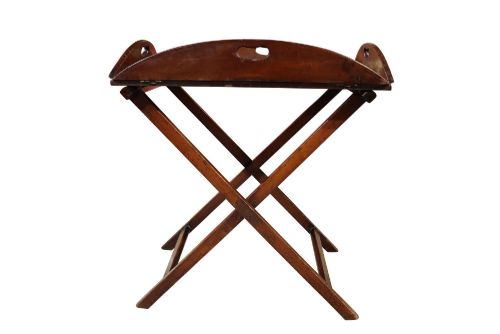
- A portable rectangular tray featuring hinged or cut-out sides, designed to rest upon a folding X-frame stand for serving. Surviving examples often retain their matching stands.
- Coopered
- Construction using closely fitted wooden staves bound together with hoops, similar to barrel-making. This technique formed curved sides on specific serving vessels.
Regency Tray: Frequently Asked Questions
How were regency trays used originally?
These pieces served multiple domestic functions, from carrying tea services and decanters across large houses to functioning as portable desks and card tables when placed on stands. Servants utilised them to clear dining rooms efficiently.
Over time, many trays transitioned from kitchen utility to permanent display items in drawing rooms, mounted on folding frames as low tables.
Can I use an antique tray for daily serving?
Most wooden and papier-mâché examples require careful handling to protect aged lacquers and delicate gilding from moisture and heat damage. Modern use is best restricted to dry display or gentle occasional service.
Metal toleware surfaces tolerate light use better, though abrasive cleaning agents will permanently damage the original painted decoration.
How do I identify a papier-mâché tray?
Papier-mâché feels surprisingly light yet rigid, with a smooth, heavy-varnished surface that lacks the grain of timber. Tapping the material produces a dull sound rather than the ring of metal or solid wood.
Makers frequently pressed their stamps or paper labels into the underside of these pieces, though many signatures wore away over centuries of handling.
What is the difference between a tray and a tray table?
A tray is a standalone flat serving surface with raised edges or handles, whereas a tray table combines that same surface with a detachable or folding support stand. Many trays acquired stands later in their lifespan to increase utility.
Matching stands made alongside the original tray often feature bespoke joinery, such as faux bamboo turning or specific hinge placements.