


Antique Paper Tray
These antique paper tray pieces are practical desk accessories and decorative surfaces you will find in papier-mache, wood, and lacquer.
Antique Paper Tray
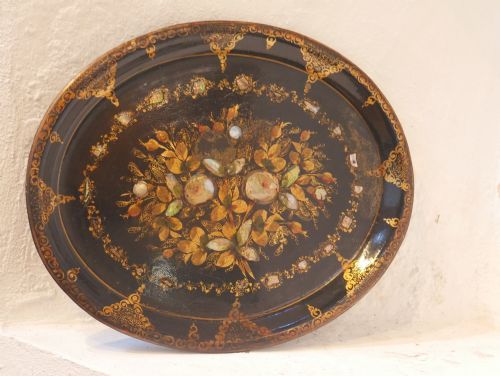
When you search for an antique paper tray, you are looking at functional desk accessories, decorative trays, and occasional tables designed to hold papers and small items. The versions you are most likely to meet on this page date from the Georgian and Regency periods through to the early twentieth century.
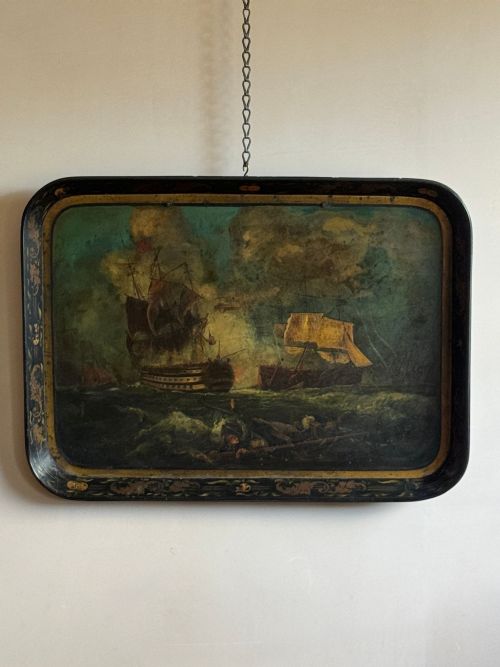
Many examples take the form of papier-mache or lacquered trays, sometimes mounted on stands to create tray tables or paired with desk organisers and tidies. Materials range from papier-mache and wood to brass, gilding, and marble, reflecting both utility and display.
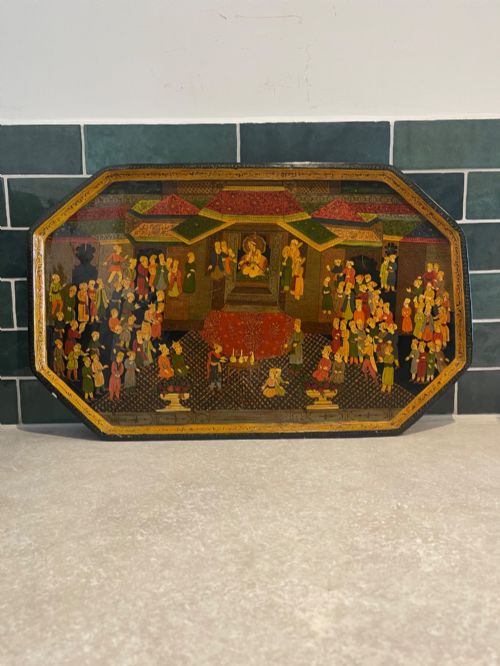
Origins span British Regency and Victorian workshops as well as Kashmiri production, showcasing styles from Chinoiserie decoration to plain timber desks and boxes. Each piece offers a tangible link to historical desk habits and interior styling.
How they were made
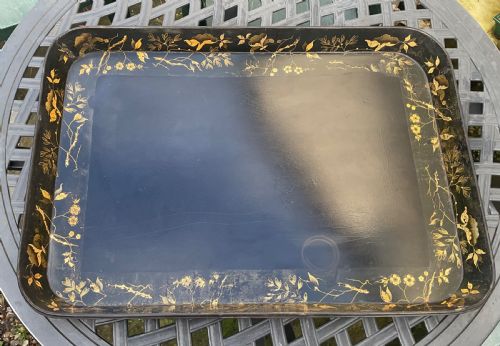
Maker workshops utilised layered paper pulp compressed and treated to form robust papier-mache foundations capable of holding a smooth surface. This core material received coats of dark lacquer and paint, often enhanced with gold leaf and gilding.
Alternative pieces rely on timber construction using oak and mahogany, sometimes incorporating secret drawers or raised bun feet. Metal elements such as brass fixtures and iron stands provide structural support for larger tray tables and desk sets.
Materials recorded across the inventory include papier-mache, lacquer, paint, gold leaf, wood, gilding, brass, iron, and marble.
What varies in quality
The sophistication of the painted and gilded decoration separates standard production from finer workshop outputs. Precision in Chinoiserie motifs and the crispness of applied gold leaf indicate the skill of the original decorator.
The structural integrity of the papier-mache or timber core dictates longevity, alongside the quality of any associated stands or secondary mounts. Well-preserved surfaces with minimal disruption to the original lacquer finish hold greater visual appeal.
Jennens & Bettridge·Clay
The Antique Paper Tray Glossary
- Papier-mache
- A composite material made from paper pulp or layers of paper mixed with glue, oil, or resin, then moulded and baked until hard. It provides a lightweight yet durable base for decorative lacquer and paint.
- Japanned
- A European imitation of East Asian lacquerwork, created by applying successive layers of varnish and heat-curing the surface. This technique produced the glossy black or dark finishes seen on many Regency trays.
- Chinoiserie
- A European style inspired by Chinese artistic traditions, featuring whimsical landscapes, figures, and pavilions. It appears frequently on nineteenth-century lacquered trays and tables.
- Desk Tidy
- A compartmented desk accessory or box designed to organise letters, pens, and paper items. Examples often feature internal dividers or secret drawers.
Antique Paper Tray: Frequently Asked Questions
What was an antique paper tray used for?
These trays served as desktop receptacles for sorting correspondence, documents, and writing materials in period studies and parlours.
Over time, many were adapted onto folding or fixed stands to function as occasional tea or display tables.
How do I care for a papier-mache tray?
Keep the piece away from direct sunlight and damp environments to protect the fragile lacquer and painted decoration from cracking or lifting.
Dust gently with a soft, dry cloth and avoid using liquid cleaners or polishing agents on the finished surface.
How can I tell a Regency tray from a Victorian one?
Regency examples often display classical or early Chinoiserie motifs with hand-painted gold leaf on deep black lacquered papier-mache surfaces.
Later Victorian pieces frequently incorporate more varied colour palettes and may be paired with iron stands or mass-produced support frames.
Are all paper trays made of papier-mache?
While papier-mache is the predominant material found across these listings, timber versions in mahogany and oak also exist as desk boxes and tidies.
Other material variations include marble pin trays and gilded bronze desk sets.