



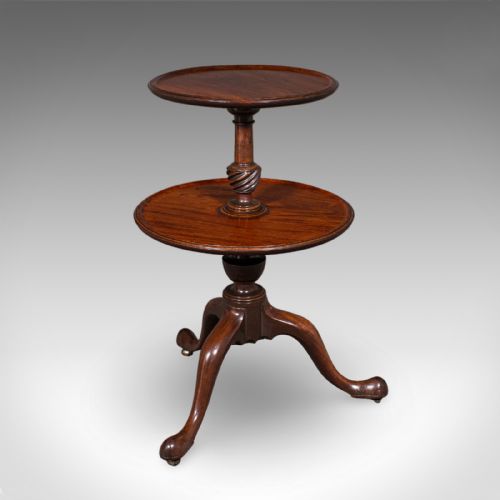


Regency Tray on Stand
A regency tray on stand combines a portable serving surface with a tailored support, offering a versatile occasional table with distinct historical character.
Regency Tray on Stand
When you search for a regency tray on stand, you are looking at a dual-purpose piece of furniture designed for serving and display. These items pair a removable tray, often originally used for tea, drinks or general service, with a dedicated folding or rigid support structure.
The most common versions met on this page span the 19th Century and the Regency period, constructed primarily in mahogany or papier-mâché. Many examples combine an authentic period tray with a later bespoke stand, such as a faux bamboo frame.
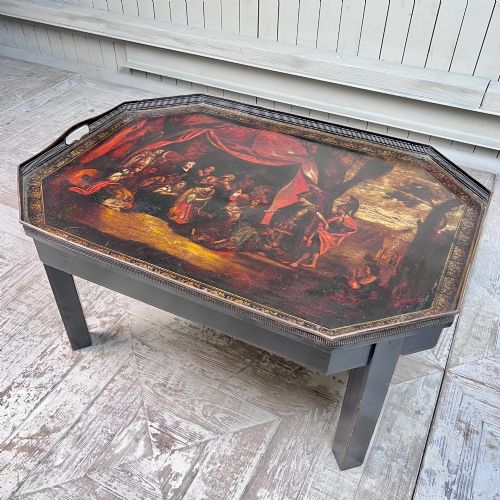
Beyond traditional butler trays, the category includes painted tole trays and lacquered surfaces decorated with Chinoiserie motifs. These pieces function today as compact coffee tables, side tables, or occasional tables within domestic spaces.
How They Were Made
Construction relies heavily on timber selection, with Cuban mahogany and rosewood utilised for structural strength and rich grain. Carpenters shaped tray edges with hinged flaps or shaped cut-out handles for portability.
Papier-mâché trays required multi-layered paper pulps pressed and dried to form a rigid board, then finished with black ebonisation, gilding, and hand-painted hand-painted Chinoiserie scenes. Toleware alternatives employed sheet metal painted and lacquered to withstand daily use.
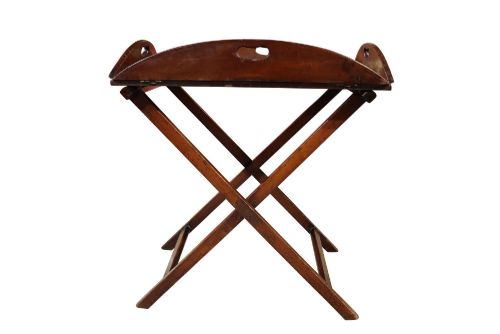
Stands were fashioned as folding X-frames or four-legged bases, sometimes incorporating brass fittings, inlay, or turned wooden stretchers to support the weight of the tray above.
Listings feature pieces spanning the 19th Century, Regency, and Georgian periods, alongside later 1930s revivals.
What Varies in Quality
The distinction between top-tier examples and simpler pieces rests on the integrity of the surface decoration and the harmony of the pairing. Hand-painted Chinoiserie with crisp gilding and original lacquer elevates a papier-mâché tray above plain ebonised versions.
Proportion and matching matter significantly, particularly because many trays were reunited with stands later in their history. A stand made specifically for the tray, such as a bespoke faux bamboo frame matching the period, sits more successfully than a generic base.
Timber selection and cabinetmaking detail also divide the range, from straightforward pine-lined folding frames to finely turned mahogany or rosewood structures featuring precise joinery and brass hardware.
Gillows·William Burwash·Mein of Kelso
The Regency Tray on Stand Glossary
- Butler's tray
- A rectangular wooden tray featuring hinged sides that fold down to allow flat storage or easy carrying. They are typically set onto a separate folding X-frame stand when in use.
- Papier-mâché
- A composite material made from paper pulp or layers of paper bound with glue, then pressed and dried. It forms a remarkably strong, smooth base for fine lacquer and gilt decoration.
- Toleware
- Enamelled or lacquered sheet metal items, often painted with bright pigments. Trays in this material were durable and resistant to spilled liquids during service.
- Chinoiserie
- European artistic interpretations of Chinese and East Asian decorative motifs. It frequently appears as gilt landscapes, figures, and pavilions on black lacquered surfaces.
- Faux bamboo
- Wood turned and carved to imitate natural bamboo stalks. It was a popular ornamental technique on stands during the Regency and Victorian periods.
Regency Tray on Stand: Frequently Asked Questions
Were these trays originally made with stands?
Many trays were originally standalone serving items used by servants to carry items from the kitchen to the parlour. The supporting stands were often paired with them later or made to measure as tastes changed.
Over time, collectors and makers recognised the decorative potential of mounting these trays on dedicated frames to utilise them as permanent furniture.
How do I use a tray on stand today?
These pieces function ideally as compact coffee tables or side tables in sitting rooms where floor space is limited. The removable nature of the tray retains its original portable utility.
Placing them away from direct sunlight and excessive heat protects delicate lacquer, painted surfaces, and antique wood finishes from drying out.
How can I tell a period stand from a later one?
Period stands often feature construction methods, wood types, and wear patterns that match the age of the tray resting upon them. Mahogany frames from the early 19th century show period-appropriate joinery.
Many listings note when a stand is a later addition, such as a bespoke faux bamboo base created to display an earlier papier-mâché or tole tray.