
Regency Tilt Top Breakfast Table
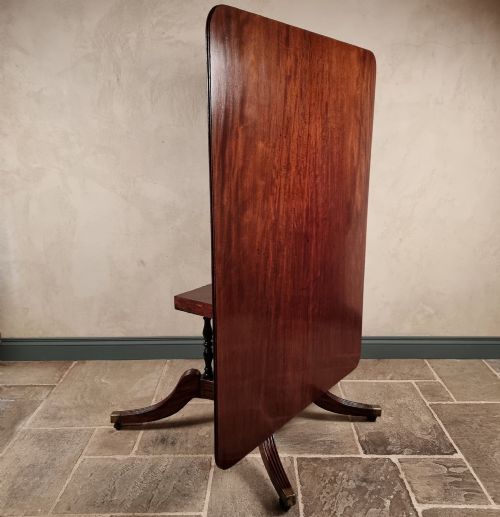
A regency tilt top breakfast table combines practical engineering with fine cabinet-making, offering a generous dining surface that folds away when not in use.
Regency Tilt Top Breakfast Table
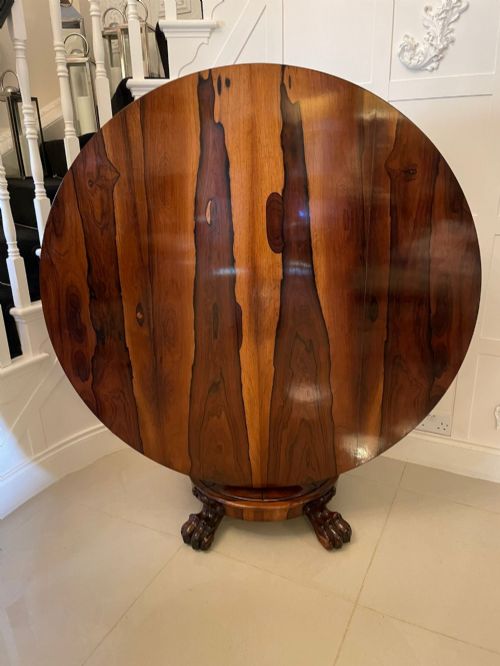
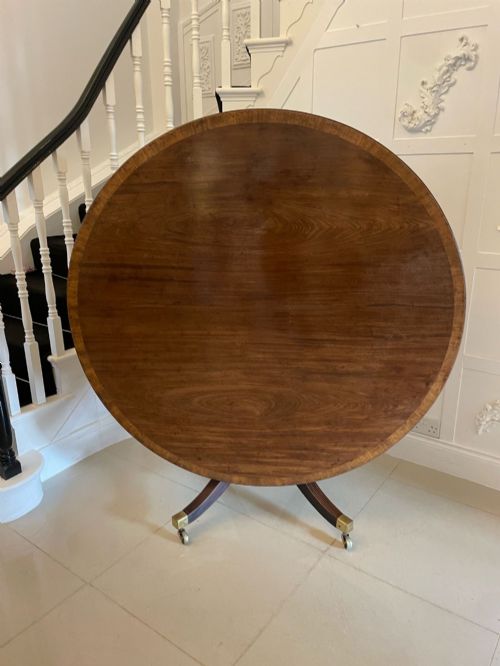
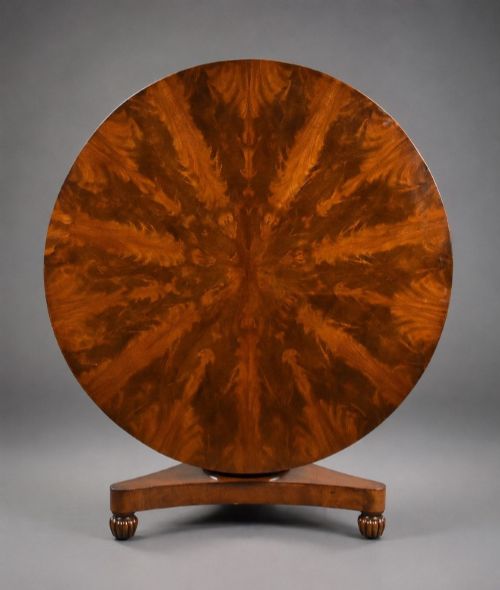
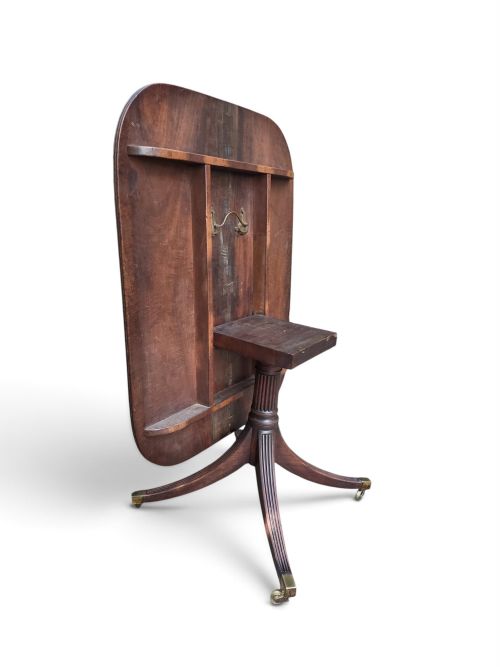
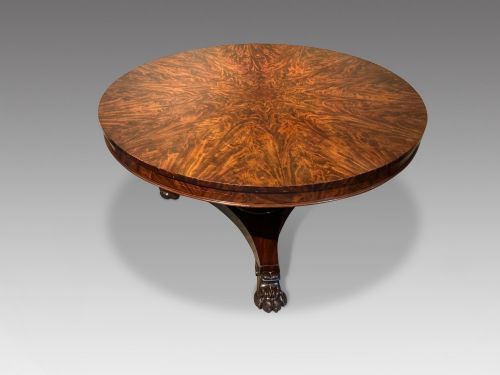
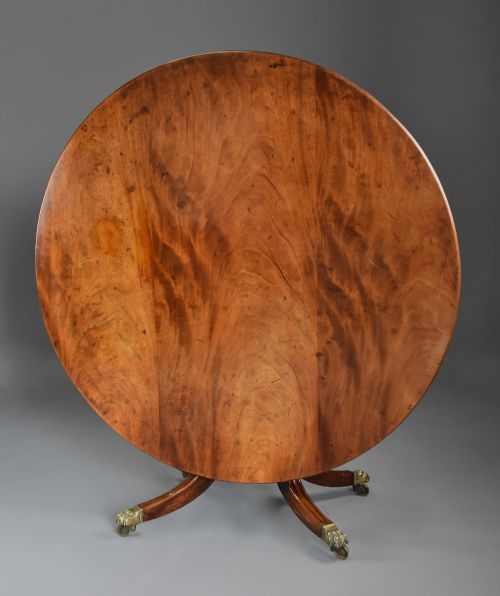
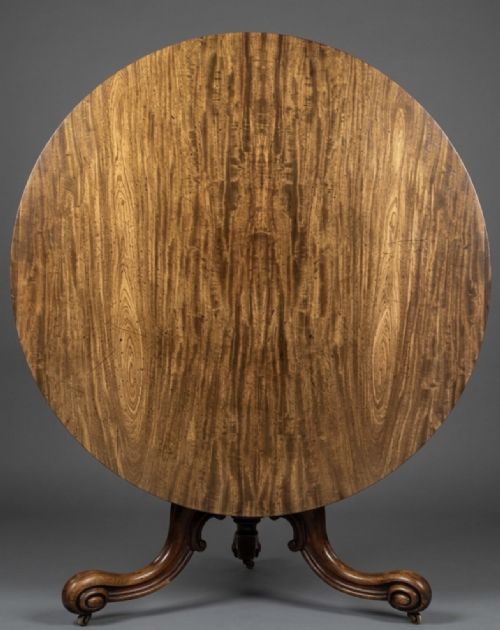
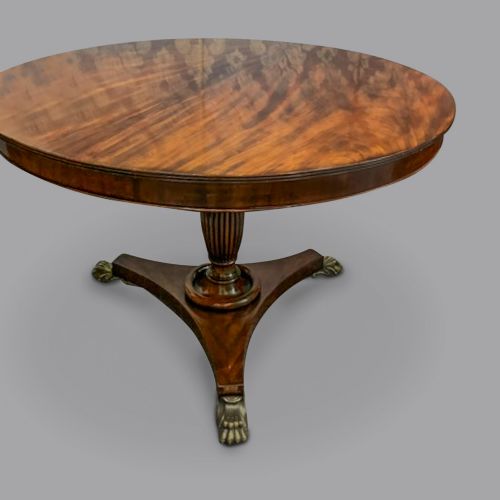
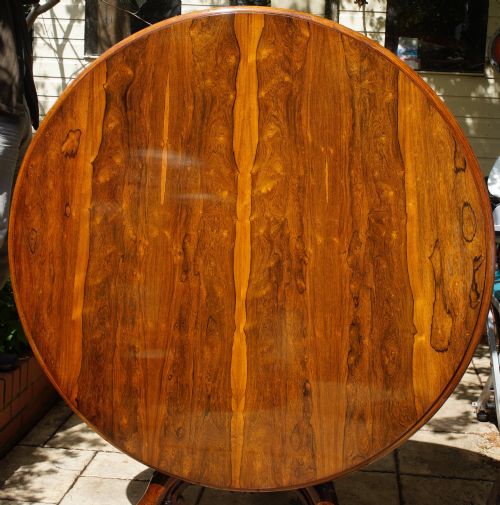
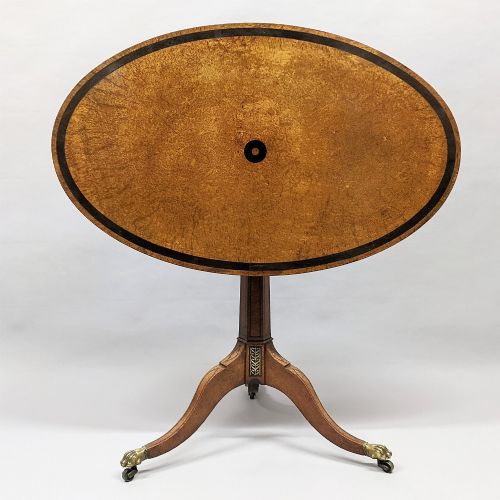
A regency tilt top breakfast table is primarily found in mahogany, flame mahogany veneer, and rosewood, emerging predominantly from the Georgian and Regency periods through to the William IV era. These pieces generally feature a substantial central pedestal supporting a large circular, oval, or rectangular top designed to tilt vertically on a brass or wooden catch. While many originate from the early nineteenth century, later revivals also appear on the market.
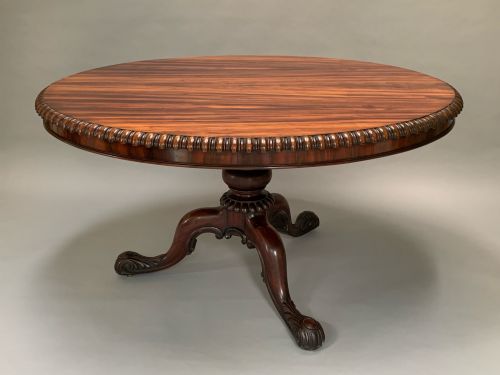
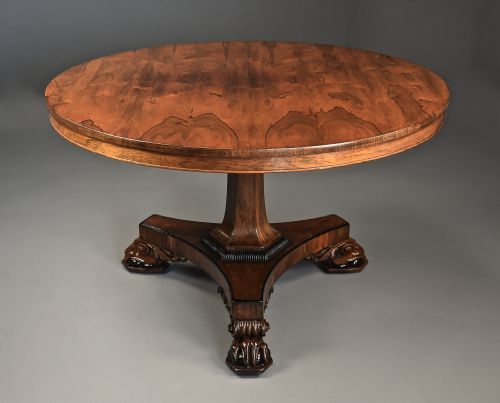
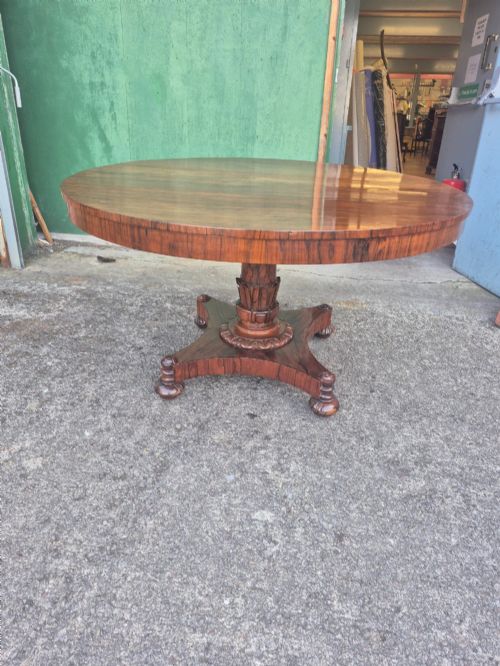
Buyers searching for this form frequently encounter circular or ovular dining tables capable of seating six to eight people, alongside smaller occasional versions. The tilting mechanism allowed the table to be stored against a wall to reclaim valuable floor space in drawing rooms and parlours. The listings show a strong representation of pedestal designs resting on tripartite or quadrupartite bases, often fitted with brass casters.
Materials and Construction
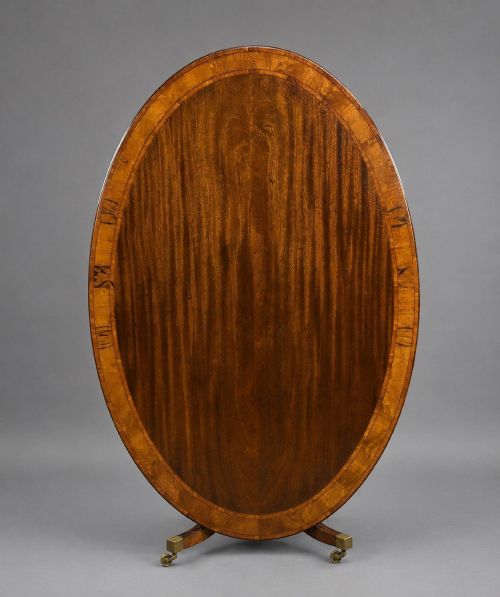
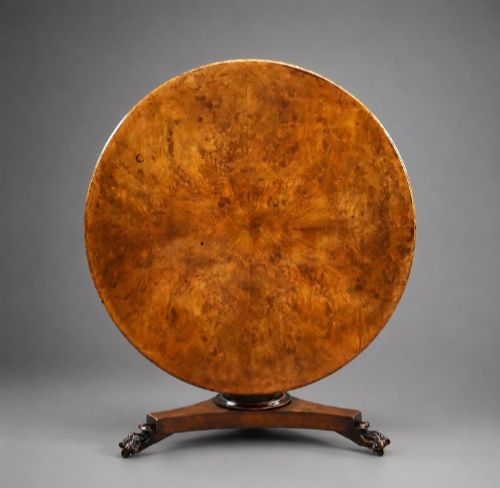
Cabinet-makers of the period relied heavily on dense tropical hardwoods like solid mahogany and rosewood, frequently applying highly figured veneers such as flame mahogany, burr elm, and pollard oak over sturdy secondary timbers. Crossbanding in contrasting timbers like satinwood framed the primary field, while intricate brass inlay and parcel gilding added decorative contrast to the borders and pedestals. Construction typically involved a robust central pillar turned from a single block of timber, fixed to a heavy stabilizing platform or spreading legs.
The pivotal mechanism required precise metalwork beneath the top, incorporating brass catches and tilting blocks that allowed the massive timber surface to lock securely into either a horizontal or vertical position. Joinery on the pedestals often employed heavy internal iron braces or wooden blocks to bear the significant weight of the pivoting top. Finishing involved meticulous hand-polishing with shellac to build up a deep, reflective patina that highlighted the natural grain of the wood.
Listings feature mahogany, rosewood, burr elm, and pollard oak across Georgian, Regency, and William IV periods.
Craftsmanship and Proportion
Quality in these tables is fundamentally determined by the selection of timber and the dexterity of the veneer work. Superior examples exhibit symmetrical flame mahogany or richly figured rosewood matched flawlessly across the central seam, whereas lesser pieces rely on plain timber or show careless grain alignment. The depth of the colour and the clarity of the polished surface also separate standard production from exceptional cabinet-making.
Proportion and stability dictate the upper tier of the market, where pedestals display crisp carving such as acanthus leaves, reeding, or paw and claw feet rather than flat, machine-cut details. The mechanism underneath must operate smoothly, allowing the heavy top to tilt and lock without excessive play in the pivot. Fine tables integrate brass casters seamlessly into robust, well-spread legs that prevent any tipping when the leaf is loaded.
Walker-Lancaster·Gillows
The Regency Tilt Top Breakfast Table Glossary
- Tilt-top
- A tabletop mounted on a hinge mechanism that allows the surface to be rotated vertically against the pedestal for storage. This clever space-saving innovation defined domestic furniture arrangement in the early nineteenth century.
- Crossbanding
- A border technique where thin strips of veneer are laid perpendicular to the grain of the main tabletop, creating a contrasting decorative frame. Cabinet-makers used timbers such as satinwood to achieve this striking perimeter effect.
- Loo table
- A large circular or oval table designed for nineteenth-century card games like commerce and loo, sharing the same tilt-top pedestal construction as breakfast tables. These versatile surfaces transitioned easily between dining and evening entertainment.
- Patina
- The deep, lustrous surface sheen developed over decades of handling, exposure to light, and careful polishing. A desirable, faded patina indicates genuine age and continuous domestic use.
Regency Tilt Top Breakfast Table: Frequently Asked Questions
Did these tables double as dining surfaces?
Despite the name, these pieces served multiple domestic functions throughout the day, operating primarily as centre tables or library desks when not laid for meals. Their generous circular or oval proportions accommodated family gatherings and larger evening dinner parties with ease.
The stable pedestal base allowed diners to sit comfortably without knocking their knees against fixed corner legs, making them a popular alternative to traditional four-legged dining tables.
How can I tell a Regency table from a later revival?
Examine the construction methods and timber characteristics beneath the tabletop and inside the pedestal housing. Period pieces from the early nineteenth century feature hand-cut joints, subtle tool marks, and dense secondary woods appropriate to the era.
Later Victorian copies and Edwardian revivals often exhibit heavier proportions, standardised machine-cut components, and a different quality of internal bracing. The colour and depth of the polish also tend to differ between authentic Regency production and subsequent revivals.
What is the difference between a breakfast table and a loo table?
In period terms, breakfast tables and loo tables share identical pedestal and tilt-top construction but served different social functions. Loo tables were specifically built for card games, while breakfast tables accommodated morning dining.
In modern practice, the terms are frequently used interchangeably by dealers to describe large circular or ovular pedestal tables from the same eras.