
Regency Tier Shelf
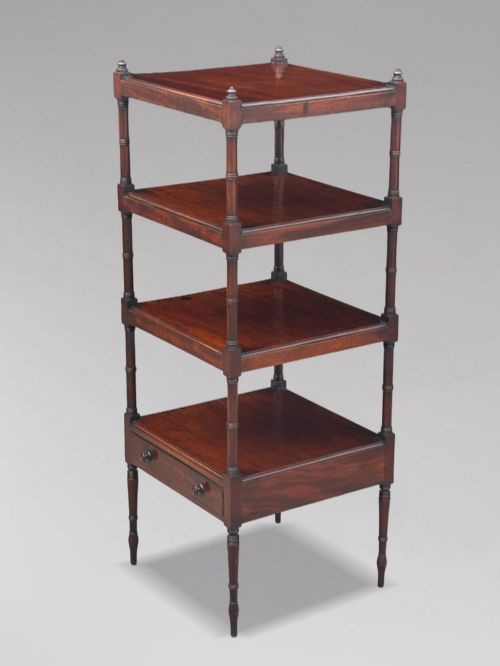
A regency tier shelf brings tiered display space to a room, using stacked wooden shelves to hold books and decorative objects.
Regency Tier Shelf
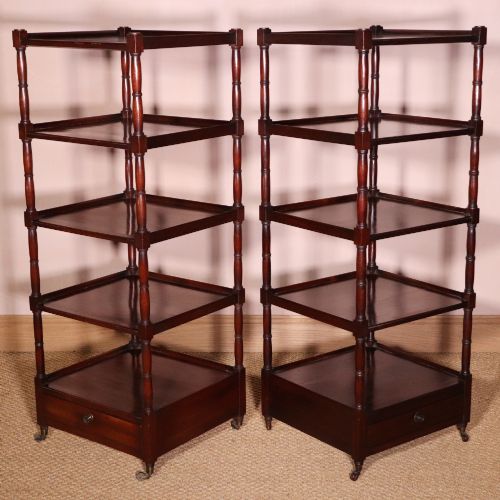
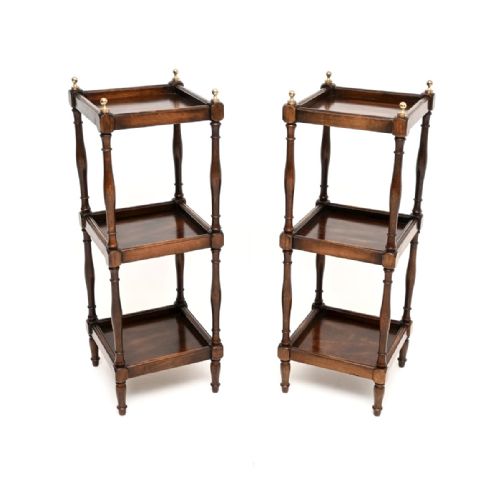
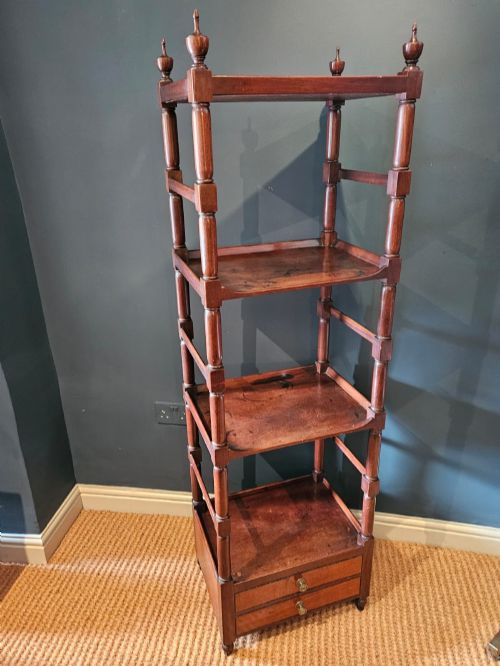
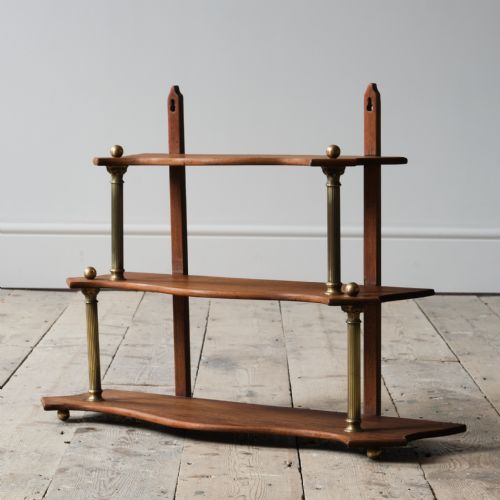
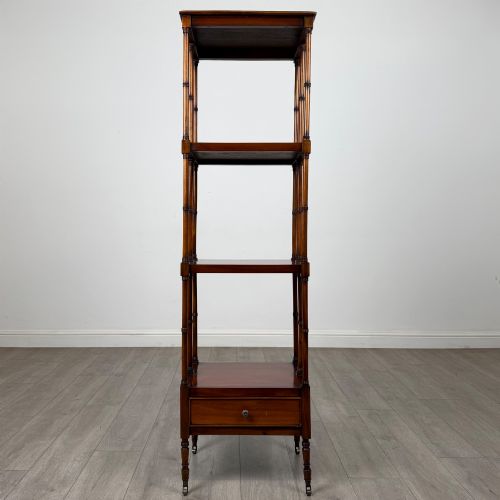
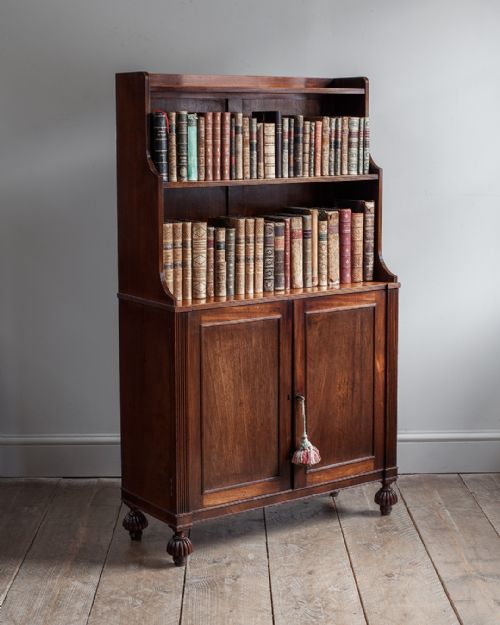
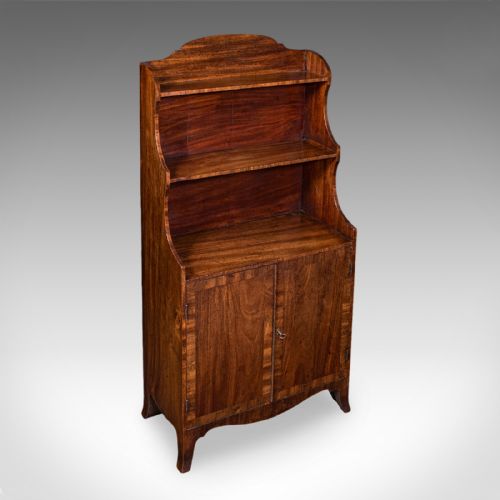
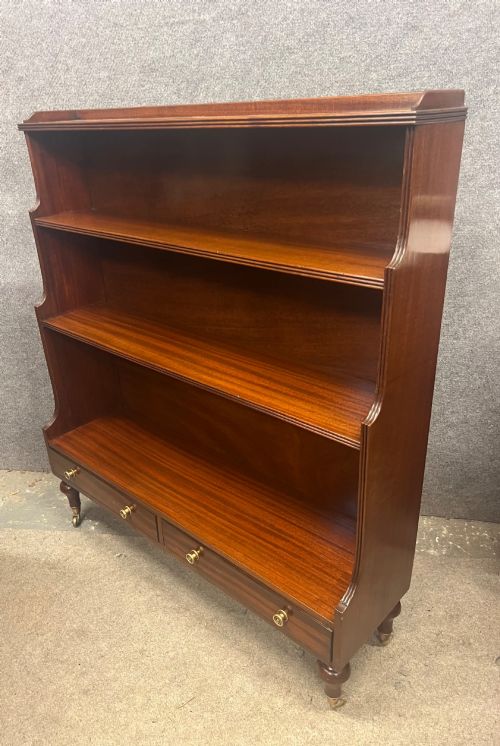
A regency tier shelf combines open shelving with tiered levels, appearing frequently as whatnots, bookcases, and wall-hanging shelves. The pieces span periods from the Georgian and Regency eras through to later revival styles like Victorian and Edwardian interpretations.
Most examples found here utilise sturdy wood construction, featuring stacked platforms designed for organising books, sheet music, or display items in domestic interiors.
What varies in quality
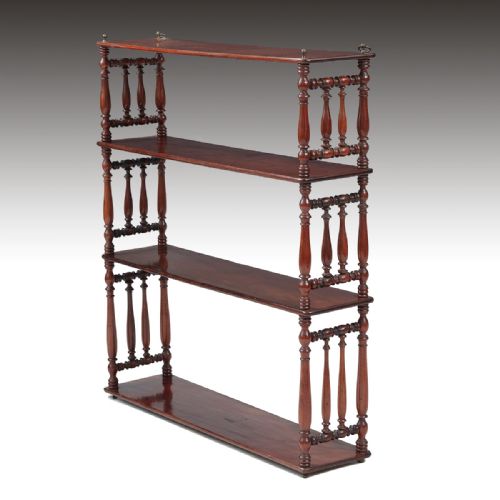
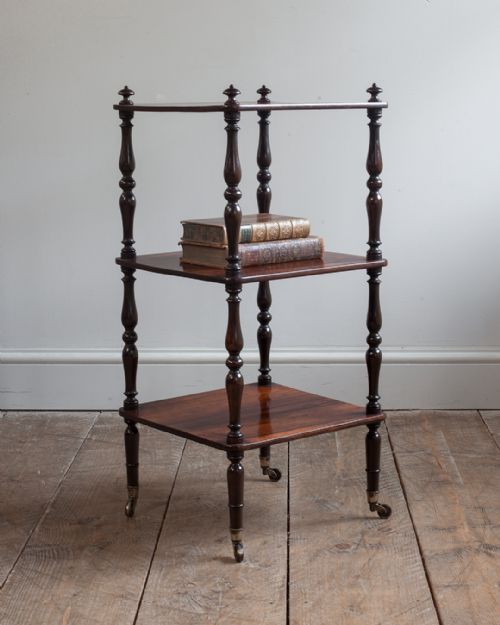
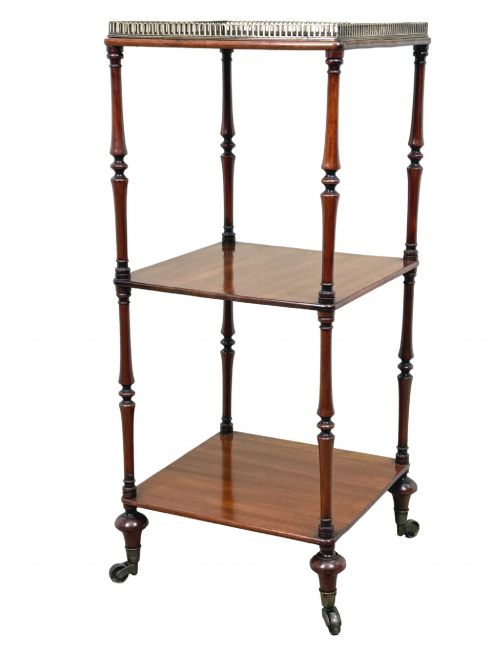
The choice of timber underpins the character of each piece, with finely figured flame mahogany or select rosewood marking out superior examples. The crispness of turned wooden supports and the integration of brass elements also indicate the level of craftsmanship involved.
Proportion and structural balance separate standard utilitarian pieces from more refined furniture designed for principal rooms.
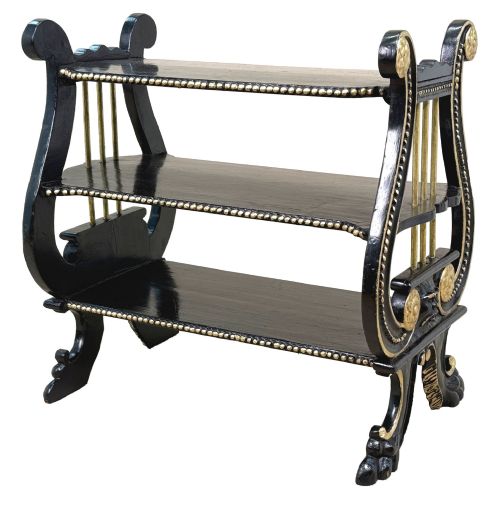
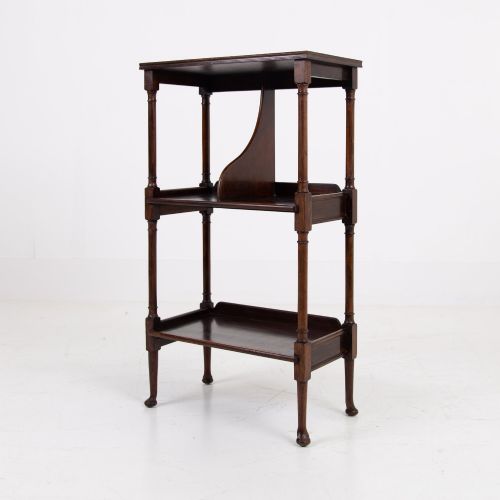
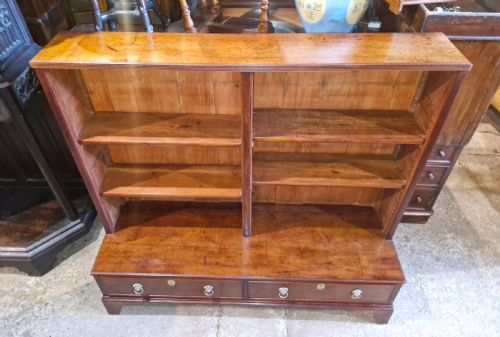
Formats range from wall-hanging shelves to freestanding bookcases, music stands, and tiered étagères.
Gillows
The Regency Tier Shelf Glossary
- Étagère
- A French term for a piece of furniture with a set of open shelves for holding ornaments. These items function similarly to whatnots and tier shelves.
- Waterfall bookcase
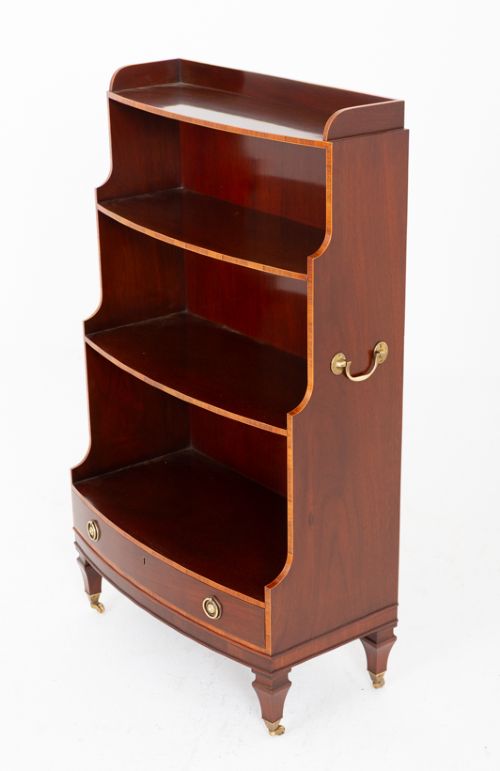
- A set of open shelves where each tier steps back progressively from the one below it. The profile resembles the cascading steps of a waterfall.
- Cellarette
- A fitted cabinet or compartment designed to hold bottles, occasionally integrated into lower sections of 19th-century stands.
- Parcel gilt
- Wood surfaces partially decorated with gold leaf. This technique highlights carved details or mouldings against dark or ebonised wood.
Regency Tier Shelf: Frequently Asked Questions
What is a regency tier shelf?
A regency tier shelf is a multi-level open shelving unit designed for displaying books and decorative objects. These pieces include freestanding whatnots, waterfall bookcases, and wall-mounted variants.
They originate primarily from the 19th century, drawing on Georgian and Regency design principles, with later revivals appearing into the 20th century.
Where were these shelves used?
These tiered units served versatile functions in period homes, functioning as bedside stands, music stands, and bookcase combinations in parlours or libraries.
Portable and wall-hanging versions allowed owners to add storage to smaller spaces without blocking floor areas.
How do I care for rosewood?
Rosewood surfaces require minimal moisture and protection from direct sunlight to prevent the timber from drying out. Regular dusting with a soft cloth preserves the natural finish.
Avoid placing these pieces near modern heat sources which can cause timber joints to move.
How do I date a whatnot?
Dating relies on observing timber choices, turning styles on the upright supports, and construction methods. Earlier 19th-century examples often feature solid mahogany or rosewood with hand-turned components.
Later revival pieces from the Edwardian period or the 1920s show different manufacturing marks and standardisation in their assembly.