
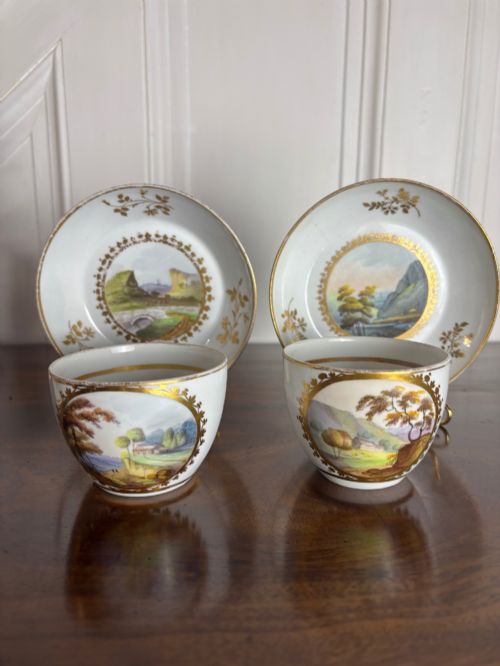


Regency Teacup and Saucer
A regency teacup and saucer brings delicate porcelain and hand-painted detail to the table, offering a tangible connection to the early nineteenth century.
Regency Teacup and Saucer
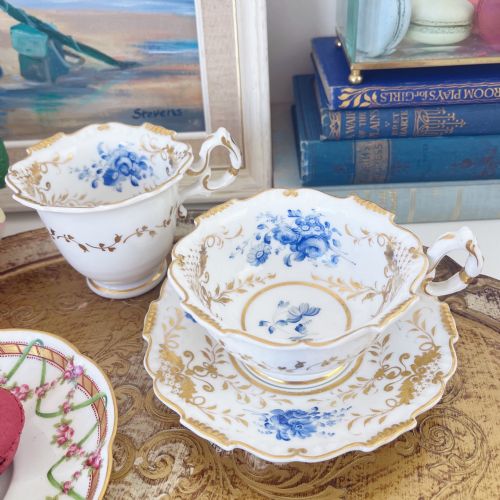
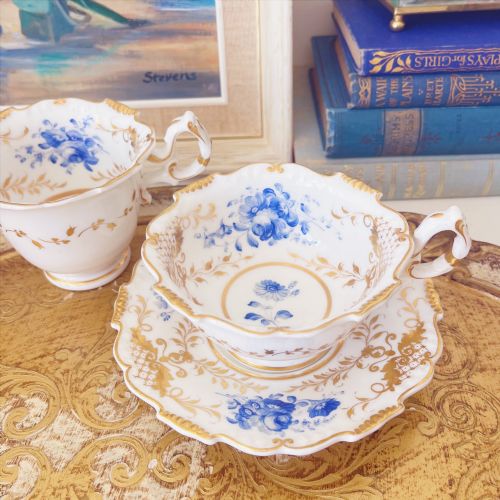
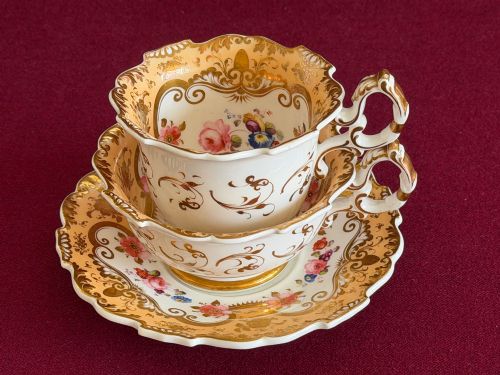
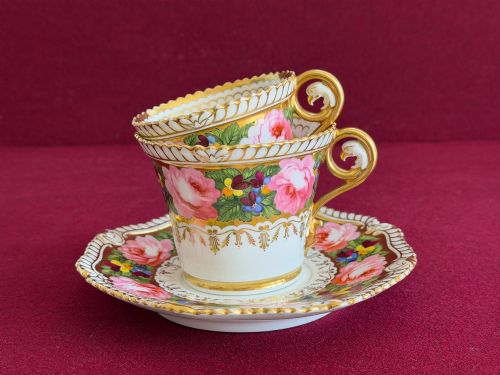
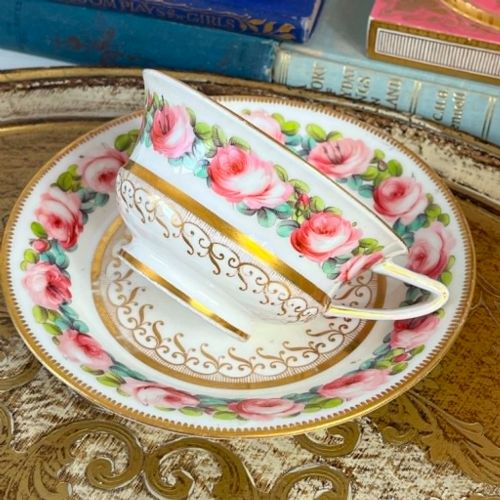
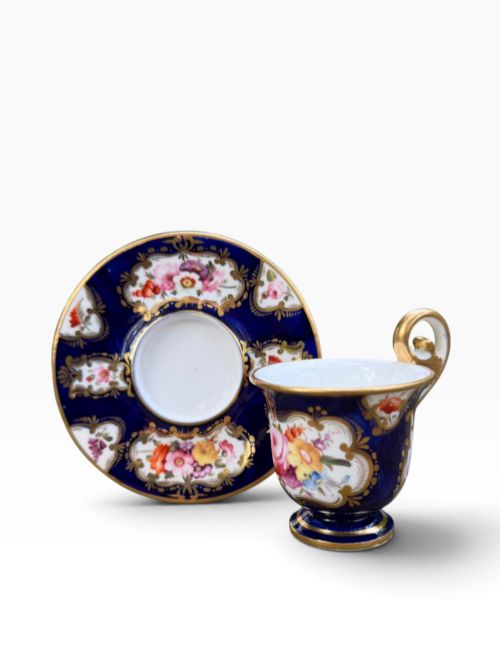
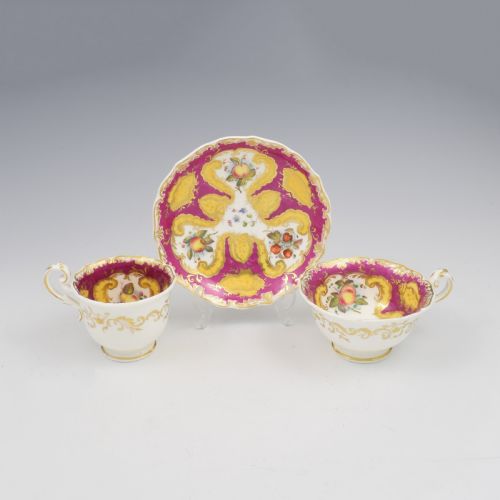
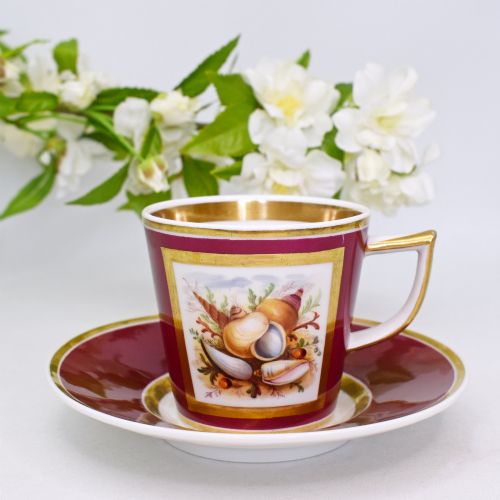
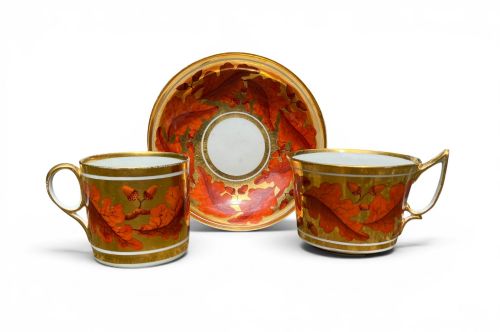
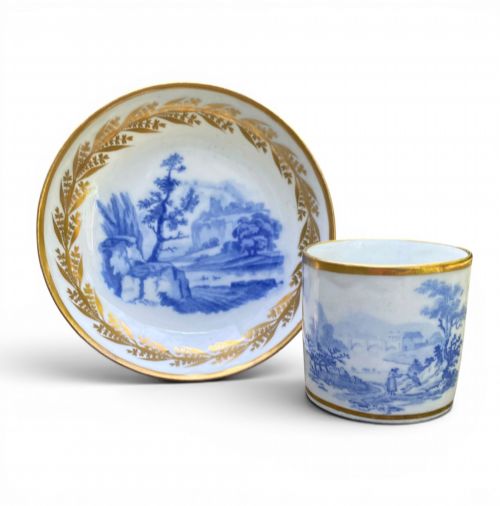
A regency teacup and saucer represents the refined ceramic output of the Georgian and Regency eras, combining porcelain bodies with decorative painting and gilding. These domestic sets include standard teacups alongside larger cabinet cups designed for display.
The pieces appearing on this page stem from the nineteenth century, specifically the early decades around eighteen hundred to eighteen twenty. They reflect the forms and painting styles characteristic of English manufactories operating during the Regency period.
How they were made
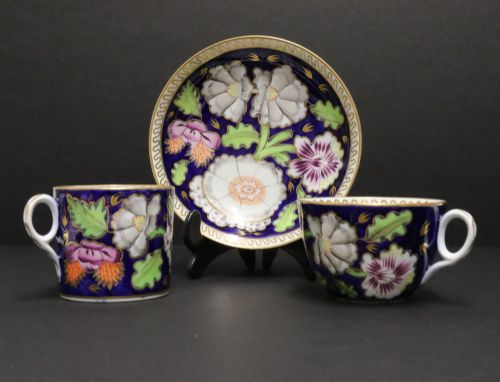
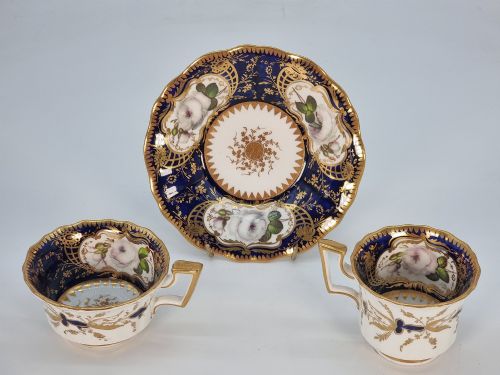
Makers utilised porcelain as the primary body, shaped by hand or moulded with specific profiles such as the London shape or Nantgarw type moulding. Artisans applied cobalt enamel and detailed hand-painted floral motifs directly onto the ceramic surface.
Gilding and gold leaf complete the decoration, applied in borders and highlights around the rims and handles. Firing in kilns set the enamels and gold, creating a permanent gloss finish across the cup and saucer.
Regency Teacup and Saucer Retail Price Guide 2026
Typical asking prices for regency teacup and saucer among the pieces listed under this phrase on Sellingantiques today, from the lower quarter to the upper quarter. They describe what is for sale here now, not the wider market.
Some nineteenth-century tea drinkers preferred dragons painted in compartments over simple flowers to keep their morning brew company.
What varies in quality
Quality rests in the precision of the hand-painted decoration and the crispness of the porcelain moulding. Pieces featuring intricate patterns like the dragon in compartments or specific royal associations demonstrate superior artistic execution by skilled factory painters.
The preservation of the original gilding and enamel work dictates the overall standard of the set. Finer examples retain their gold leaf highlights intact without rubbing, while lesser pieces show loss to the decorative surface from historical use.
Spode·Coalport John Rose·Flight Barr and Barr
The Regency Teacup and Saucer Glossary
- Cabinet cup and saucer
- A decorative teacup and saucer made for display in a cabinet rather than for daily service. These pieces often feature richer gilding and more elaborate painting than utilitarian wares.
- London shape
- A specific ceramic profile for teacups featuring a straight-sided tapered bowl and an angled handle. It became popular among English porcelain makers during the early nineteenth century.
- Gilding
- The application of gold leaf or gold paint to ceramic surfaces for decoration. It provides bright metallic borders that frame the painted scenes.
- Cobalt enamel
- A deep blue vitreous colouring fired onto porcelain. It forms the base for rich underglaze or overglaze patterns.
- Moulding
- The shaping of wet clay using a form or press to create raised surface patterns. Nantgarw type moulding refers to specific relief designs imitated by various factories.
Regency Teacup and Saucer: Frequently Asked Questions
What is a regency teacup and saucer?
A regency teacup and saucer is an early nineteenth-century ceramic drinking vessel and matching dish made from porcelain. These items date from the Georgian and Regency eras.
English factories produced them with hand-painted floral motifs, cobalt enamel, and gold leaf highlights. They survive today as both cabinet display pieces and collectible antiques.
How do I date a regency teacup and saucer?
Dating relies on stylistic markers such as the London shape, specific moulding types, and known factory periods. Many pieces date from the second decade of the nineteenth century.
Factory marks, where present, help narrow the production window. Comparing the painting style and porcelain body to documented examples provides further chronological context.
Were these cups used for daily tea?
Cabinet cups and similar fine porcelain pieces were often intended for display or special company rather than rough everyday use. The delicate porcelain and fine gold leaf required careful handling.
Standard teacups saw service during polite tea drinking rituals in the home. Their survival in good condition suggests they were treasured and preserved.
How should I display my teacup and saucer?
Display these porcelain sets in enclosed cabinets away from direct sunlight to protect the enamel colours and gold leaf. A stable shelf prevents accidental knocks.
Using specialised plate stands allows both the cup and the saucer to be viewed together. Keeping them in a dust-free environment minimises the need for frequent cleaning.