



Regency Tea Tray
A regency tea tray brings grand early nineteenth century service into modern rooms, offering a sturdy yet graceful surface for everyday hospitality.
Regency Tea Tray
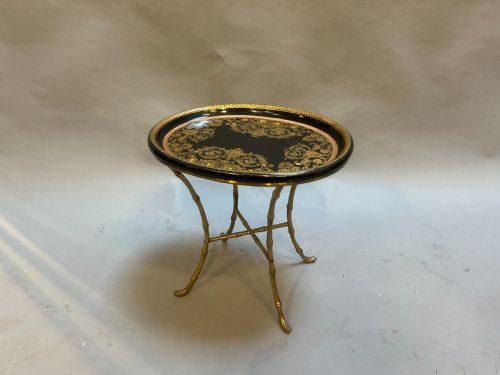
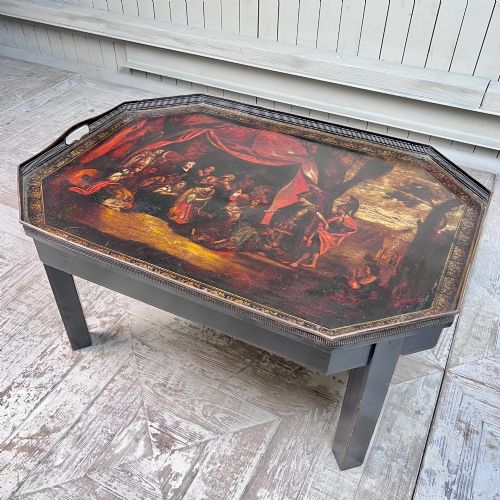
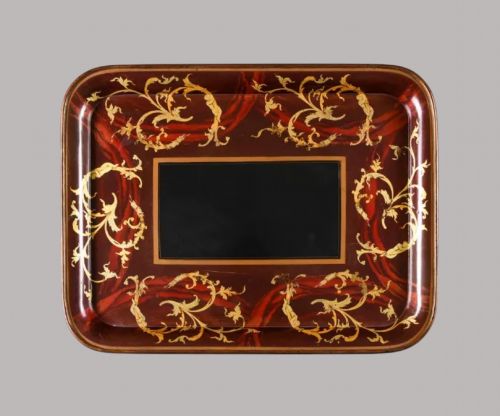
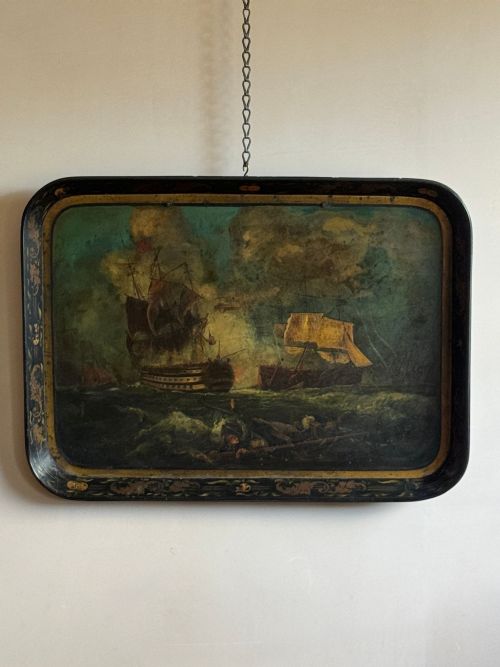
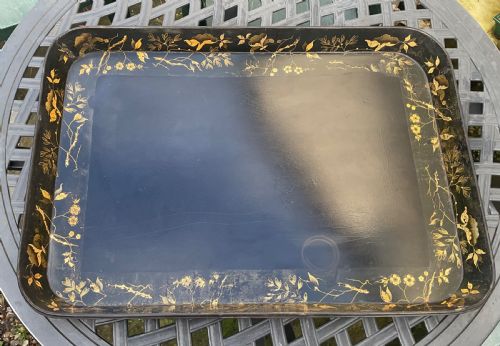
The versions most common here date from the early nineteenth century and the wider Regency period, often featuring gilt embellishments or hand-painted scenes. You will also encounter later nineteenth century interpretations and occasional mid-century nods to the aesthetic.
Beyond simple service, these objects function as striking centrepieces on side tables or coffee tables. Their raised edges and durable construction meant they were built to carry heavy silver teapots and porcelain without flinching.
How they were made
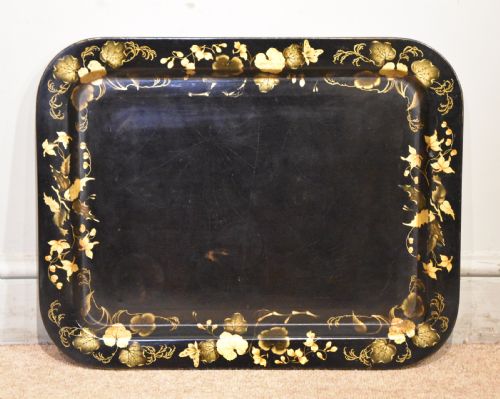
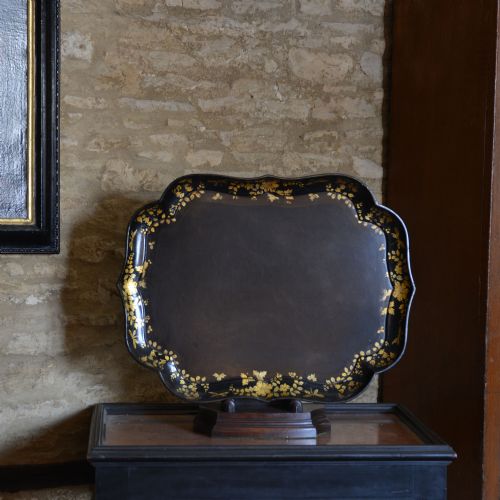
Papier-mâché examples start with layers of paper pulp and glue pressed in heavy iron moulds, then baked until rigid. Artisans applied successive coats of dark lacquer and polished the surface to a deep gloss before adding gold leaf or hand-painted details.
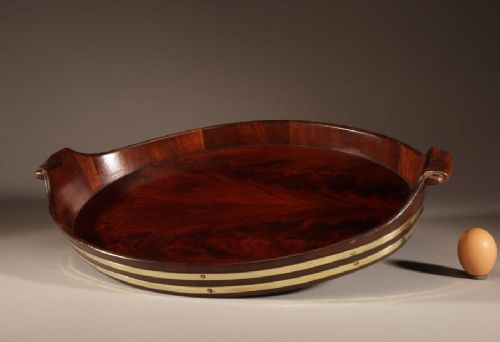
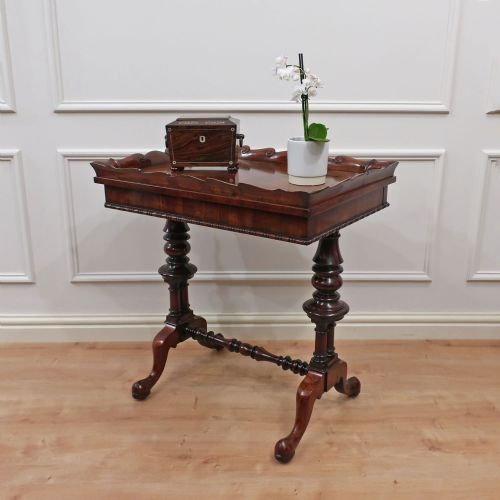
Wooden variants rely on dense cuts of mahogany or satinwood, sometimes featuring coopered construction with brass bands or delicate inlay work. Toleware trays utilise sheet metal coated in heavy paint or japanning, providing a sturdy base for elaborate pictorial decoration.
Listings feature papier-mâché, mahogany, and painted toleware spanning the Regency, Georgian, and Victorian periods.
What varies in quality
The distinction between a standard utility tray and an exceptional example rests entirely upon the confidence of the hand behind the decoration. Master workshops employed skilled painters whose landscapes and classical scenes retain their depth and crisp detail after two centuries.
Subtlety of form and the integrity of the base material separate the finer pieces from later imitations. A well-preserved papier-mâché core remains rigid and light, while superior mahogany boards display rich grain patterns and tight, expert joinery.
Gillows·Jennens & Bettridge·Paul Storr·Clay
The Regency Tea Tray Glossary
- Papier-mâché
- A composite material made from paper pulp, bound with glue and resin, then pressed and dried into a hard, durable board suitable for lacquering. It forms the lightweight foundation for many fine early nineteenth century serving surfaces.
- Toleware
- Enamelled or japanned metalware, usually iron or tinplate, painted and baked with a hard glossy finish. These trays often display bright gilt borders and pastoral scenes.
- Japanning
- A European imitation of East Asian lacquer work, created by applying layers of dark varnish and curing them under heat. It protects the wooden or paper substrate while providing a deep reflective background for gold decoration.
- Coopered
- Constructed from vertical wooden staves fitted together with side joints, much like a barrel. This technique gave curved wooden trays exceptional strength.
- Salver
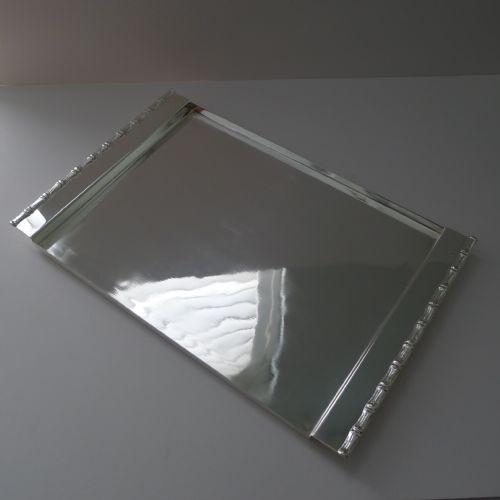
- A flat metal plate or tray used for serving drinks or presenting items, typically resting on small feet.
Regency Tea Tray: Frequently Asked Questions
How were regency tea trays used?
These trays served to transport tea sets, porcelain pots, and glassware from the kitchen to the drawing room during formal afternoon visits. Servants carried them by the raised edges or handles, presenting them directly to guests.
Today, many owners repurpose them as display surfaces on low tables or sideboards, where their painted details and rich patination remain visible.
Can I use an antique tray for daily serving?
While original papier-mâché and lacquered surfaces are remarkably tough, moisture and heat can damage delicate nineteenth century finishes. Gentle use with dry items is generally safer for fragile or gilt-decorated pieces.
Sturdier mahogany and metal toleware trays handle light service well, though most owners prefer to protect the antique finish with coasters or linen cloths.
How do I care for a papier-mache tray?
Keep these pieces away from direct sunlight, damp environments, and extreme temperature shifts that might crack the lacquer. Dust them softly with a dry cloth and avoid commercial polishes or water.
Treating the surface with museum wax can help protect the aged finish without building up harmful residues over time.
What is a tray on stand?
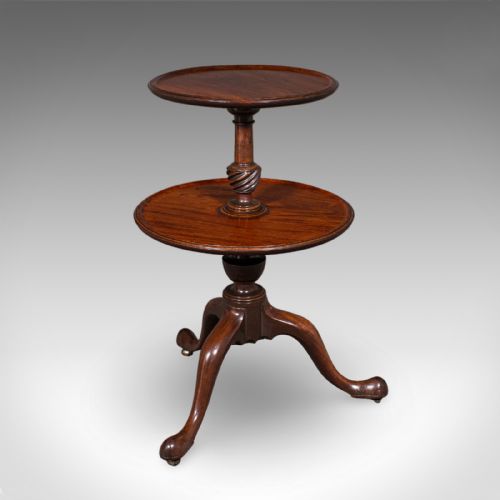
A tray on stand is an antique serving tray fitted to a dedicated folding or fixed wooden base, transforming a portable platter into an occasional or coffee table. This practice gained popularity as households sought flexible furniture for entertaining.
Many stands date to the same period as the tray itself, while others represent later Victorian or Edwardian adaptations.