




Regency Tabletop Cabinet
These regency tabletop cabinet examples are compact architectural storage pieces offering refined small-scale craftsmanship for desktop or table use.
Regency Tabletop Cabinet
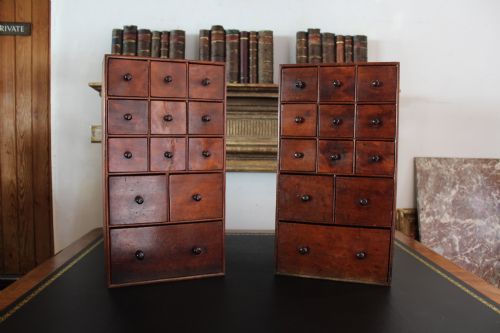
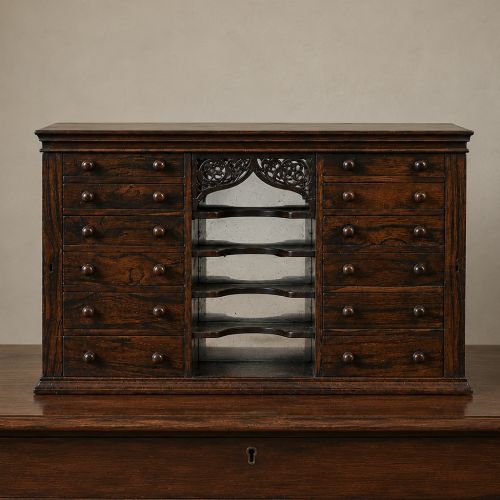
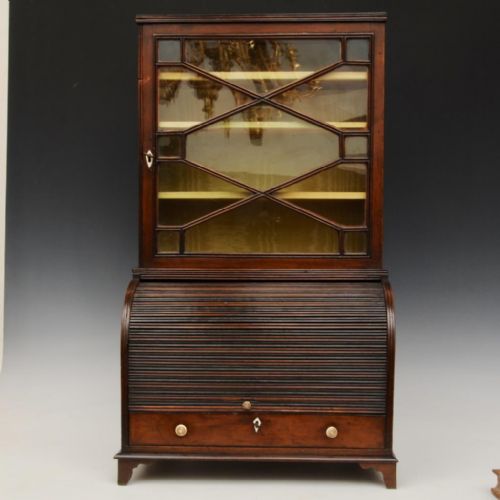
A regency tabletop cabinet brings the formal presence of larger antique case furniture down to a scale suited for desks and tables. These pieces encompass miniature chests of drawers, collector cabinets, spice boxes, and specialised stationery repositories.
The selections found here span the Georgian, Regency, and William IV periods, alongside later nineteenth-century interpretations. Mahogany and rosewood dominate the forms, frequently enriched with boxwood inlay, brass mounts, or mirrored glass elements.
Materials and construction
Cabinetmakers utilised dense native and imported timbers, notably mahogany and rosewood, often pairing them with contrasting boxwood stringing or veneers. Carcasses were constructed using traditional joinery methods suited to miniature proportions.
Decorative detailing relied on fine brass handles, escutcheons, and gilt-brass mounts, alongside specialist surface treatments such as penwork or tooled leather. Mirror glass and amboyna veneer appear on select pieces to provide textural contrast.
Some miniature chests hide tiny secret compartments behind dummy drawers.
Assessing quality in miniature furniture
Quality rests in the fidelity of the proportions and the crispness of the secondary wood selection and internal drawer construction. Superior examples maintain exact miniature scale rather than feeling like clumsy adaptations of full-sized furniture.
The integration of decorative elements such as boxwood stringing, brass hardware, and specialised finishes dictates the distinction between standard utilitarian boxes and high-status pieces commissioned for wealthy households.
The Regency Tabletop Cabinet Glossary
- Bowfront
- A curved convex front profile commonly found on small chests of drawers and cabinets from the Georgian and Regency periods. This shape softens the rectilinear lines of the cabinet.
- Stringing
- Narrow inlaid lines of contrasting timber, such as boxwood, used to outline drawer fronts and panels on case pieces. It provides a sharp visual border against darker primary woods like mahogany.
- Wellington chest
- A tall, narrow chest of drawers secured by a hinged locking stile on one side that fastens over the drawer edges. This specific form provides secure storage for papers or specimens.
Regency Tabletop Cabinet: Frequently Asked Questions
What were tabletop cabinets used for originally?
These compact pieces served versatile storage roles in wealthy households, holding valuables, correspondence, medicines, or botanical specimens.
Owners kept them on desks, side tables, or dressing surfaces for immediate access to personal items.
How do I tell a Regency piece from a Georgian one?
Georgian examples often display classical proportions with straight lines and restrained mahogany or spice-box formats.
Regency and William IV pieces frequently introduce rosewood veneers, bolder brass mounts, or architectural elements reflecting a shift toward classical antiquity.
Are miniature chests of drawers dollhouse furniture?
No, these are fully functional small-scale cabinets produced by professional furniture makers rather than toys.
They were intended for adult use in studies, bedrooms, and drawing rooms to store precious trifles.
Where should I place a tabletop cabinet at home?
Position them on sturdy desks, chests of drawers, or console tables where their fine timbers and brass mounts can be appreciated at eye level.
Avoid locations with direct sunlight or fluctuating humidity to protect the delicate veneers and antique polishes.