



Warm Brown Miniature Chest
These warm brown miniature chest pieces offer the compact charm of full-scale furniture, drawing collectors with their intricate proportions and rich timber tones.
Warm Brown Miniature Chest
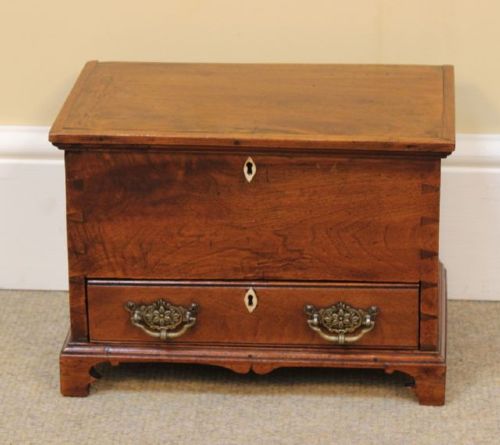
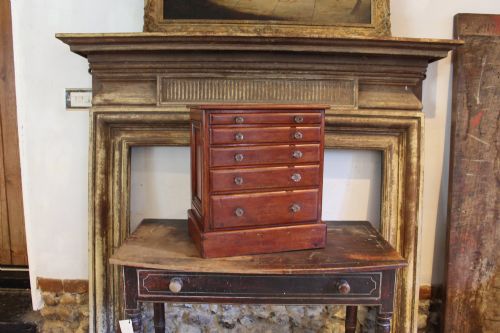
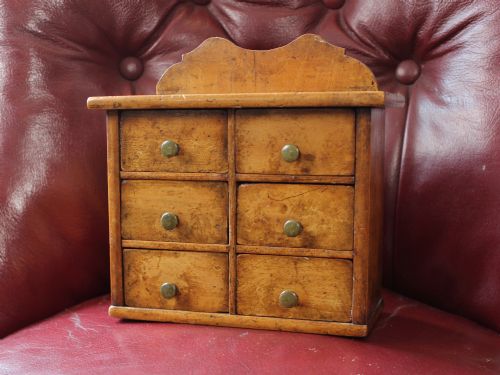
The selections on this page appear as diminutive chests of drawers, spice drawers, mule chests, and tabletop cabinets. They arrive in forms such as apprentice pieces, campaign trunks, and provincial commodes, originating from British workshops and further afield.
Makers utilised rich timbers including mahogany, walnut, oak, fruitwood, and teak to build these diminutive objects. Their utility historically ranged from journeyman display pieces to desktop storage for jewellery or documents.
How they were made
Cabinetmakers constructed these miniature chests using traditional joinery methods suited to domestic furniture, scaling down dovetails and drawer linings for smaller dimensions. Solid timbers like mahogany, walnut, and oak provided sturdy carcases designed to endure.
Surface finishing relied on polishing the natural grain of the wood to achieve the characteristic warm brown tone. Details such as bone escutcheons, brass drop handles, and campaign mounts were fitted by hand to complete the miniature scale.
A Welsh oak coffor bach provides diminutive blanket storage for mice with expensive tastes.
What varies in quality
The finesse of the internal drawer construction and the precision of the timber matching separate standard examples from finer works. Cabinetmakers who invested time in hand-cut joints and carefully selected grain patterns elevated the piece beyond simple novelty.
Original hardware, such as miniature brass handles or bone key escutcheons, preserves the integrity of the object. Subtle proportions and restrained decoration generally signal a more deliberate creation by a skilled hand.
The Warm Brown Miniature Chest Glossary
- Apprentice piece
- A small item of furniture demonstrated to a guild to prove a craftsman's skill. These objects often mirror full-sized chests with precise miniature detailing.
- Commode
- A low decorative chest of drawers or cabinet. French provincial examples introduce serpentine fronts and distinctive regional styling.
- Escutcheon
- A flat plate surrounding a keyhole. Bone and brass versions protect the surrounding wood from wear.
- Mule chest
- A traditional chest featuring one or more drawers beneath the main storage compartment. Miniature versions replicate this dual storage form in compact timber.
- Spice drawers
- A small arrangement of tidy drawers intended for culinary ingredients or valuable commodities. These tabletop units utilise timbers like fruitwood and oak.
Warm Brown Miniature Chest: Frequently Asked Questions
What were miniature chests used for?
These small pieces served various practical purposes in domestic settings, functioning as desktop repositories for jewellery, letters, or valuable trinkets. Some served as merchant samples or journeyman pieces to demonstrate technical proficiency to a guild.
Over time, collectors repurposed them as tabletop display items. Their diminutive scale allowed owners to enjoy fine cabinetmaking in rooms with limited space.
How do I date a miniature chest?
Dating relies on observing the timber species, construction techniques, and stylistic markers characteristic of specific eras. Georgian examples often feature understated mahogany or yew carcases, while Victorian pieces incorporate varied brass hardware or campaign styling.
Internal elements like secondary wood types and handmade drawer dovetails offer further clues. Comparing the proportions to full-scale furniture of the same period helps confirm the timeline.
Are apprentice pieces genuine?
The term apprentice piece is traditional in the antiques trade for smaller scaled furniture items. Many reflect the serious skill of a maker demonstrating mastery over wood and jointing.
Evaluating the quality of the timber and the precision of the construction helps distinguish genuine workshop examples from later decorative copies. Each piece requires assessment on its own merits.
How do I care for antique miniature furniture?
Maintain these wooden pieces by keeping them away from direct sunlight and sudden temperature shifts. Environmental stability protects fragile timbers like walnut and mahogany from splitting.
Apply traditional wax polish sparingly to nourish the grain without buildup. Handle drawers gently to preserve the historic joints.